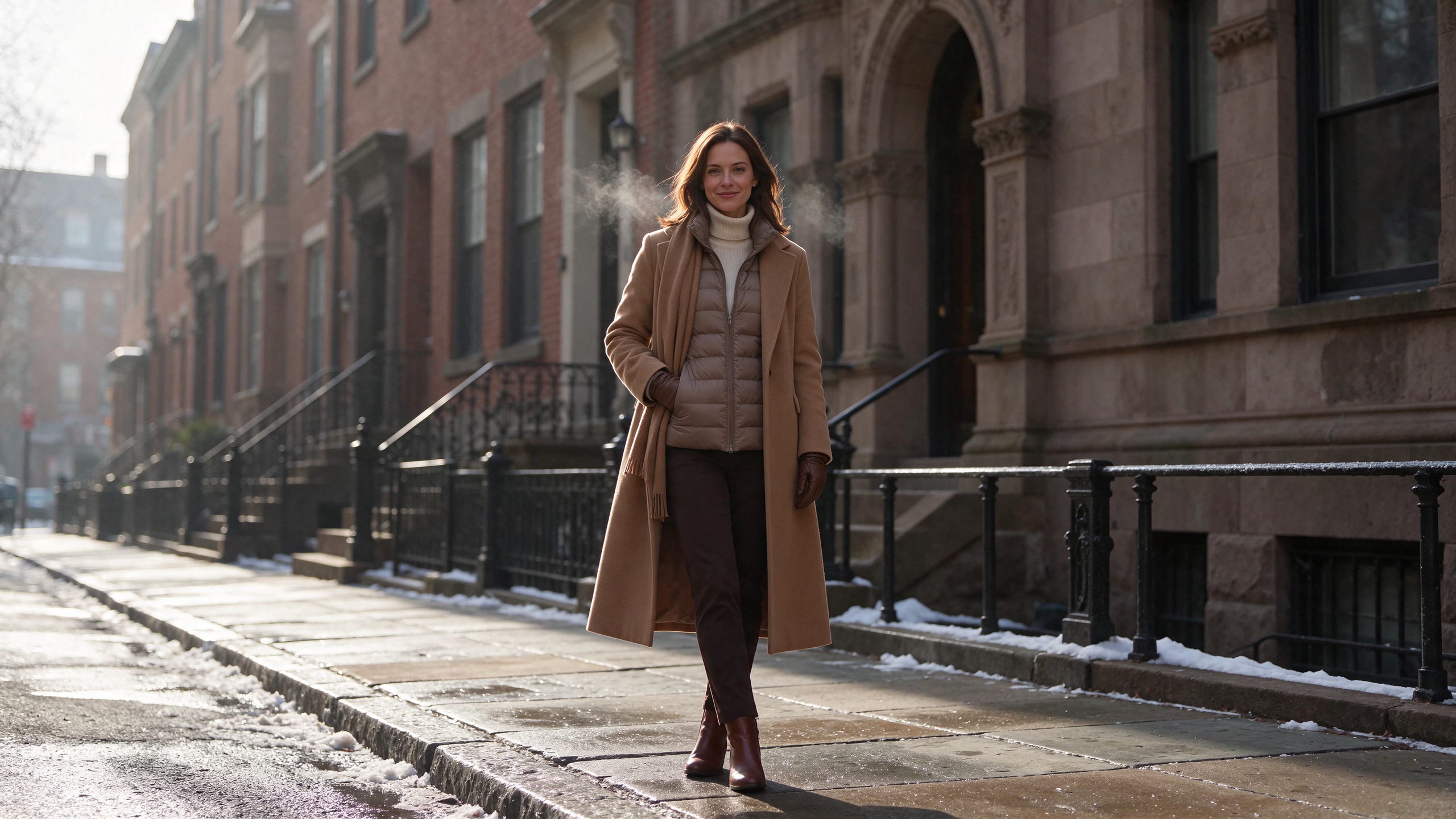
It is 7:15 a.m. in Boston, the thermometer reads 19°F, and you have already pulled on a thermal tee, a chunky knit, a fleece pullover, and a down parka that makes you feel like a sleeping bag with legs. By the time you reach the office, you are sweating through the subway ride, your shoulders ache from the weight, and the mirror in the lobby confirms what you feared: you look like you are wearing every item you own. This is the winter layering trap. Most women believe that warmth equals bulk, so they keep adding thicker pieces until movement becomes a negotiation. The result is not actually warmer; it is just heavier, sweatier, and less flattering.
We tested the alternative during a Boston cold snap in January 2026. For five consecutive days with morning lows between 15°F and 22°F, our editorial team wore the same three-layer formula: a merino wool base layer, a thin 800-fill down mid layer, and a knee-length structured wool coat on top. The total weight was lower than a single chunky sweater plus a cheap puffer, and the silhouette stayed sleek enough for client meetings and dinner reservations. The secret is not piling on more fabric. It is choosing the right fabric in the right order so that each layer does one job perfectly. Below, we explain the science, show the exact outfits, and break down the base layers that performed best in real cold.
Whether you are commuting, running weekend errands, or heading to an après-ski lodge, the goal is the same: stay warm at 20°F without the marshmallow look. Here is the system that works.
Why Bulky Isn't Warm: The Science of Trapped Air
Your body is always producing heat. The reason you feel cold in winter is that heat is escaping faster than you can replace it. Clothing keeps you warm by trapping a thin layer of still air next to your skin, and that trapped air is what insulates you from the colder air outside. The more still air your clothing can hold, the warmer you are. This is why a single fluffy down jacket can be warmer than three dense sweaters pressed together. According to the ready.gov winter-weather guidance, effective layering depends on trapping multiple thin layers of air rather than one thick, compressed layer.
When you wear three thick sweaters under a puffer, each sweater compresses the one beneath it. The fabric becomes packed, the air pockets collapse, and your own body weight squeezes out the insulation you were counting on. You end up with a heavy, restrictive outfit that moves heat away from your skin through sweat and conduction. In contrast, a thin merino base layer, a light down sweater, and a wind-blocking wool coat create three distinct air barriers. Each layer stays lofted, each layer breathes, and you can remove one without the whole system falling apart.
Wind is the second enemy. Even the warmest fleece loses its advantage when icy air blows straight through it. A structured outer layer acts as a shield, holding the warm air inside and the cold air outside. That is why the outer layer is not just about style, although a good coat certainly helps with that. It is the part of the system that makes the inner layers actually work.
The Three-Layer System, Explained
The three-layer system is simple: base, mid, outer. Each layer has one job. If a layer tries to do two jobs at once, it usually does both badly. The base layer manages moisture, the mid layer traps heat, and the outer layer blocks wind and precipitation. When all three are chosen correctly, you can be comfortable from below-zero mornings to overheated offices without changing your entire outfit.
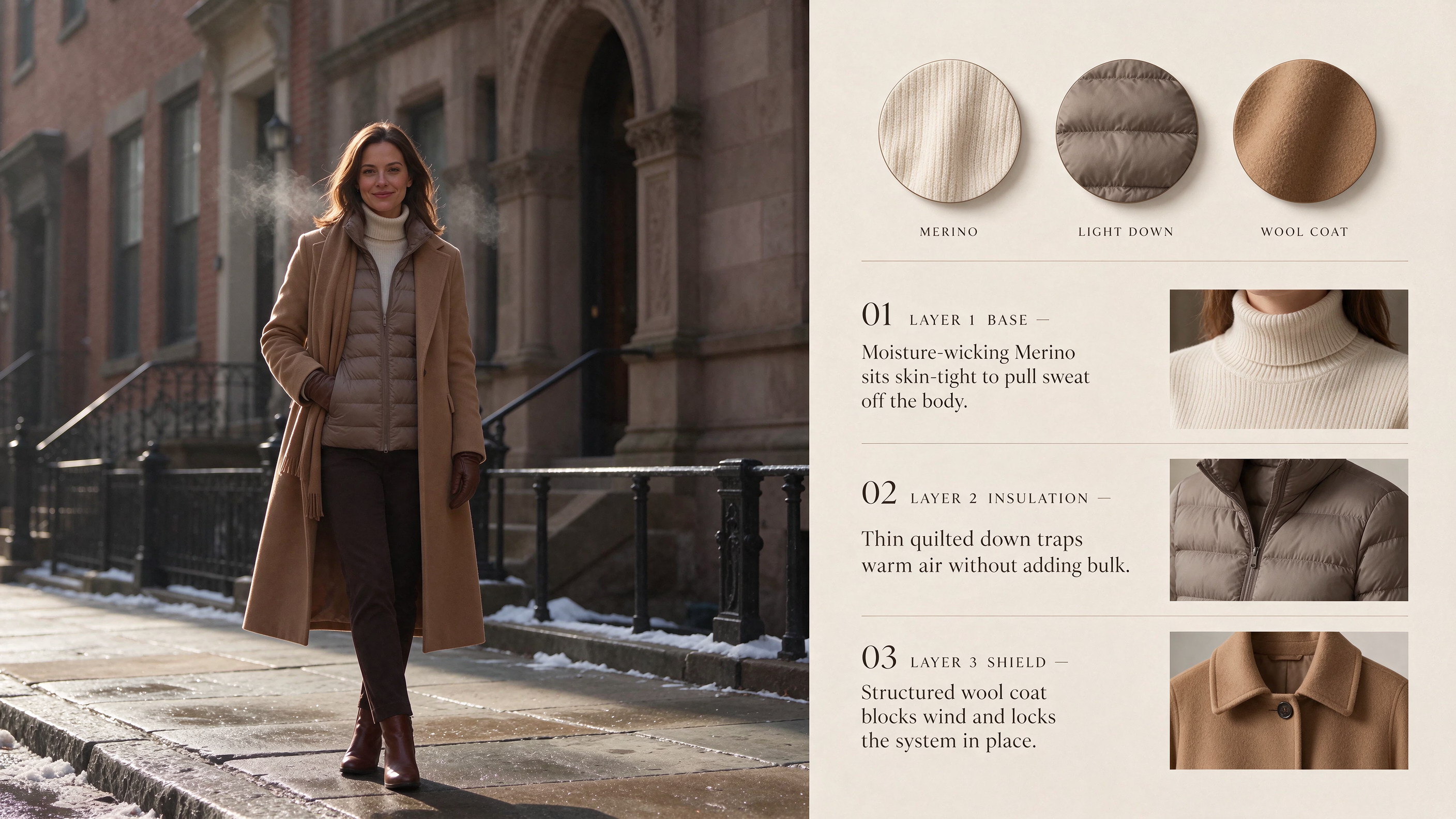
Base layer: This is the layer that touches your skin, and its only job is to move sweat away before it cools against your body. Wet skin loses heat roughly 25 times faster than dry skin, which is why cotton T-shirts feel fine in summer but dangerous in winter. The best base layers are made from merino wool, synthetic blends, or silk. Merino is our top pick for everyday wear because it resists odor, stays warm when damp, and feels soft against the neck and wrists. Synthetics dry fastest and cost less, but they can retain smell after repeated use. Silk is the thinnest and most luxurious option, ideal for office days when you do not want any texture showing under a fitted blouse.
Fit: Skin-tight to body-skimming. Loose fabric traps air that your body has to heat repeatedly.
Weight: Lightweight or midweight for 20°F active commutes; heavyweight only for static outdoor exposure.
Neckline: Crew, scoop, or turtleneck depending on what sits on top. A turtleneck base under a V-neck sweater adds polish.
Price expectation: Quality merino base layers range from $75 to $150. Synthetics start around $35. Silk starts around $60.
Mid layer: This is where warmth actually happens. The mid layer traps the air heated by your body and holds it close to your core. Light down sweaters, thin fleece pullovers, and fine-gauge wool sweaters all work. The key is light. A 800-fill down sweater with a slim cut can provide more warmth per ounce than a thick cable knit, and it compresses easily under a coat. Fleece breathes better than down during high-output activities. Wool sweaters add texture and look presentable if you remove your coat indoors.
Fill power: For down, look for 650-fill or higher. 800-fill is the sweet spot for warmth-to-weight.
Fleece weight: 100-weight fleece is thin enough to layer; 200-weight works as a standalone mid layer.
Wool gauge: Fine-gauge merino or cashmere layers smoothly; chunky knits belong in the wrong column.
Silhouette: Slim or tailored. The mid layer should not balloon under your outer coat.
Outer layer: The shield. This layer blocks wind, sheds snow or light rain, and gives the outfit its visible shape. A knee-length structured wool coat is our go-to for city dressing because it reads as intentional and put-together while still providing enough room for the layers beneath. Technical shells are better for true outdoor conditions but can look too sporty for the office. If you need help choosing the right silhouette, see our coat guide for the best structured and insulated options for 2026.
Fabric: Wool, wool-cashmere blend, or technical waterproof-breathable shell.
Length: Hip to knee. Longer coats protect more of the leg; shorter coats allow more movement.
Fit: Should fit over the base plus mid layer without pulling at the shoulders or closing at the bust.
Details: Storm flaps, adjustable cuffs, and a high collar add real protection.
Wrong vs Right: Same 20°F, Two Silhouettes
Let us look at the same woman on the same 20°F morning. In one version, she is wearing a cotton camisole, a thick cotton sweater, a chunky cardigan, and an oversized puffer. In the other, she is wearing a merino turtleneck base layer, a thin down sweater, and a long wool coat. Both can be warm for a few minutes. Only one stays warm, moves well, and looks polished.
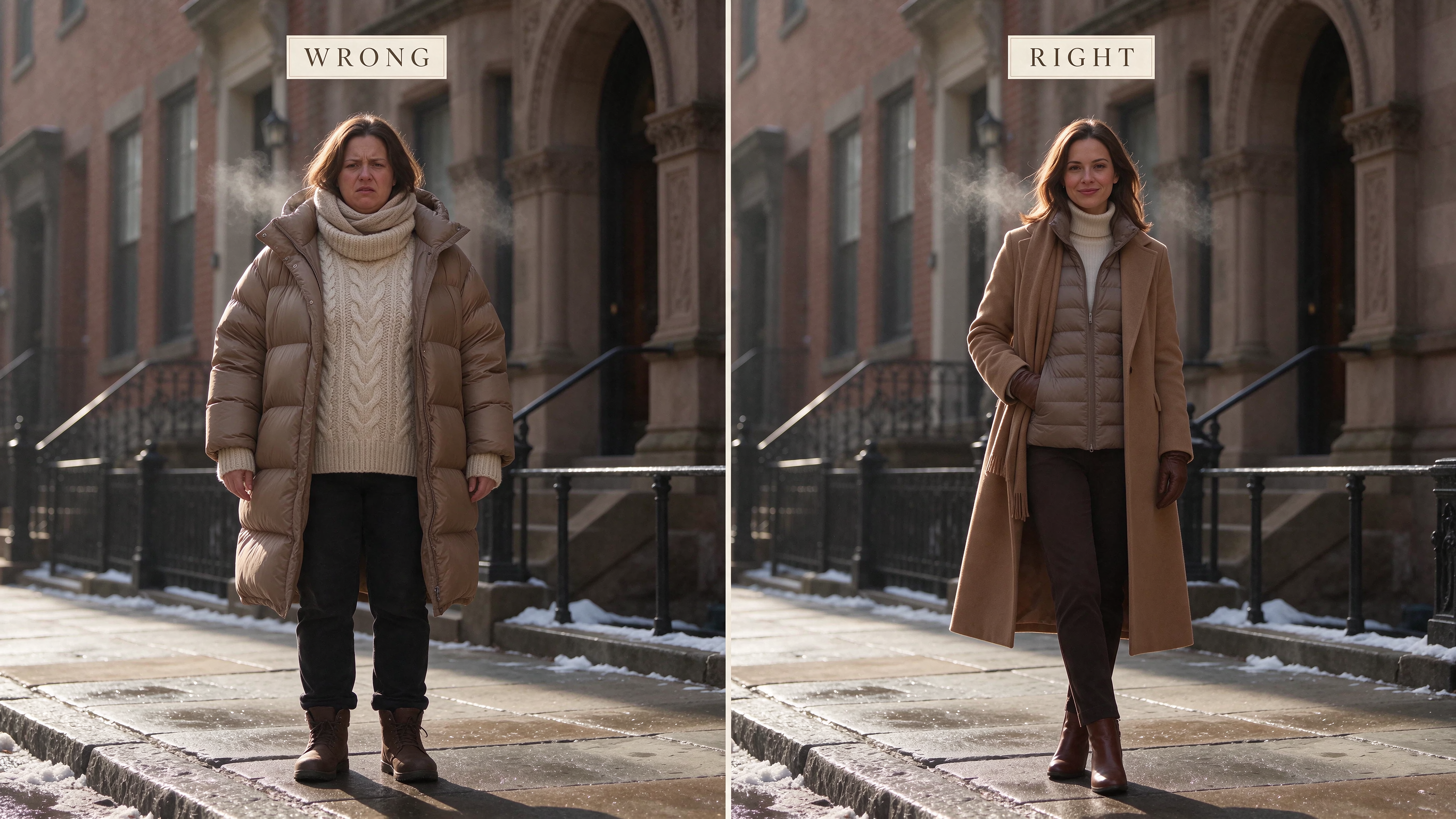
The wrong formula:
Cotton tank or tee as the base
Thick cable-knit sweater
Chunky cardigan or second sweater
Oversized puffer coat
Total pieces: four to five
Result: compressed insulation, trapped sweat, restricted arms, silhouette like a sleeping bag
The right formula:
Merino wool turtleneck base layer ($95)
800-fill down sweater or light fleece ($140)
Knee-length structured wool coat ($320)
Total pieces: three
Result: three lofted air barriers, breathable moisture management, full range of motion, sleek silhouette
The cost difference is real but the cost-per-wear favors the right formula. A $320 wool coat worn four months a year for five years costs about fifty cents per wear. Three cheap sweaters that pill, stretch, and lose shape in one season cost more in the long run. More importantly, the right formula is repeatable. Once you own the pieces, you can swap the mid layer for a fleece on active days or a silk base layer on dressier days without changing the underlying system.
The Office Commute: 20°F Outside, 72°F Inside
The commute is where most layering systems fall apart. You are outside in wind chill that feels like 12°F, then inside a subway car that feels like 78°F, then in an office that is technically 72°F but feels drafty by the window. If you cannot remove layers cleanly, you spend the day either shivering or sweating.
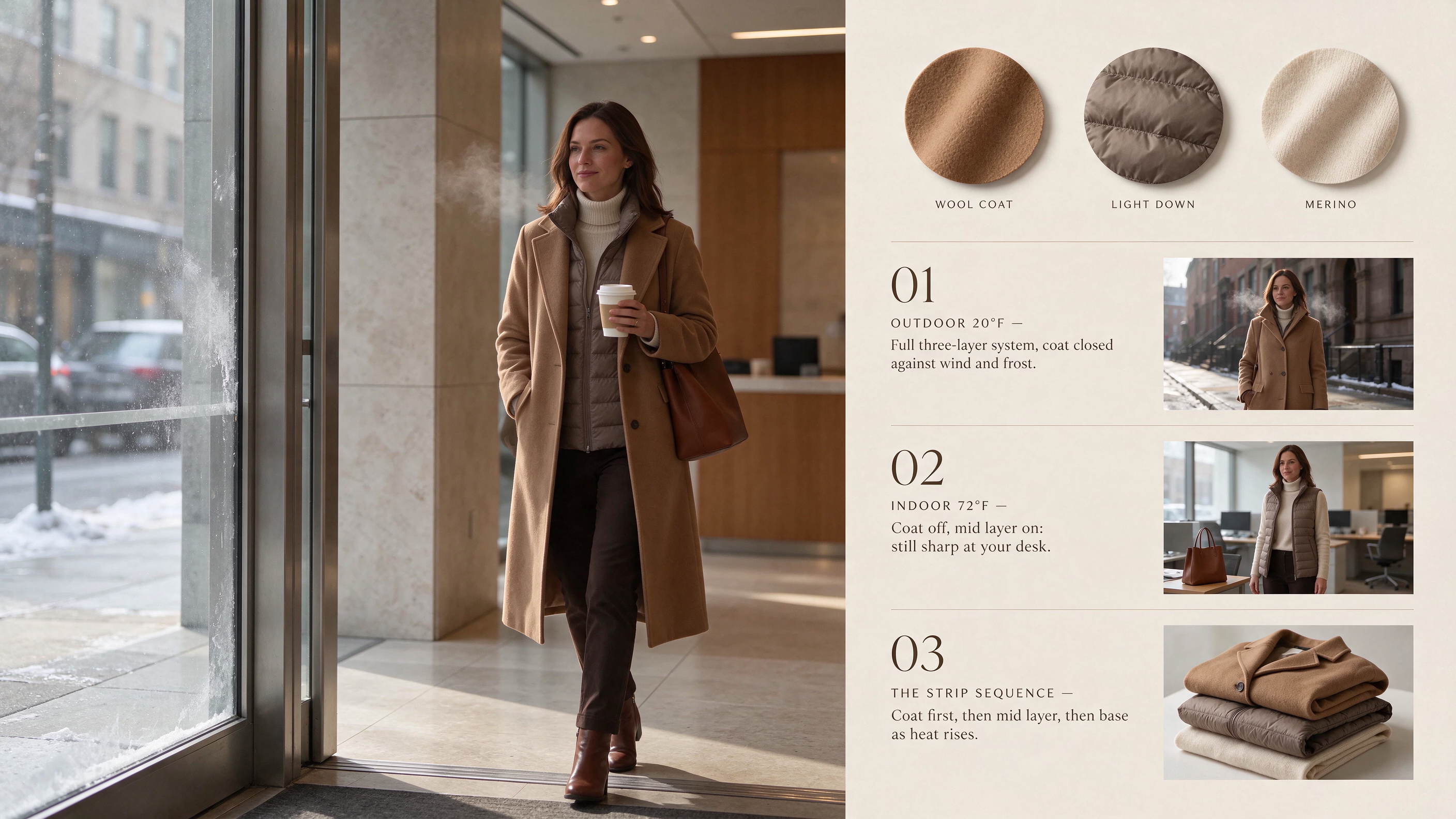
Our tested commute formula for 20°F starts with a thin merino base layer in a neutral color. Over that goes a fine-gauge wool sweater or a quilted down liner that looks intentional when the coat comes off. The outer layer is a structured wool coat in camel, charcoal, or navy. The coat comes off as soon as you enter the building. The mid layer stays on at your desk. If the office overheats, you can strip the mid layer too and still have a base layer that resembles a fitted long-sleeve top.
The strip sequence matters. Put layers on in this order: base, mid, outer. Remove them in reverse: outer, mid if needed, base only if you are truly overheated. Never put the outer layer back on over a damp mid layer. If you have been walking fast and sweating, let the mid layer air out for a few minutes before adding the coat again. This small habit keeps you warmer than any single expensive piece.
For the office mid layer, choose something that does not look like outdoor gear. A fine merino crewneck, a quilted vest over a blouse, or a thin cashmere cardigan all work. Avoid hoods, loud logos, or shiny technical fabrics unless your office dress code is casual. The goal is to look like you planned your outfit, not like you are camping between meetings.
Weekend Cold: From Errands to Apres-Ski
Weekend dressing is more forgiving than office dressing, but the same principles apply. You still need a base layer that moves moisture, a mid layer that traps heat, and an outer layer that blocks wind. The difference is that the mid layer can be more casual and the outer layer can be more technical.
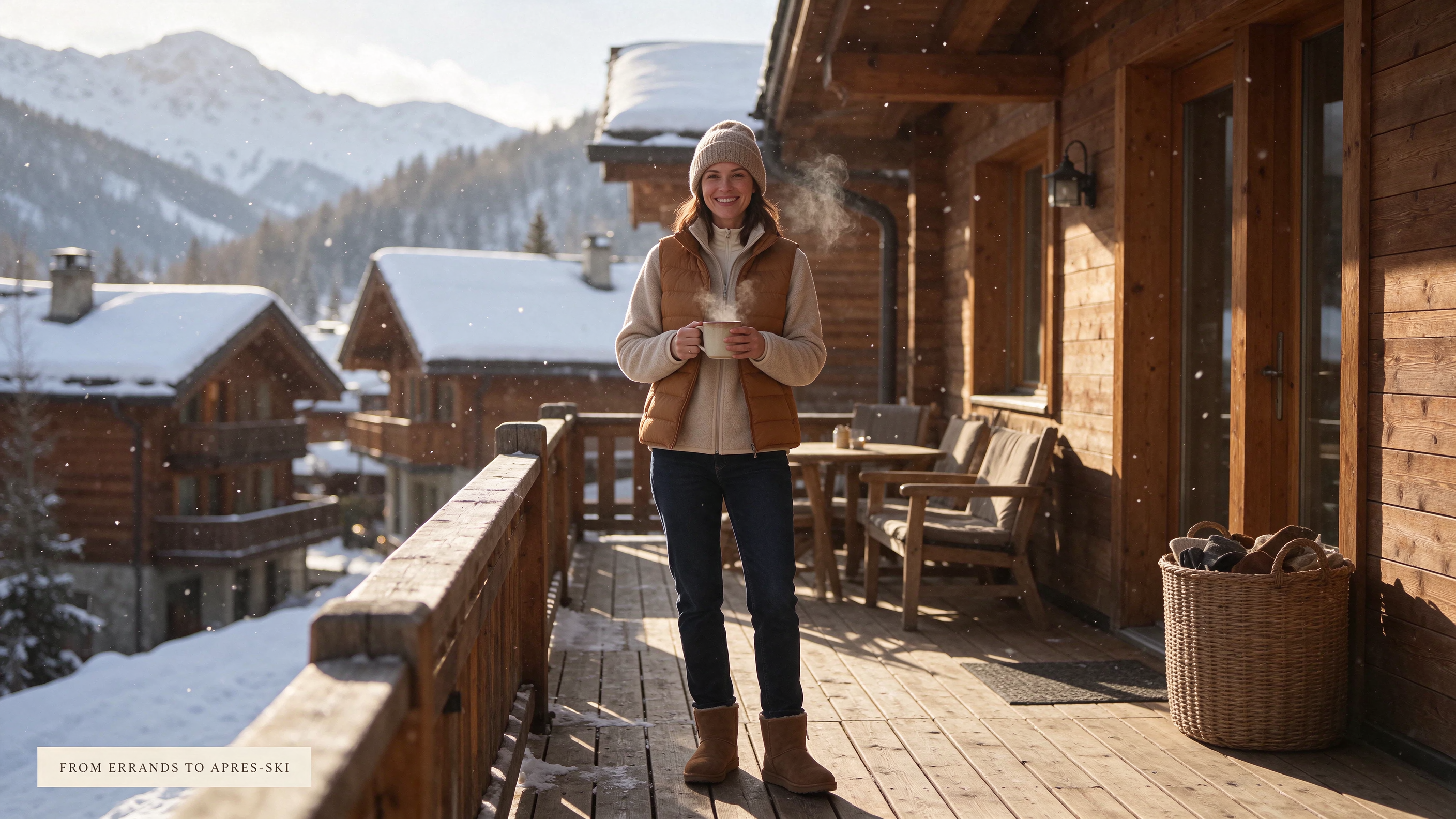
Errand formula: synthetic or merino base layer, 100-weight fleece pullover, water-resistant parka or insulated barn coat, straight-leg jeans or lined trousers, wool socks, and ankle boots. This outfit handles walking, driving, and standing in line without overheating. The fleece breathes well during bursts of activity, and the parka blocks wind while you wait for the car to warm up.
Apres-ski formula: merino long-sleeve base, thin down sweater or fleece, puffer vest, beanie, and a technical shell or wool cocoon coat. This is the look that works from the ski-lift line to the lodge fireplace. If you are heading straight to a New Year's Eve party from the mountain, see our guide to NYE party dress layering for how to turn the same base layer into an evening silhouette.
Cold safety matters when you are spending real time outside. The NOAA cold safety guidance reminds us that wind, moisture, and prolonged exposure can lead to hypothermia even when the temperature is above 0°F. Layering is not just about style. It is about keeping your core temperature stable. If you are wet from snow or sweat, change your base layer as soon as you are indoors. A dry thin layer is warmer than a damp thick one.
Choosing a Base Layer: Merino vs Synthetic vs Silk
The base layer is the most important piece because it is the only layer that touches your skin for the entire day. Get this wrong and even the best coat will feel clammy. We tested three base layers during a Boston cold snap: a 100% merino wool crewneck, a polyester-synthetic blend, and a silk-cashmere long-sleeve top. Each performed well in different conditions.
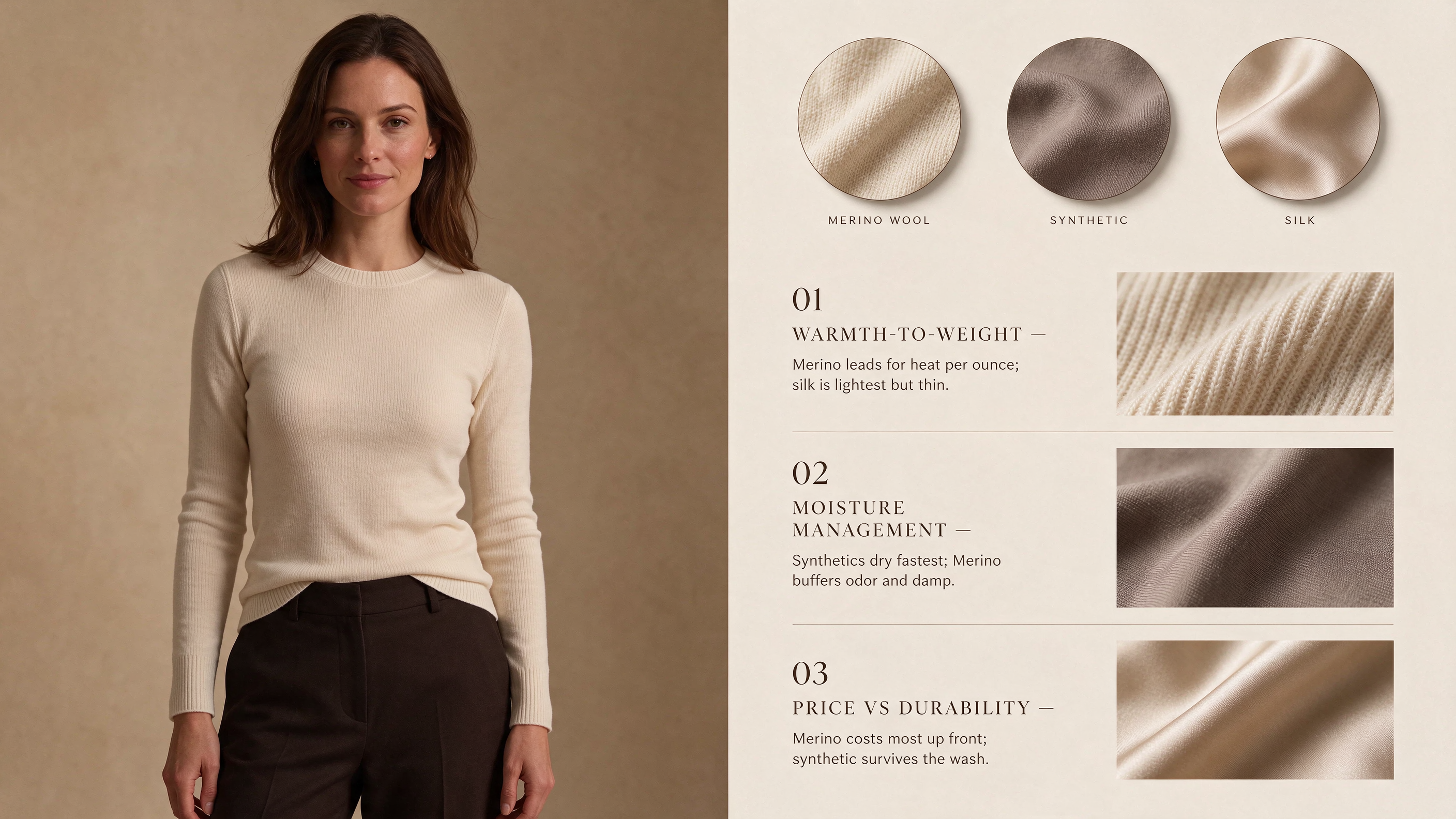
Merino wool: The all-rounder. It insulates when damp, resists odor for multiple wears, and feels soft rather than scratchy. In our test, a 150-gram merino base kept us comfortable during a 22°F walk and did not smell after three commutes. The downside is price and care. Expect to pay $75 to $150, and wash on gentle or hand wash to prevent shrinkage. Look for 17.5-micron fiber or finer for comfort against the neck.
Synthetic: The value pick. Polyester blends dry faster than merino and cost half the price. They are ideal for high-output activities like shoveling snow, hiking, or chasing a toddler through a playground. The trade-off is odor retention. After one sweaty commute, a synthetic base layer needs washing. For a budget rotation, buy two synthetics at $35 each and alternate days.
Silk: The invisible layer. Silk base layers are extremely thin and smooth, making them perfect under fitted blouses, silk shirts, or dresses. They provide modest warmth and feel luxurious, but they are not as durable or moisture-wicking as merino or synthetic. We recommend silk for office days when the base layer is more about smoothness than serious insulation, or as a second skin under party outfits. Prices range from $60 to $120.
Material | Warmth-to-weight | Moisture management | Price vs durability | Best for |
|---|---|---|---|---|
Merino wool | Excellent | Very good | Higher price, long lifespan | Daily commute, odor control |
Synthetic | Good | Excellent | Budget-friendly, shorter lifespan | Active weekends, workouts |
Silk | Moderate | Fair | Mid price, delicate | Office, layering under dresses |
Our final recommendation: own at least one merino base layer for the coldest days, one synthetic for active days, and one silk for dressy days. That three-piece rotation covers every winter scenario without adding bulk. For milder weather and the transition into spring, our transitional layering guide explains how to keep the same base-mid-outer logic with lighter fabrics.
FAQ
Is cotton bad for winter layering?
Yes, for your base layer. Cotton absorbs sweat and holds it against your skin. Once damp, cotton loses almost all insulating power and can actually pull heat away from your body. Save cotton for outer shirts or mid layers in very dry, mild conditions, and keep it away from your skin on 20°F days.
How many layers do I need for 20°F?
Three intentional layers are usually enough for 20°F: a moisture-wicking base, an insulating mid layer, and a wind-blocking outer layer. If you are sedentary outside, add a thicker mid layer or a base layer weight. If you are active, you may need only a base and a light shell.
Can you layer without looking bulky?
Absolutely. The trick is choosing thin, high-performance fabrics rather than thick casual knits. A merino base, a slim down sweater, and a structured coat create a sleek silhouette while keeping you warmer than multiple bulky sweaters.
What is the best base layer for sensitive skin?
Fine merino wool with a fiber diameter of 17.5 microns or less is usually comfortable for sensitive skin because it is softer than traditional wool. If you are very reactive, silk is the gentlest option, followed by smooth synthetic blends. Avoid coarse wool or recycled synthetics with rough seams.
Try the DLOOK virtual try-on experience to see how these outfits look on you, discover your perfect colors, and effortlessly manage your closet and looks.