By DLOOK Fashion Editorial Team · Updated October 2026 · 8 min read
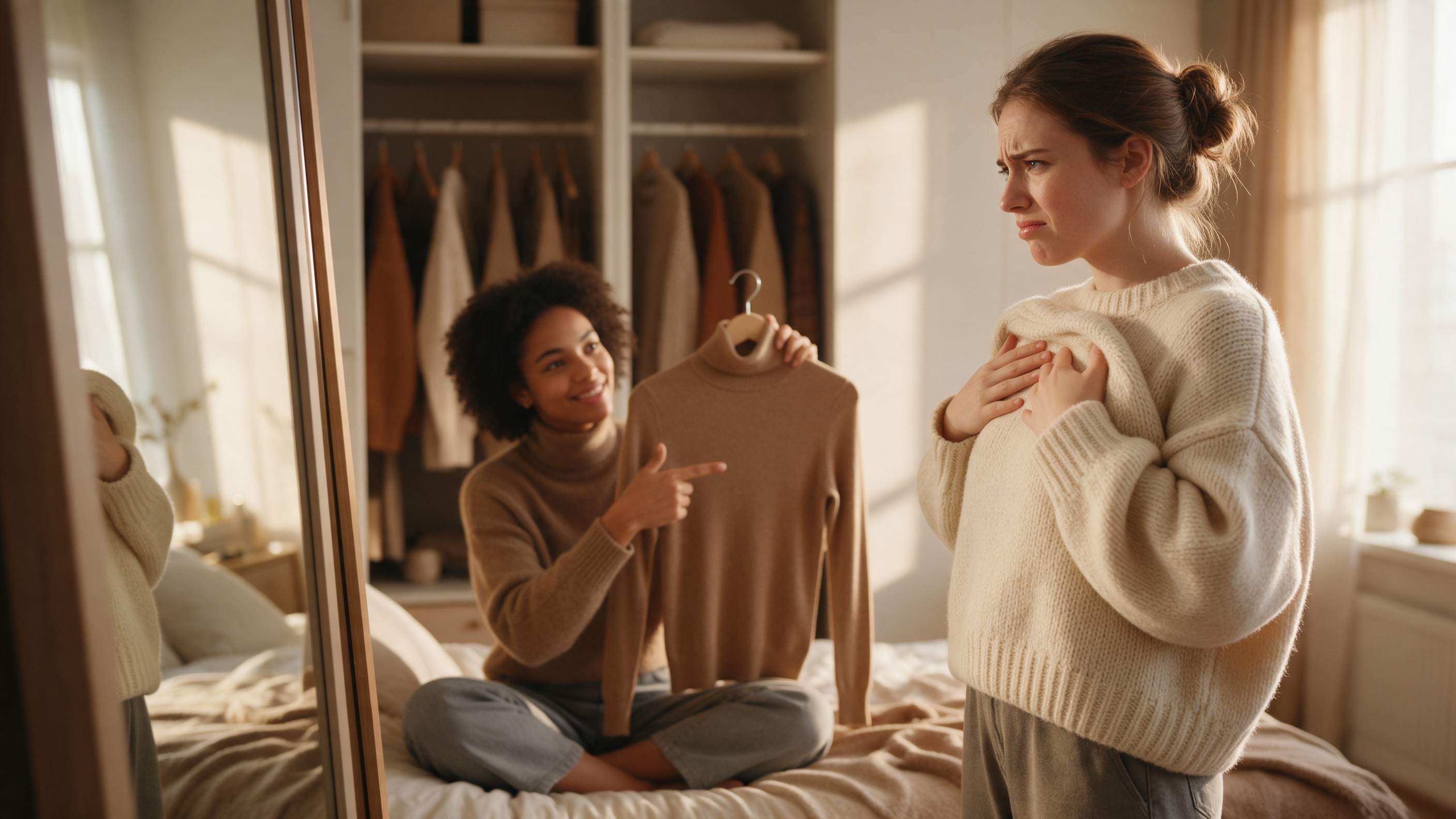
There is a moment every fall when you pull your favorite sweater out of storage, put it on, and catch your reflection by accident. Instead of the effortless, catalog-worthy look you imagined, you see… a rectangle. Shoulders gone. Waist gone. Neck swallowed by ribbed wool. If you have ever asked yourself why do I look bulky in sweaters?, you are in very good company — and the answer almost never has anything to do with your body. It has to do with the neckline.
Here is the truth most styling advice skips: the neckline of a sweater decides where the eye lands, how long your neck looks, how wide your shoulders appear, and whether the knit reads as intentional volume or accidental bulk. A turtleneck that smothers a short neck will look editorial on someone else. A boat neck that widens broad shoulders will look like pure Parisian chic on a narrow frame. Same sweater, completely different outcome.
That is why the smartest sweater outfits of 2026 are built neckline-first. In this guide, we break down exactly how to style the four necklines that dominate this season — turtleneck, crew (round) neck, boat neck, and off-shoulder — with concrete, no-bulk styling rules for each one. You will learn how to balance proportions, which layers actually slim instead of stack, how to choose the right neckline for your neck length and shoulder width, and the five universal principles that keep any knit looking sleek. Whether your closet leans minimalist or maximalist, by the end of this guide you will be able to put on any sweater and know — before you leave the house — that it works.
In This Guide
1. Turtleneck Sweaters: Sleek, Not Suffocating
The turtleneck is the winter equivalent of a perfect white tee — foundational, endlessly restylable, and quietly sexy in the way it elongates the entire upper body. Fashion historians trace the silhouette from medieval practical wear to mid-century icons like Audrey Hepburn and Steve McQueen, and it still anchors modern cold-weather wardrobes; you can read the full evolution on Wikipedia's turtleneck entry. Every year, as temperatures drop, search interest in turtlenecks climbs sharply toward its holiday-season peak — and 2026 is no exception. The difference between "chic literary heroine" and "lost in the knit" comes down to a handful of fit and proportion decisions.
Why turtlenecks can look bulky — and how to fix it
The problem: a high collar adds visual weight exactly where most of us are widest — the shoulder and bust line. Stack a chunky gauge, drop shoulders, and a hip-length hem on top, and the eye reads one continuous block of fabric.
The fix starts with the neck itself. Match the collar height to your neck length (more on that in the body-type section below). If you have an average or shorter neck, look for a cowl or funnel neck — both fold or stand away from the throat, creating a soft vertical opening that reads as length without exposing skin. If you love a full fold-over turtleneck, keep the fold slim (one neat roll, not three) so the collar adds height without adding width.
Keep the sleeves fitted. This is the single most underrated anti-bulk trick for turtlenecks. A body-skimming sleeve — especially one that ends at the wrist bone, not swallowing your hand — signals that the sweater fits you, rather than you borrowing someone else's. If the body of the sweater is intentionally oversized, fitted sleeves are what keep the silhouette deliberate.
Tuck with intention. A full tuck of chunky knit into jeans creates a muffin of fabric at the waistband — the classic bulk trap. Instead, use the front tuck (also called a French tuck): tuck only the front center inch or two of the hem into the waistband and leave the sides and back loose. You get waist definition, a clean vertical line at the front, and zero bunching. For very chunky knits, a bra tuck — tucking the front hem under the band of your bra — achieves the same effect without touching the waistband at all.
Build a long vertical line. A turtleneck in the same color family as your bottoms (an all-black, all-cream, or all-camel column) creates one unbroken line from chin to toe. Monochrome turtleneck outfits are the oldest slimming trick in the book because the eye travels vertically instead of stopping at every horizontal seam.
How to style a turtleneck: outfit formulas for 2026
The party formula (Look 1): a cream or ivory chunky turtleneck paired with dark tailored bottoms — think black wide-leg trousers, a charcoal midi skirt, or dark straight jeans. The light-on-top/dark-on-bottom contrast keeps the chunkiest knit feeling festive instead of heavy, and ivory against dark wool instantly reads "holiday party" without a single sequin. Add a long pendant necklace or sleek gold hoops and pointed-toe boots to sharpen the look.
The office formula: fine-gauge black turtleneck + high-waisted trousers + loafers + a structured blazer worn open. The blazer lapels create a long V over the collar, which mimics the neck-lengthening effect of a V-neck.
The weekend formula: fitted white turtleneck + straight-leg light denim + ankle boots + a long wool coat. Clean, warm, and never bulky because every piece sits close to the body.

Turtleneck styling by body type
Long neck: You can wear everything — full fold-over collars, chunky cowls, even a mock neck layered under a crew. Turtlenecks are your signature; add a collar necklace to fill extra space if a very tall collar feels bare.
Short neck: Choose mock necks and slim fold-overs; skip the triple-roll. Wear hair up or swept back to reveal the full line of the collar, and add vertical structure with long earrings or an open jacket.
Broad shoulders: Pick turtlenecks with raglan or drop shoulders (no shoulder seams) and a finer gauge. The collar draws the eye up and inward, away from the shoulder line.
Petite frames: Keep the hem at or just below the hip bone and always define the waist with a front tuck or belt. Cropped turtlenecks with high-waisted bottoms are proportion magic.
Want to test these turtleneck proportions against your own closet before buying? Try the pieces on virtually with DLOOK to see which collar height flatters your neck length — no fitting room required.
2. Crew Neck Sweaters: The Layering Workhorse
The crew neck — also called a round neck — is the most common sweater silhouette in America, and for good reason: it sits at the base of the neck, works under blazers, over button-downs, and with every jacket you own, and it flatters more neck and shoulder combinations than any other cut. It is also the neckline most likely to look "fine but forgettable," which is its own kind of styling failure. The goal with a crew neck in 2026 is not to hide it — it is to give it structure.
Why crew necks can look bulky — and how to fix it
The problem: the high, round collar shortens the neck visually and, when combined with a relaxed body, can make the whole torso read square and dense. Crew necks also tempt us into lazy layering — a thick tee underneath, a scarf on top — until three necklines compete at the throat.
Create a V over the crew. The fastest way to de-bulk a crew neck is to add a long vertical opening over it: an unbuttoned blazer, an open longline cardigan, a denim jacket left undone, or a long pendant necklace that drops below the bust. Any of these draws a V shape against the round collar and restores the neck length the collar took away.
Master the collar-out layer. A crisp shirt collar, a silk band-collar blouse, or even a thin turtleneck layered underneath a crew neck adds structure and breaks up the expanse of knit. Keep the underlayer thin — tissue-weight poplin, not flannel — so the layer adds architecture, not inches. Let the collar, cuffs, and a hint of shirttail show; those small horizontal details read as intentional styling rather than bulk.
Watch the shoulder seam. A crew neck with a shoulder seam that lands at or slightly past your natural shoulder looks modern; one that lands halfway down your upper arm reads sloppy and adds width. If you love an oversized crew, make sure the neckline itself still sits close to the base of your throat — a giant body with a tight collar keeps the look styled rather than sloppy.
Choose the hem strategically. Hip-length crews look best half-tucked or fully tucked into high-waisted bottoms; cropped crews (ending at the natural waist) are made for high-rise trousers and skirts. The only hem that reliably adds bulk is the in-between one that lands at the widest point of the hips with no tuck — either commit to the tuck or commit to a longer tunic length with slim bottoms.
How to style a crew neck: outfit formulas for 2026
The striped classic: a cream-and-navy striped crew neck (striped knits are having a real moment — crew neck sweater searches with "stripe" have been climbing) + straight dark jeans + loafers + a trench. Timeless, and the stripes add vertical rhythm.
The menswear mix: fine merino crew in camel or grey + white button-down with collar and cuffs out + pleated trousers + belt. The shirt's vertical placket line cuts the roundness of the collar perfectly.
The soft weekend: slouchy cotton crew + satin midi skirt + sneakers. The contrast between the matte, structured knit and the fluid, shiny skirt is what keeps this from looking bulky — more on silhouette contrast in the universal rules below.
Crew neck styling by body type
Long neck: Crew necks can handle a little extra coverage — feel free to add a slim scarf or a mock-neck base layer underneath.
Short neck: Keep the collar opening wide and shallow (a "modified crew"), show some collarbone-adjacent skin, and always add a V-shaped layer or long necklace on top.
Broad shoulders: Raglan or dolman-sleeve crew necks remove the horizontal seam entirely; also try crews with textured or darker bodies and lighter sleeves to draw the eye inward.
Narrow shoulders: Classic set-in shoulder seams and slightly padded or structured shoulders are your friend — the crew collar frames the face while the seams build a balanced line.
Full bust: Size for the bust and have the waist taken in if needed; a boxy crew that pulls across the chest adds visual bulk fast. Deep-armhole crews (with a tank underneath) also work beautifully.
If you are rebuilding your sweater drawer this season, DLOOK's closet tools help you catalog what you own and spot which necklines are missing — so every new purchase earns its hanger.
3. Boat Neck Sweaters: Parisian Width, Zero Bulk
The boat neck — known in French as the bateau neckline — runs horizontally from shoulder to shoulder, following the line of the collarbone. It was popularized by Coco Chanel in the 1910s and became a signature of 1950s and 60s elegance, from Audrey Hepburn's Breton stripes to Jackie Kennedy's knit sets; the style's history is documented on Wikipedia's bateau neckline entry. In 2026 the boat neck is back in a big way, and it happens to be one of the most anti-bulk necklines that exists — if you style it correctly.
Why boat necks can look bulky — and how to fix it
The paradox: the boat neck's horizontal line can widen broad shoulders — but because it sits wide and shallow, it also exposes the collarbone and the graceful slope of the shoulder, which keeps the look airy rather than heavy. The bulk trap is not the neckline itself; it is what you pair with it.
Keep the knit close to the body. A boat neck is at its best in a fine-to-medium gauge with a slim fit through the torso. Because the neckline already adds horizontal width up top, the body of the sweater should follow the body's natural line. A slouchy, oversized boat neck on top of wide-leg everything erases your shape entirely. Instead: fitted boat-neck knit + fluid or structured bottom = the classic Parisian proportion.
Let the collarbone breathe. The whole point of the boat neck is the expanse of skin (or thin base layer) between chin and chest. Avoid chunky scarves knotted at the throat and collared shirts underneath — both cancel the neckline's airy effect. If you need warmth, a slim coat or jacket worn open over the shoulders preserves the line.
Handle the bra strategy. A wide neckline demands a strap solution: a strapless bra, a bra with convertible straps, or a delicate camisole underneath in winter. Visible, clashing straps break the clean horizontal line and instantly cheapen the look.
Mind the sleeve. Three-quarter sleeves and slim long sleeves both work; what fights the neckline is a very full bishop or balloon sleeve on a wide neck — that combination adds volume at two points. If you love drama, choose one: wide neck or statement sleeve, never both.
How to style a boat neck: outfit formulas for 2026
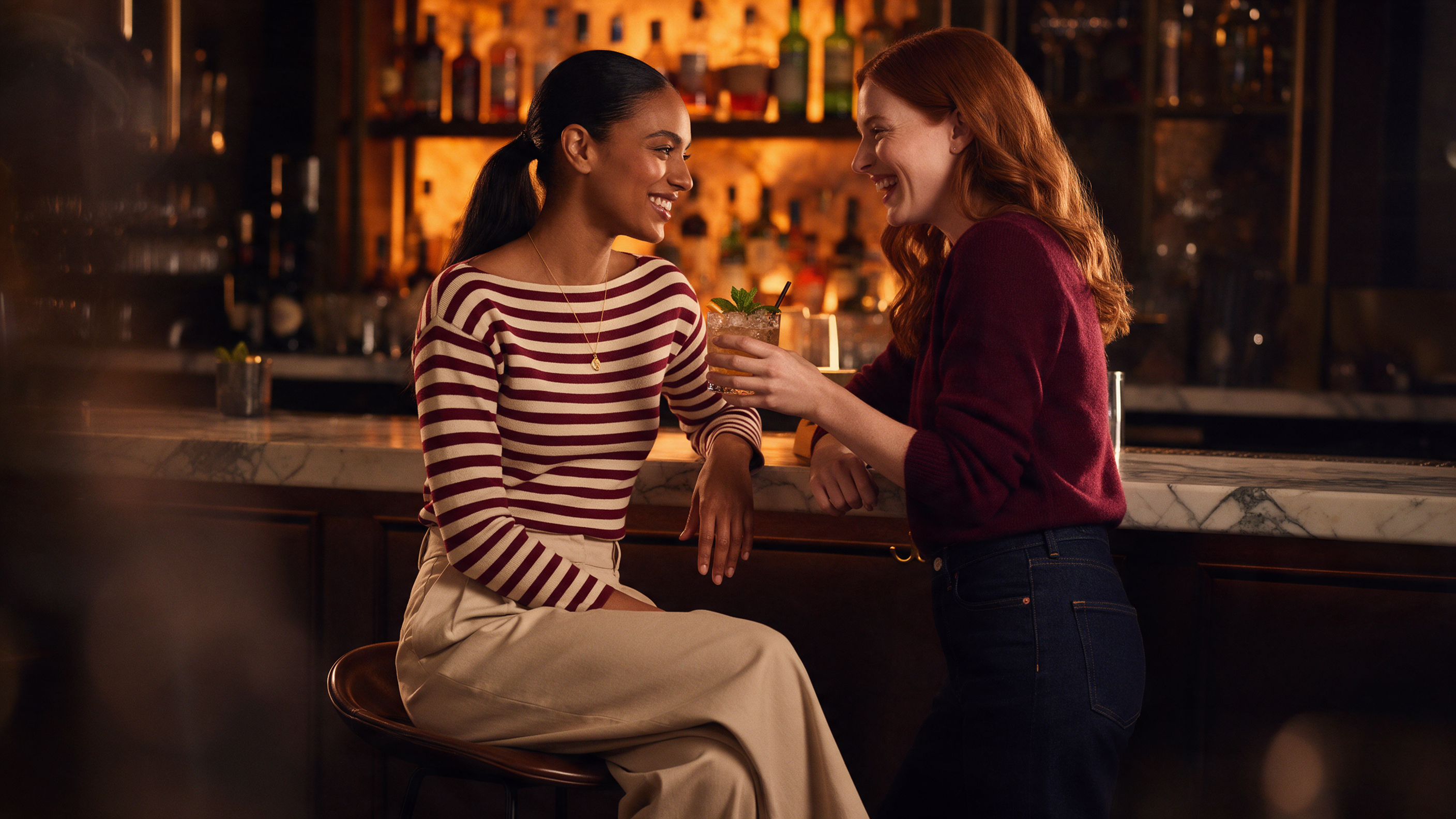
The dinner date (Look 2): a burgundy boat-neck striped knit with neutral bottoms — camel trousers, a cream satin slip skirt, or straight ivory jeans. Burgundy is the sleeper hero color of the season: richer than red, warmer than black, and endlessly flattering against winter skin. The stripe keeps the wide neckline graphic, while the neutral bottom anchors the look. Add gold hoops and a low bun for an easy restaurant-ready outfit.
The office formula: navy fine-gauge boat neck + grey pleated trousers + pointed flats + a long pendant that dips into the neckline's open space.
The off-duty formula: breton-striped boat neck + straight-leg jeans + ballet flats + a crossbody bag. The stripe-and-boat-neck combo is the oldest French-girl trick in the book and still works every single time.
Boat neck styling by body type
Narrow or sloped shoulders: The boat neck is your best friend. Its horizontal line visually builds width exactly where you want it, and the exposed collarbone draws attention upward. This is the single most flattering neckline for narrow-shouldered frames.
Broad shoulders: Skip the true boat neck, or cheat it: choose a neckline that stops a finger's width inside the shoulder seam (a "modified boat"), which hints at the shape without adding width. V-necks and scoop necks will serve you better.
Short neck: Surprisingly good — the wide, shallow opening reveals more of the chest and shoulder than a crew, which lengthens the neck visually. Keep the hair off the neckline with an updo or tucked-behind-the-ears styling.
Small bust: Boat necks drape beautifully on smaller chests; try a draped or cowled boat neck for extra softness.
Full bust: A boat neck can work if the sweater is cut with enough ease through the chest and the hem hits at the high hip — never tucked tightly into a waistband, which pulls the neckline open too far.
4. Off-Shoulder Sweaters: Bare Skin Balances Volume
The off-shoulder (or bardot) sweater folds the neckline below the shoulders, framing the collarbone and décolletage. It reads as evening-leaning and a little romantic, which is exactly why it can look overdone — or, worse, bulky: a big cozy knit plus a big exposed expanse of skin can feel like two ideas fighting each other. In 2026, the off-shoulder sweater works when the rest of the outfit whispers.
Why off-shoulder sweaters can look bulky — and how to fix it
The problem: off-shoulder styles often combine three bulk factors at once — a relaxed body, a wide neckline, and a thick knit. Add the elasticized band that holds the sweater below the shoulders, and the whole thing can read as heavy and costume-y.
Let the skin do the slimming. The exposed shoulder and collarbone are your built-in anti-bulk device: bare skin breaks up the mass of knit and signals intention. Protect that negative space. Keep the décolletage area free of chunky necklaces, scarf knots, and high-neck underlayers. If you want jewelry, choose one delicate piece — small hoops, a thin pendant — that complements rather than competes.
Balance with a fitted lower half. Because the top is relaxed and voluminous, the bottom should be sleek: straight or skinny jeans, a pencil skirt, tailored trousers. The contrast between the soft, slouchy sweater and a clean leg line is the entire formula. Wide-leg trousers with an off-shoulder chunky knit can work on tall frames, but for most of us, one voluminous piece per outfit is the ceiling.
Try the cold-shoulder compromise. If a full off-shoulder feels like too much (or too chilly), a cold-shoulder cut — with strategic shoulder cutouts — gives you the same skin-against-knit contrast while keeping the neckline anchored. It is also far easier to wear with a coat.
Mind the band. The elastic or ribbed band that holds an off-shoulder sweater in place should sit snugly but not dig — if it cuts in, it creates a horizontal squeeze line that works like a visual divider. Check the fit seated, raising your arms, and reaching forward; the band should stay put without pinching.
How to style an off-shoulder sweater: outfit formulas for 2026
The date-night formula: fitted off-shoulder ribbed knit (fine gauge, body-skimming) + dark high-rise jeans + heeled boots + a clutch. The ribbing reads sleek, the shoulders read romantic.
The transitional formula: chunky off-shoulder cream knit + leather or faux-leather leggings + loafers. The matte shine of leather against soft wool is texture contrast at its best — and leggings keep the volume in check.
The polished formula: off-shoulder fine knit tucked into a satin midi skirt + mules. Tucking a fitted off-shoulder knit defines the waist and lets the skirt's drape balance the exposed neckline.
Off-shoulder styling by body type
Narrow shoulders: Excellent — the wide folded neckline adds the illusion of width, and bare shoulders always photograph beautifully on slighter frames.
Broad shoulders: Approach with care. A full bardot band lands right across the widest point. Instead, look for asymmetric one-shoulder knits, which add the skin-versus-knit drama on a diagonal that flatters broader frames.
Long or short neck: Both work, because the neckline sits far from the throat. Short necks especially benefit — nothing compresses the neck at all. Just keep the collar area clean and the hair up or to one side.
Petite: Choose cropped or waist-length styles and always define the waist. A long, untucked off-shoulder tunic will overwhelm a small frame.
Not sure whether bardot or one-shoulder flatters your frame more? Snap a photo and preview both necklines on yourself with DLOOK before you commit.
5. Five Universal Rules to Never Look Bulky in Sweaters
Whatever the neckline, these five principles govern whether a sweater outfit reads sleek or stuffed. Editors at Who What Wear — one of the outlets that has defined everyday American styling for two decades — return to the same handful of proportion tricks season after season, and so do the runways documented by Vogue's fashion coverage. Strip away the trend cycles and the rules are remarkably stable:
Rule 1: One voluminous piece per outfit
Volume needs contrast. If the sweater is chunky, oversized, or boxy, every other element — bottoms, coat, shoes — should be fitted or structured. If the bottoms are wide and flowing, the sweater should be slim. Two voluminous pieces at once is the definition of bulky; zero voluminous pieces is the definition of forgettable. Aim for exactly one.
Rule 2: Every sweater outfit needs one waist signal
The eye needs to know where your torso ends. Give it a signal: a front tuck, a full tuck, a belt over the sweater, a cropped hem, or a jacket that nips in. You do not need a dramatic hourglass — you need one clear horizontal reference point anywhere near your natural waist. Without it, sweater + jeans = shapeless by default.
Rule 3: Layer thin over thick, never thick over thick
Bulk in layering comes from stacking equal weights. The correct order is thin against the body (tissue tee, silk cami, fitted turtleneck), chunky in the middle (your statement knit), and structured on top (wool coat, blazer, leather jacket). Each layer should differ in weight and texture so every layer reads as a deliberate choice. And when in doubt, remove a layer: a sweater plus a great coat beats a sweater plus a cardigan plus a coat, every time.
Rule 4: Create one long vertical line
Vertical lines elongate; horizontal lines widen. Build at least one unbroken vertical into every sweater outfit: an open jacket or coat, a long scarf worn loose (not looped), a column of one color from collar to shoe, a long necklace, or a shirt placket under a crew neck. Necklines are the start of this line — a turtleneck extends it upward, a V continues it downward.
Rule 5: Choose gauge and fit by contrast, not by mood
Fine-gauge knits (thin, smooth, merino-like) read as polished and slim; chunky-gauge knits (cable, rib, bouclé) read as cozy and voluminous. Neither is wrong — but each demands its counterpart. Fine gauge can handle volume elsewhere (full skirts, wide trousers). Chunky gauge demands sleekness elsewhere (straight jeans, leather leggings, slim skirts). The mistake is matching chunky with chunky because both pieces were comfortable that morning.
Rule 6: Respect the rise — hems and waistbands decide everything
A sweater hem that meets a low-rise waistband creates a wide, undefined band of fabric across the hip — one of the most common bulk traps we see. High-rise bottoms are the quiet hero of sweater season: they let you tuck, half-tuck, or meet a cropped hem exactly at the waist, keeping every proportion where it should be. As a rule of thumb, the higher the rise, the more freedom you have with the sweater's length and volume; the lower the rise, the more fitted and tucked the sweater needs to be.
A quick note on fabric: what the fiber does to the silhouette
Fiber changes drape, and drape changes bulk. Merino wool and fine cashmere hug the body and layer thinly, making them ideal for turtlenecks and fitted crews under jackets. Cotton knits hold their shape and can look boxy, but they are brilliant for structured cropped styles. Acrylic and bouclé tend to add visual (and literal) weight — gorgeous as the single statement piece in an outfit, risky as a layering base. Before buying, do the "pinch test": pinch the fabric at the side seam. If your fingers disappear into an inch of loft, that sweater is your one voluminous piece for the day. If the fabric folds into a thin ribbon, it will layer like a dream.
Internalize these rules and every section above becomes second nature: you will start choosing necklines by what balances the rest of the outfit instead of by what was on top of the drawer.
6. The Best Sweater Neckline for Your Body Type
Necklines are proportion tools. Use this table as a quick reference, then read the notes below for the reasoning — because the "why" is what lets you bend the rules with confidence. A quick self-check before you shop: stand in front of a mirror in a fitted tee, note where your neck meets your shoulders, where your shoulder bones end, and where your natural waist sits. Those three landmarks tell you more about which neckline will flatter you than any size label ever will.
Feature | Best necklines | Necklines to approach with care | Why |
|---|---|---|---|
Long neck | Turtleneck, mock neck, crew neck | Deep scoop (can look stretched) | High collars fill vertical space elegantly; your neck can carry coverage. |
Short neck | Boat neck, V-neck, scoop, funnel neck | Tall fold-over turtleneck, tight crew | Shallow and open necklines reveal more skin above the chest, visually lengthening the neck. |
Broad shoulders | V-neck, scoop, off-shoulder (asymmetric/one-shoulder), raglan crew | Boat neck, set-in-shoulder crew, puff sleeves | Diagonal and deep necklines draw the eye inward; horizontal lines exaggerate width. |
Narrow shoulders | Boat neck, off-shoulder, set-in crew, padded-shoulder styles | Deep V without structure, spaghetti straps with heavy knits | Horizontal and wide necklines build the shoulder line your frame is missing. |
Full bust | V-neck, wrap, deep scoop, fitted crew sized for the bust | Boxy cropped crews, double-breasted chunky layers | Vertical openings balance proportions; tight boxy cuts pull and add bulk at the chest. |
Petite frame | Cropped crew, fitted V, waist-length turtleneck | Tunic-length anything, oversized + untucked | Shorter hems and fitted bodies preserve your natural proportions. |
One important caveat: these are starting points, not laws. Bodies are combinations — you might have a short neck and broad shoulders, in which case a modified boat neck (narrower than the classic) or a soft funnel neck threads the needle. The real skill is testing combinations quickly. That is precisely where technology helps: use DLOOK's virtual try-on to preview how a turtleneck versus a boat neck changes your proportions in seconds, using the clothes already in your closet or pieces on your wishlist.
7. FAQ: Sweater Outfits, Answered
How do I wear a chunky sweater without looking bulky?
Pair one chunky piece with fitted everything else: straight or slim bottoms, fitted sleeves, and sleek shoes. Give the outfit one waist signal (front tuck or belt), keep the lower neckline area clean, and add one long vertical line with an open coat or a column of color. Chunky + chunky is the only real mistake.
What sweater neckline is best for a short neck?
Open and shallow necklines: boat neck, scoop, V-neck, or a soft funnel neck that stands away from the throat. Avoid tall fold-over turtlenecks, which compress the neck visually. Whatever you choose, wear hair up or swept back so the full neckline shows.
Can I wear a turtleneck if I have a large bust?
Yes — but choose wisely. A fine-gauge turtleneck sized to fit the bust (not squeezed into a smaller size) is sleek and elongating. Look for styles with some drape through the torso, and define the waist with a tuck or a belt. Chunky, cropped, boxy turtlenecks are the versions that add bulk on a full bust.
What's the best way to layer a crew neck sweater?
Thin under, structured over: a tissue-weight button-down with collar and cuffs out, a slim turtleneck, or a silk camisole underneath; an unbuttoned blazer, longline coat, or open jacket on top. Keep only one visible neckline competition at the throat, and add a long pendant to restore the vertical line the round collar removes.
Are off-shoulder sweaters still in style for 2026?
Yes — in refined form. The 2026 version is less "elasticized party top," more elegant bardot knit in rib or fine gauge, often asymmetric or one-shoulder. Style it with fitted bottoms and minimal jewelry so the exposed neckline stays the focus.
Still torn between two necklines for an event this week? Revisit the section that matches your frame, run your outfit through the five universal rules, and when in doubt, choose the neckline that shows a little more skin and the silhouette that tucks — those two defaults are right far more often than they are wrong.
Download the DLOOK app to virtual try on outfits, discover your perfect colors, and effortlessly manage your closet and looks.