By the DLOOK Fashion Editor Team
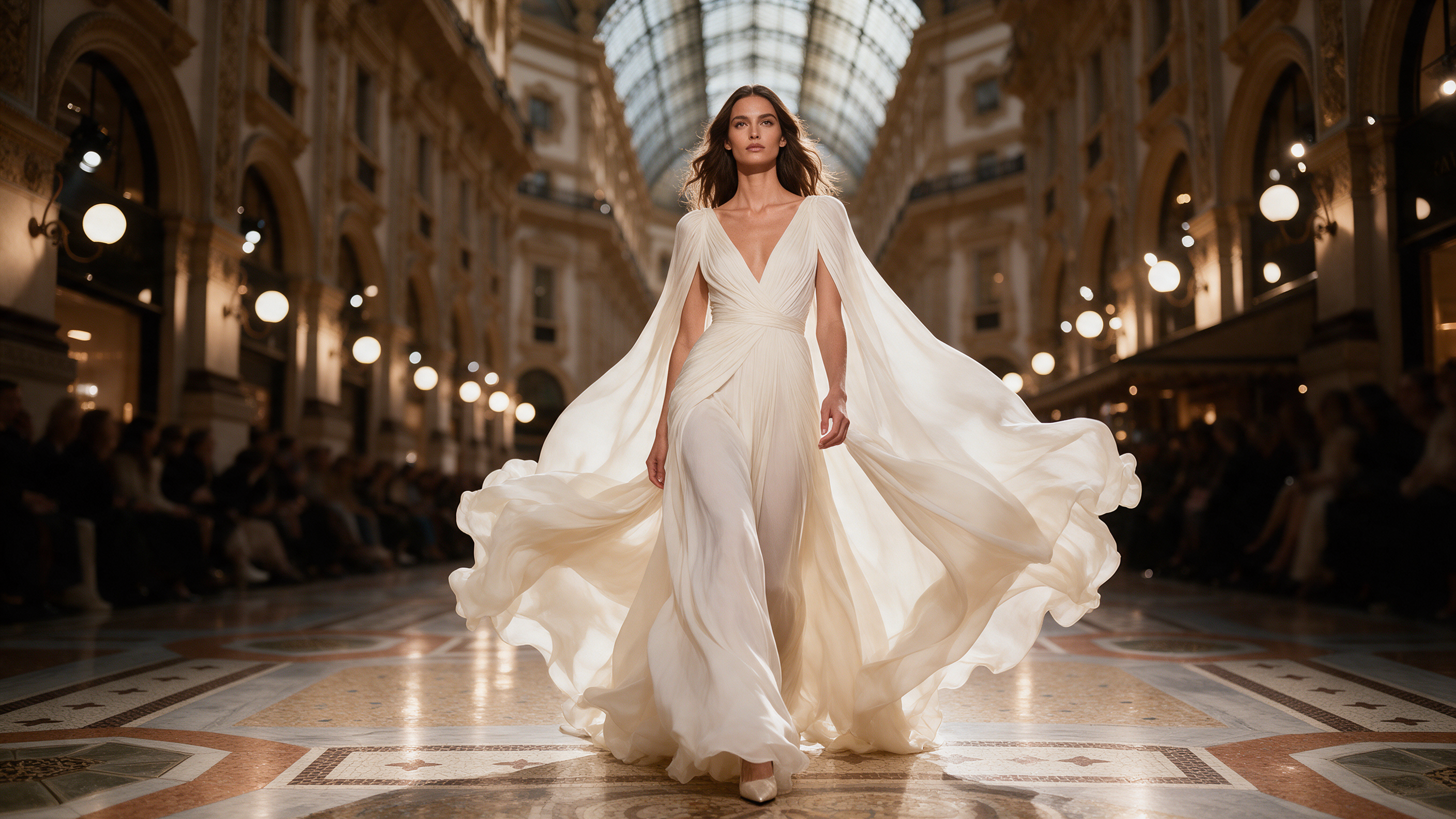
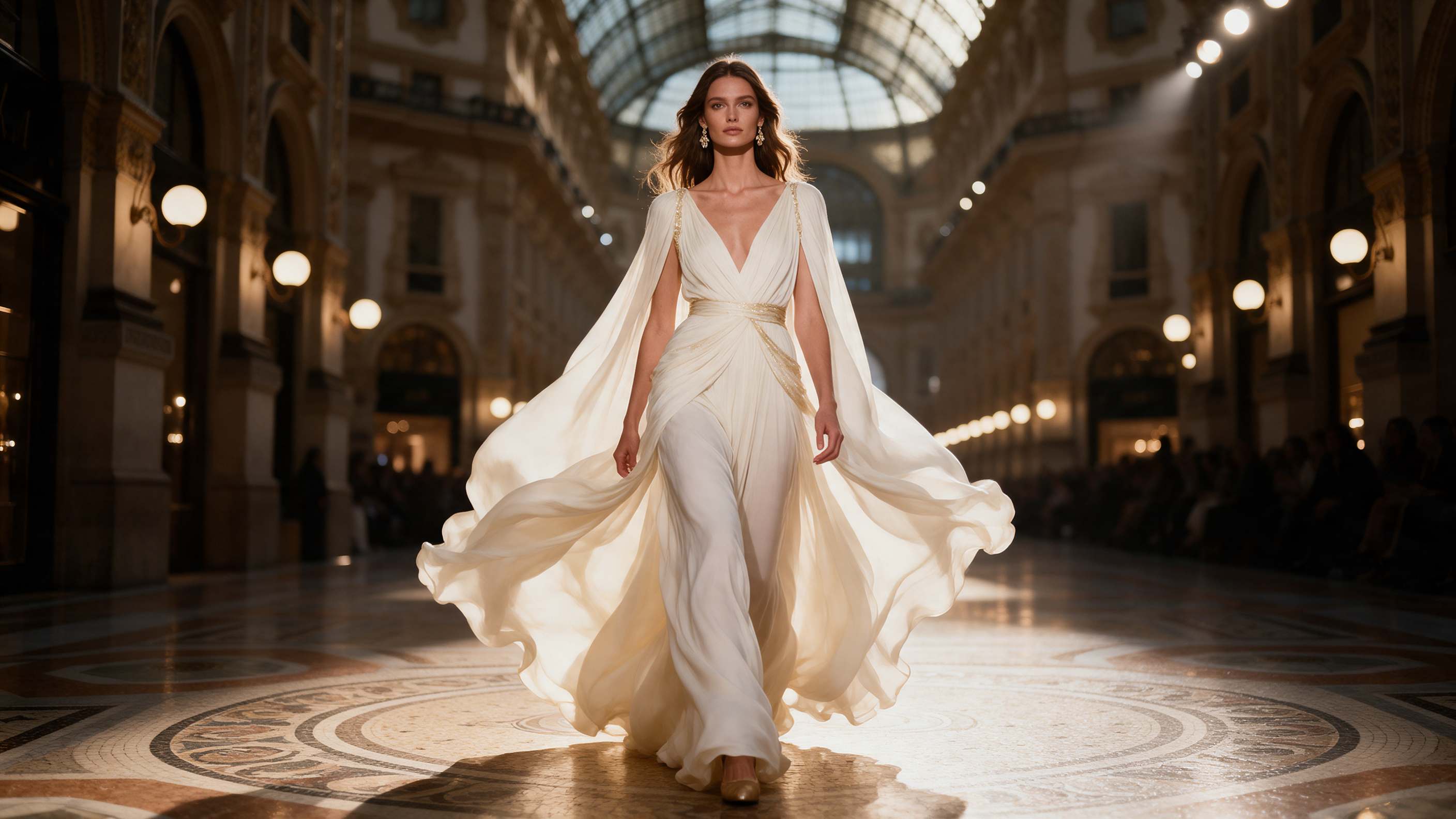
On September 22, 2026, fashion history walked through the oldest shopping arcade in the world. Vogue World: Milano took over the Galleria Vittorio Emanuele II — the soaring 19th-century glass-vaulted passage that connects Piazza del Duomo to Piazza della Scala — and turned it into a five-act runway that traced how clothes carry memory. The theme, Memory Dresses, was inspired by 68,000-year-old hand stencils found in an Indonesian cave: some of the earliest evidence of humans pressing identity into surfaces. For the finale, eight couture houses — Giorgio Armani Privé, Valentino, Prada, Gucci, Fendi Couture, Ferragamo, Bottega Veneta, and Dolce & Gabbana Alta Moda — each created an “echo chamber dress,” a one-of-a-kind white gown embedded with fragments of each house’s archive. Vogue Singapore’s full report describes the closing moment: Vittoria Ceretti leading the finale in Prada, eight memory dresses glowing like parchment under the Galleria’s mosaic dome.
Here is the takeaway for your own closet: white is no longer the blank canvas. It is the message. After a night when the most important dresses in fashion were deliberately, defiantly white, the question every wardrobe asks is simple — how to style a white dress so it carries the same intention at a wedding, on a city street, or across a candlelit dinner table. That is exactly what this guide delivers.
Below, we break down the three fabrics that defined the memory-dress mood — lace, linen, and satin — and show you how to build a complete white dress outfit around each one for the three occasions where a white dress earns its keep. No runway budget required.
What the Eight Memory Dresses Teach About Styling White
Strip away the couture price tags and the Milano finale was, at heart, a masterclass in the exact problem this guide solves: how do you make one white dress say something? Each house answered with a technique any closet can borrow.
Treat texture as biography.
The memory dresses embedded archival fragments — re-editioned house motifs, heritage laces, fabric treatments from decades past — into new gowns. Your version: a white dress with a texture that means something to you. The crocheted white dress your aunt taught you to notice, the crisp poplin you bought for your first gallery job, the satin you wore to your best friend’s rehearsal dinner. White shows texture more honestly than any other color, which is why the memory-dress concept translates so naturally into real wardrobes: the “memory” is visible in the fabric’s surface.
One motif per outfit.
Judith Clark, the show’s curator, built each act around a single idea — craft, industry, Italian cinema, technology, imagination — and let it run clean through. Styling works identically: one idea per look. “Gold jewelry and camel accents” is a look. “Gold jewelry, camel accents, a red lip, a patterned bag, and statement shoes” is a yard sale. The discipline that made eight couture gowns coherent inside one glass arcade is the same discipline that makes a $90 white dress look considered.
Fit is the luxury.
The tailoring acts of the show — the Armani codes of clean shoulder and fluid trouser, echoed in the neutral tailoring photographed backstage by Ethan James Green — carried no ornament at all. They did not need it. A white dress that fits the shoulder exactly and skims the body without pulling reads expensive at any price point, because white forgives nothing and therefore proves everything. Budget for alterations before you budget for accessories: taking in a waist or hemming a midi to the right shoe gap will return more compliments than any handbag.
Handcraft beats polish.
The show opened with Renaissance-era handwork — visible stitches, pressed patterns, the human hand left in the cloth. Take that as permission: your linen’s wrinkles, your lace’s slightly irregular scallop, your knit’s softening hem are not flaws to hide but signatures to keep. The most modern thing about the memory-dress aesthetic is that it replaced the machine-perfect finish with evidence of the hand. Styling white well means resisting over-ironing, over-matching, and over-thinking.
Why the White Dress Is the Smartest Piece You Can Style Right Now
The timing is not accidental. Search interest in “white dress” in the United States follows a reliable seasonal heartbeat: it builds from late February, peaks in April, and holds strong through summer before tapering in September, according to Google Trends data tracked by our editors over the past twelve months. “Linen dress” runs on the same rhythm at roughly two-thirds the volume, while long-tail styling phrases like “how to style a white dress” stay below the measurable threshold — which means the people searching it are looking for real answers, not browsing headlines.
In plain terms: there is a large, loyal audience that already owns a white dress and wants to know what to wear with it. That is the best possible reader for a styling guide, because the distance between “reading an outfit idea” and “trying it tonight” is one closet away. If you have ever wished you could preview an idea before committing to it, that is precisely what the DLOOK app was built for — but more on that after the fabric lessons.
The Five Universal Rules of Styling a White Dress
Before we match fabric to occasion, five rules apply to every white dress outfit in this guide — and every one you will ever build.
1. Solve the opacity question first.
White amplifies everything underneath it. The fix is not “buy a new dress”; it is choosing skin-tone seamless underwear and, for anything fitted or backlit, a slip in your exact skin tone rather than white — white under white actually reads more visible. Hold the dress up to a window in daylight before an evening where photography is guaranteed.
2. Let the fabric, not the accessories, do the talking.
A white dress is already a full sentence. Your job is punctuation: one metal family (gold or silver, rarely both), one accent color, one texture contrast (woven bag, suede shoe, silk scarf). The memory dresses at the Galleria worked because each house edited relentlessly — a single archival motif per gown. Edit the same way.
3. Ground the look with intentional shoes.
White floats visually; shoes anchor it. Nude or tan lengthens the leg, metallics formalize, and a deliberate dark shoe (espresso, black, navy) gives the outfit editorial weight — the same trick stylists used throughout the Milano show’s tailoring acts.
4. Treat texture as your color palette.
Because the dress is one hue, texture carries the outfit: matte cotton lace against patent leather, slubbed linen against smooth gold hoops, liquid satin against a dry wool coat. When everything is the same color, contrast of finish is what reads as “styled.”
5. Build for the photograph, then for the mirror.
A white dress is the most photographed garment you own — it reflects light like a softbox. Check the hemline against the seat you will actually sit in, test the neckline with the bag strap you will actually carry, and squat-test the slit. Vogue World’s models crossed cobblestones and opera balconies; you will cross restaurant chairs and dance floors.
6. Master the “third piece” without cluttering.
Dress, shoes, bag: that is two and a half outfits worth of styling, and the finishing level comes from the third deliberate element — a blazer, a trench, a knit over shoulders, a scarf on the bag, a hat. The rule is that the third piece must be removable without collapsing the look. If the outfit dies when the jacket comes off, the dress underneath was never styled; it was merely covered. Practice the jacket-off test in the mirror, because receptions, dinners, and dance floors all end at the same place: you, the dress, and whatever you actually chose to put with it.
Material Guide 1: The White Lace Dress — Wedding Guest Edition

Lace is the fabric of memory by definition: every motif is a repeated imprint, a pattern pressed and preserved — a remarkably literal echo of the hand-stencil idea behind Vogue World’s memory dresses. It is also the most socially loaded fabric in this guide, because lace plus white plus a wedding venue is territory that requires etiquette and strategy in equal measure.
Choosing the right lace
Not all lace photographs alike. Chantilly lace — fine, detailed, with a soft drape — reads romantic and slightly vintage, ideal for afternoon and garden ceremonies. Eyelash lace, with its feathery scalloped edges, frames a neckline or hem beautifully and suits evening receptions. Guipure lace is heavier, graphic, and almost architectural; it is the closest thing lace has to the structured couture spirit of the Milano finale, and it holds its shape on curvier frames. Corded lace sits between the two and forgives wrinkles better than anything else in this category, which matters when the ceremony runs long and the dance floor runs longer.
The hemline rule for wedding guests
As a guest, your lace white dress should avoid bridal signifiers: no full-length ballgown silhouettes, no cathedral trains, no veil-adjacent accessories. The safe territory is a midi hem (calf-grazing), a knee-length A-line, or a tailored lace shift. If the dress runs long, break the bridal read with color at the shoe and a structured, non-bridal bag — think a woven clutch or a satin pouch in sage, powder blue, or espresso rather than anything pearl-encrusted.
Styling the white lace wedding outfit
Shoes: block-heel sandals in nude or blush keep you stable on grass and elevate the romance; metallic strappy heels (champagne gold reads softer than silver here) dress the lace up for evening receptions. Avoid white pumps — white shoe plus white lace dress drifts toward bridal territory again.
Bag: a small top-handle or wristlet, sized for phone, card, and lip color only. Weddings punish large bags.
Jewelry: this is the one occasion where pearls genuinely belong — a single strand or pearl-drop earrings nod to the ceremony without costume effect. Alternatively, thin gold hoops and a cuff keep it modern. Pick one statement; the lace is already ornate.
Hair and coverage: an updo or half-up style shows off lace necklines, and a structured blazer in cream or pale camel over the shoulders handles air-conditioned reception halls better than any pashmina.
Three ready-to-copy formulas
Garden ceremony, afternoon: Chantilly lace midi dress + tan block-heel sandals + woven clutch + gold huggie earrings.
Evening reception, city venue: corded lace column dress + champagne strappy heels + sage satin pouch + pearl drops.
Black-tie-adjacent: guipure lace A-line midi + metallic pointed mules + sculptural cuff + espresso mini bag.
The common thread: your white lace dress should look like a deliberate guest choice, not a rehearsal. Respect the color’s bridal claim at the altar, and reclaim everything around it.
The conversation test
One final wedding filter we recommend to every reader: imagine the receiving line. The bride’s grandmother will look at you for exactly one second, and in that second she will decide whether you tried to upstage the bride. If your outfit survives that glance — midi hem, colored shoe, small bag, one jewelry statement — it will survive every photograph, every toast, and every family group chat afterward. Styling for that single second is not vanity; it is the social intelligence that separates a memorable guest from an awkward anecdote.
Care notes for lace
Lace rewards gentle handling: hand-wash or use a mesh bag on the delicates cycle with a wash formulated for fine fibers, and dry flat away from direct sun, which yellows white cotton and nylon laces over time. Store lace rolled rather than hung — gravity stretches the openwork and distorts the neckline by the second wear. If a scalloped edge snags, resist the urge to clip the thread; a pulled loop restored with a fine crochet hook disappears completely, while a cut thread ladders.
Lace across body types
Because lace adds visual volume wherever it sits, place it deliberately. All-over lace works beautifully on straight and athletic frames that want texture; for curvier figures, lace panels at the neckline and hem with a solid bodice give the romance without doubling the silhouette. Petite frames should watch the motif scale — a giant guipure flower can swallow a small frame, while fine Chantilly reads proportionate. And every body type benefits from the tailoring rule: lace seams are harder to alter than plain cloth, so buy closest to your shoulder and bust fit and tailor the rest.
Material Guide 2: The White Linen Dress — City Street Edition
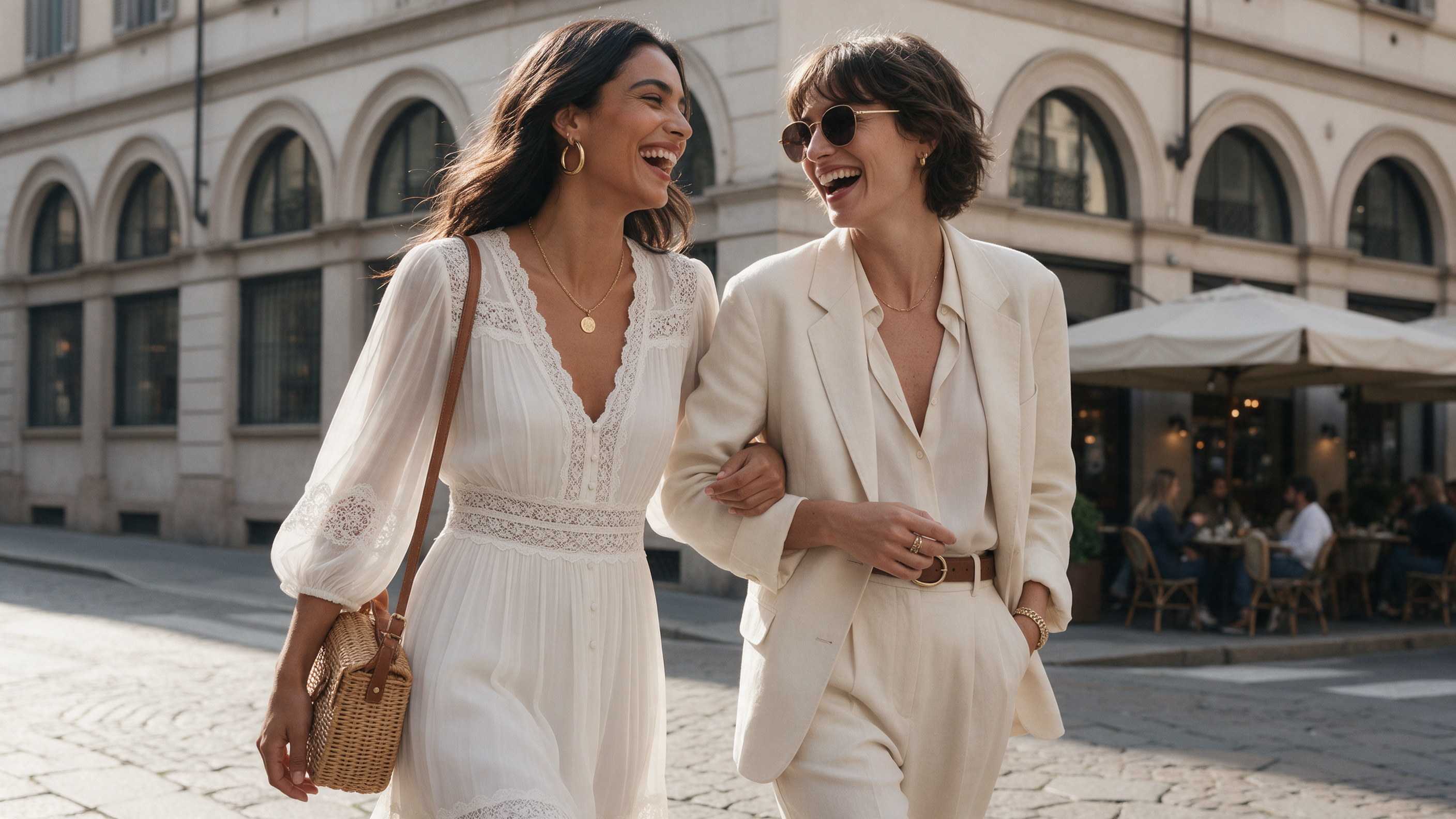
If lace was the Milano finale, linen was the Milano morning after. The show’s opening acts celebrated Renaissance handcraft and “Made in Italy” ease — exactly the register of a well-cut linen dress moving through a city. Linen is the highest-volume white dress fabric in American search data for a reason: it breathes, it softens with every wash, and its natural slub gives white a texture that reads expensive even at a modest price point.
Choosing the right linen
Fabric weight is the whole game. Under 150 gsm (grams per square meter), linen is gauzy and semi-sheer — beautiful for beach covers, risky for city sidewalks without a slip. Between 150 and 210 gsm you get the sweet spot: opaque enough for daylight, fluid enough to drape. Above 230 gsm you are in blazer territory — structured, crisp, and best in shirt-dress cuts. Always check the lining situation at the skirt; an unlined white linen skirt in direct sun is the most common white-dress mistake our editors see in street-style photography.
Wrinkles: feature, not bug
Linen creases. The street-style trick is to choose cuts where creasing looks intentional — bias-cut skirts, relaxed shirt dresses, gathered waists — and to steam the collar, placket, and hem (the places the eye lands) rather than chasing perfection everywhere. A 10-second steam on the structural points reads “pressed” in every photo.
Styling the white linen city outfit
Shoes: espadrille wedges or flats extend the leg and handle miles of pavement; clean white leather sneakers make the look metropolitan; flat strappy sandals keep it resort-leaning. What to avoid: heavy lug soles, which visually anchor a floating fabric to the ground.
Layers: the city uniform is a denim jacket (mid-wash keeps it casual; white-on-white denim is sharper), a tan or camel blazer for meetings-after-brunch, or a fine-gauge knit tied over the shoulders for the air-conditioned commute. Each layer adds a color story without breaking the white’s calm.
Bag: this is the fabric’s best accessory argument — woven totes, basket bags, and canvas-and-leather hybrids all make sense with linen’s matte texture. For a workday, a structured cognac crossbody pulls the look together and keeps hands free.
Jewelry and sun: rattan or gold hoops, a silk scarf tied on the bag handle (not the head — save that for the coast), and real sunglasses. Note the lesson from our competitor street-style research: nothing kills an editorial white outfit faster than visible logos, so keep every piece unbranded and let the fabric speak.
Three ready-to-copy formulas
Weekend market run: oversized linen shirt dress + tan espadrille sandals + woven tote + rattan hoops.
Creative-office day: fitted linen midi + camel blazer + white leather sneakers + cognac crossbody.
Golden-hour rooftop: linen slip dress + flat strappy sandals + silk scarf on a structured mini bag + gold cuff.
Walkability is the test. If you can cross a city for two hours — stone streets, café chairs, a surprise gallery stop — and still look composed, the linen outfit is doing its job.
Care notes for linen
Wash linen cold, remove it slightly damp, and hang it by the shoulders — the fabric’s own weight pulls most wrinkles out as it dries, a trick that costs nothing and beats ironing. Skip the fabric softener, which coats the fibers and dulls the very texture you bought linen for; a splash of white vinegar in the rinse keeps it absorbent and bright. Embrace the patina: quality linen softens and improves for years, and a white linen dress that has been properly lived in has exactly the archive quality the Milano memory dresses were celebrating.
Linen across body types
Linen’s structure is an asset for styling, not a constraint. Relaxed, oversized cuts add intentional volume and look best balanced with a defined shoulder and a bare leg or ankle; fitted cuts show off the fabric’s clean drape and pair naturally with layers. If you run warm, an unlined bodice with a lined skirt gives coverage where it matters and breathability where it counts. Taller frames can carry the dramatic maxi; petite frames should hem to the top of the foot with a heel or to mid-calf with a flat — the two proportions that never argue with a shorter silhouette.
Material Guide 3: The White Satin Dress — Restaurant Dinner Edition

Satin is the memory dress at midnight. Of the eight couture gowns that closed Vogue World Milano, the ones that drew the longest looks shared a quality the runways rarely achieve at home: fabric that behaves like liquid, catching candlelight the way the Galleria’s mosaics caught the show lighting. That is satin’s superpower, and a white satin dress is the single most reliable way to look “dressed” with the least visual noise.
Choosing the right satin
Look for “matte satin” or sandwashed satin if a liquid shine feels too bold; look for charmeuse if you want full glow. Weight matters doubly here — thin satin shows every line and clings statically; a mid-weight satin with a slight bias cut skims instead of gripping. The slip dress (cowled or straight-necked) is the signature cut; a bias-cut maxi in white satin is the closest civilian equivalent to those finale gowns and needs almost nothing else.
Beating cling and transparency
Three fixes: a skin-tone slip for anything under 19-momme weight; a handheld steamer pass on the inside of the skirt (static dies with a light steam and a drop of fabric conditioner in the rinse); and strategic fit — satin should skim the ribcage and float from the hip. If it pulls across the seat when you sit, size up or choose a bias cut, which was engineered for exactly this problem.
Styling the white satin dinner outfit
Shoes: strappy heeled sandals in gold or silver for full evening; pointed mules in espresso or black for a sharper, gallery-opening feel; a satin pump in a blush tone if you want softness. The shoe can take risk here because the dress is pure.
Jewelry: satin and gold are a classic marriage; a sculptural cuff or dome earrings give the minimal dress an intentional focal point. One cold evening note: white satin with silver and a sharp red lip is the most Milan way to finish this look — a single saturated accent the way a stylist would punctuate an all-white runway exit.
Outerwear: a longline trench in stone or camel over a satin slip dress is one of fashion’s genuinely perfect combinations — matte over shine, structure over fluidity. Indoors, nothing; the dress does not want a necklace and a jacket and a bold shoe.
Bag: a small shoulder bag in black patent, metallic, or dark chocolate. Satin is soft; the bag should be crisp.
Three ready-to-copy formulas
Anniversary dinner: white satin slip dress + gold strappy heels + gold dome earrings + black patent mini bag.
Gallery opening then dinner: bias-cut satin maxi + black pointed mules + silver cuff + espresso shoulder bag.
Winter white evening: satin midi + camel trench (worn in) + espresso knee boots + cream knit over shoulders on arrival.
One last satin rule: check the menu plan. Satin and splashing sauces negotiate poorly — a napkin on the lap, a jacket on the chair back, and you are protected from the only real enemy this fabric has.
Care notes for satin
White satin shows water spots, so spot-clean with a barely damp cloth and let it air-dry fully before storing. Steam — never iron directly — and if the care label allows, a cool iron through a pressing cloth on the reverse side rescues travel creases. Hang satin on a padded or wide hanger so the straps do not leave shoulder bumps, and give it space in the closet: satin abhors being crushed against sequins or hardware. Between wears, a fabric-freshening spray and a night of air will extend the distance between cleanings, which is good for both the fabric and the fit.
Satin across body types
The bias cut is satin’s great democratizer: cut on the diagonal of the fabric, it stretches and settles over curves rather than fighting them, which is why a bias slip flatters nearly every figure it meets. Look for adjustable straps — they set the neckline exactly at your torso length, which solves most fit complaints before they start. If a slip feels too exposed, a fine-knit shrug or a sheer long-sleeve mesh top underneath turns the same dress into a covered, equally elegant look. And if shine concerns you, remember the sandwashed option: all of satin’s drape with a fraction of its reflectivity.
All-White Outfit Ideas: The Accent-Color Cheat Sheet
The memory dresses worked in total white, but civilian all-white styling lives or dies on its accents. Print this mental cheat sheet:
Camel / tan: the safest elevation. Works with all three fabrics; signals quiet luxury. Linen’s best friend.
Espresso / chocolate brown: grounds white without black’s harshness. Ideal with satin in evening light.
Navy: the nautical default; sharp with crisp cotton and lace, preppy with linen.
Sage / eucalyptus green: the 2026 soft-accent choice for weddings and garden parties; gentle against lace.
Red (one item only): the Milano gesture — a red lip, a red heel, or a red clutch. Never two.
Metallics: jewelry as color. Champagne gold warms ivory; silver sharpens optical white.
And the tonal route deserves its own paragraph: white on white — ivory dress, optical-white shoes, cream bag — is the most advanced version of this entire guide. It works when the whites differ by at least half a shade and the textures differ for certain: matte knit over satin, crisp cotton beside fluid crepe. Prada, whose archive-clad memory dress led the Milano finale under the Galleria’s iron-and-glass dome, built its look on exactly this discipline — one color, many textures, zero noise.
The Capsule Strategy: One White Dress, Three Occasions
Buying one white dress to cover the wedding, the city, and the dinner is the question we hear most often, and it has a clear answer: choose by fabric weight first, silhouette second, and everything else third. The fabric determines which of the three scenes the dress can enter; the silhouette determines how confidently you walk into it.
If you attend mostly weddings and showers, buy lace. Its ceremonial texture reads intentional at events, and the midi lengths that dominate lace cuts keep you inside guest etiquette without thinking about it. Choose corded or guipure lace if you want one dress to survive a decade of invitations — heavier lace ages far better than the delicate kind.
If your life is mostly daytime — offices, weekends, travel, buy linen. It is the only fabric in this guide that improves with repetition, and a white linen midi moves from a Saturday market to a Monday meeting with nothing more than a blazer swap. Pay the most attention here to lining and weight; everything else about linen forgives you.
If evenings dominate your calendar, buy satin — but in the matte or sandwashed finish if you want maximum wear per dollar. A matte satin slip reads polished at dinner and, with sneakers and a denim jacket, surprisingly credible at brunch. Liquid-shine satin is more spectacular and more specialized; it lives for evening and nowhere else.
For the one-dress buyer determined to cover all three: a mid-weight cotton-poplin shirt dress, hemmed to the midi, is the quiet compromise. Crisp enough for a wedding with heels and pearls, relaxed enough for the city with sneakers and a tote, and polished enough for dinner with mules and gold jewelry. It will not out-dazzle a satin slip at an anniversary dinner — but it will get you credibly through every invitation on the calendar while you decide which specialized piece to add next.
Five Mistakes That Ruin a White Dress Outfit
Visible underwear lines. Seams, patterns, and white-on-white contrasts. Skin-tone seamless is non-negotiable.
Too many bridal signals at a wedding. Floor-length + lace + pearls + updo = unintentional second bride. Keep two, drop two.
Ignoring the shoe-to-hem gap. A midi hem wants an ankle bone or a heel; a maxi wants a pointed or strappy shoe that peeks. Wrong proportions here quietly undo everything above.
Over-accessorizing. The dress is the outfit. The moment you add statement earrings, a bold necklace, a scarf, and a colored bag, you have styled against yourself.
Skipping the daylight test. Every white dress decision — opacity, true color, undergarments — must be checked in direct daylight near a window, because restaurant lighting and mirrors lie kindly.
From Runway Memory to Your Closet: Style It Before You Wear It
Here is the quiet truth behind every outfit in this guide: none of them required new clothes first. They required decisions — which shoe, which metal, which accent color — and decisions are cheaper to test digitally than to undo in a restaurant bathroom.
That is the habit worth building this season. Photograph the white dress you already own, then use an AI outfit stylist to preview the lace-wedding, linen-city, and satin-dinner versions against your actual piece before any event. DLOOK’s virtual try-on and closet tools let you build and save all ten outfit formulas from this article as looks you can filter by occasion — so the next wedding invitation, city weekend, or dinner reservation starts with a swipe, not a panic. Your closet already contains your memory dress. Styling it deliberately is how it becomes one.
Frequently Asked Questions
Can I wear a white dress to a wedding as a guest?
Yes — with guardrails. Choose a midi or knee-length cut in a non-bridal fabric like linen or a textured lace, add definite color at the shoe and bag, and avoid gown silhouettes, trains, and heavy pearl styling. When in doubt, ask the couple; some weddings designate white for the bridal party only.
What shoes go best with a white dress?
Three reliable families: nude or tan (lengthens the leg and works everywhere), metallics (dresses the look up for evening), and deliberate darks like espresso or black (adds editorial weight, best with satin). Match the shoe’s formality to the fabric’s — espadrilles and sneakers for linen, heels and mules for satin and lace.
How do I keep a white dress from looking see-through?
Wear skin-tone (not white) seamless underwear, add a skin-tone slip under anything under ~150 gsm fabric weight, and do a daylight window test before wearing. White under white reads more visible, not less.
What colors pair well with an all-white outfit?
Camel, espresso brown, navy, sage green, one strategic red accent, and metallics. The rule is one accent family per outfit — the dress stays the headline, everything else is punctuation.
How do I style a white dress for fall and winter?
Layer by contrast: a camel or espresso trench or wool coat over satin, a fine knit over a linen dress with knee boots and opaque tights, or a turtleneck layered underneath a sleeveless white dress. White in cold months reads most expensive with matte textures and warm neutrals.
Is a white satin dress appropriate for a fancy dinner?
Absolutely — it is one of the strongest evening choices available. Keep it mid-weight so it skims rather than clings, add gold or silver jewelry and a dark structured bag, and bring a trench or tailored coat for arrival. A single bold accent (red lip, red heel) finishes the look Milan-style.
Download the DLOOK app to virtual try on outfits, discover your perfect colors, and effortlessly manage your closet and looks.