By DLOOK Fashion Editor Team · September 6, 2026
Two outfits can use the same silhouette and the same color — and still look completely different in quality. The difference is almost always the fabric. Understanding luxury fabrics is the single fastest way to elevate how you dress, because premium materials drape better, last longer, and photograph with a depth that budget blends simply can't replicate.
In this guide, we break down the three luxury fabrics worth building your wardrobe around in 2026 — linen, cashmere, and silk. For each one, you'll get the science behind the fiber (so you know what you're paying for) and real outfit formulas (so you know how to wear it). Let's start with the fabric that owns summer.
Linen: The Structured Breathability of Summer
The fiber science
Linen is made from the stalk of the flax plant (Linum usitatissimum), one of the oldest cultivated textiles in the world. Because flax fibers are thicker and longer than cotton fibers, linen conducts heat away from the body and dries faster — which is why a linen outfit feels cool even in high humidity. You can read the full fiber history on Wikipedia's linen entry.
The signature wrinkling isn't a flaw — it's the aesthetic. High-twist flax fibers resist bending, so creases form sharply and stay. Fashion editors call this "lived-in structure," and it's exactly what separates a deliberate linen look from a crumpled one. If you're weighing your options, our take on linen vs cotton is simple: cotton is softer and cheaper; linen is stronger, more breathable, and ages more gracefully with every wash.
Linen OOTD formulas
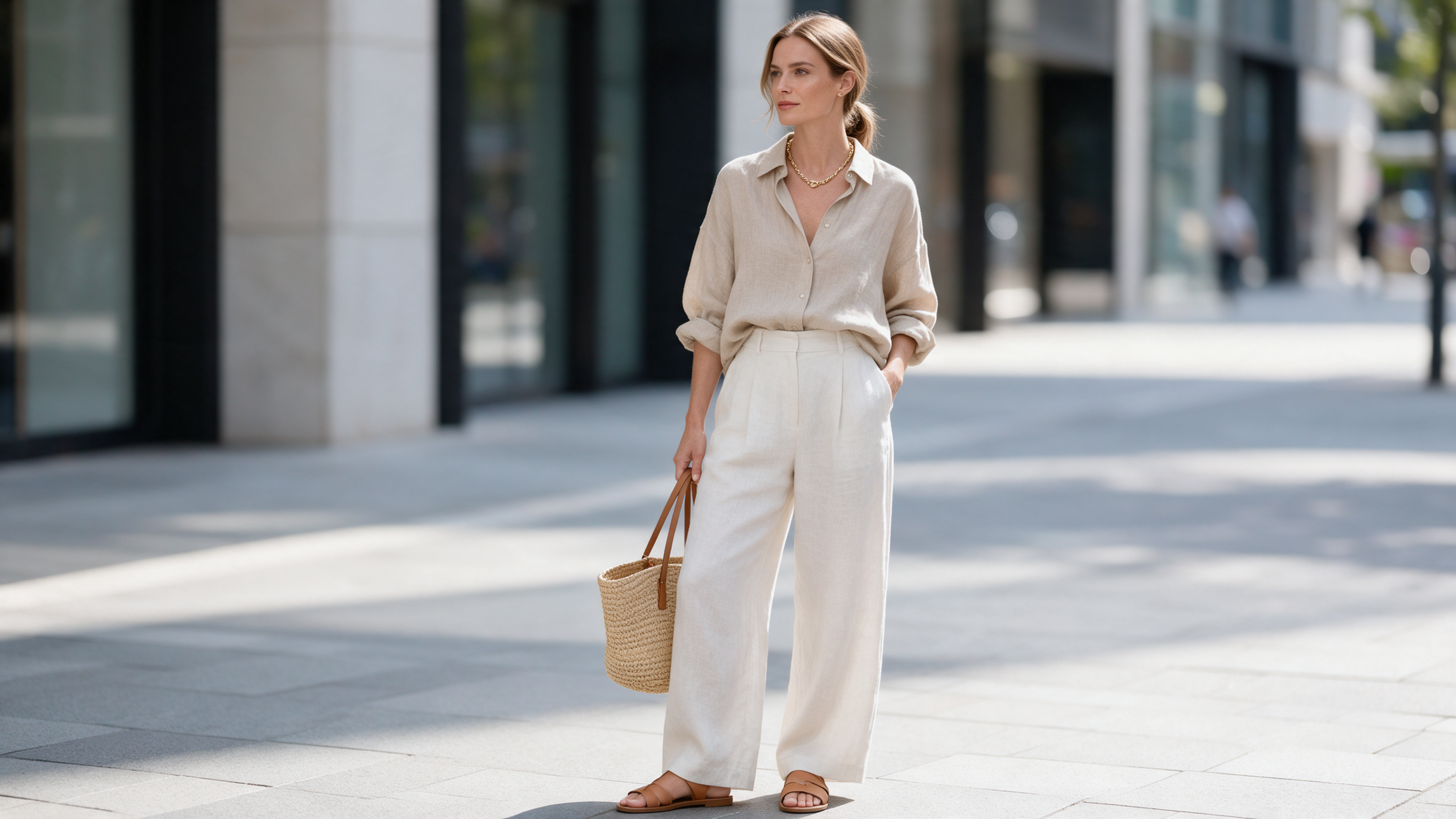
The wide-leg anchor. A pair of European-style linen wide leg pants in oatmeal or ecru, a fitted black tank, gold coin necklace, and leather sandals. This is the formula behind the breakout searches for wide-leg linen trousers in 2026, and it works because the volume on the bottom balances a clean top.
The co-ord set. Matching oversized linen shirt and trousers in the same tone (bone, sand, or sage) with a single patterned accessory — zebra slides or a striped clutch. Monochrome tailoring is the strongest linen styling move this year. For anyone wondering how to style linen pants, this two-piece is the lowest-effort, highest-return answer.
The tailored version. A men's linen suit in tobacco or stone, worn with a plain white tee and loafers — no tie, sleeves pushed up. Linen tailoring reads relaxed but intentional, ideal for summer weddings and outdoor dinners.
The one-piece. A linen dress (women's) with espadrilles and a woven tote is the warm-weather equivalent of a slip dress — one item, fully styled.
Search interest in linen peaks sharply each spring (reaching a seasonal high in April 2026, according to Google Trends), so late summer is actually the best time to buy — quality pieces go on sale just as they're about to become relevant again.
Not sure which cut flatters your frame? Upload a photo to DLOOK and virtually try on linen wide-leg pants and co-ord sets before you commit.
Cashmere: The Architecture of a Winter Wardrobe
What you're actually paying for
Real cashmere comes from the fine undercoat of Cashmere goats, historically raised in the Himalayan region of Kashmir and today sourced largely from Inner Mongolia. Each goat produces only a few hundred grams of usable fiber per year, combed (never sheared) by hand each spring. That scarcity is the honest answer to why cashmere is so expensive — you're buying a fiber supply that literally cannot scale. The sourcing story is documented in detail on Wikipedia's cashmere wool entry.
Two numbers tell you quality. First, ply: a two-ply yarn resists pilling far better than single-ply. Second, gauge: 12-gauge knits are the sweet spot for a women's cashmere sweater that holds its shape. If a label says "cashmere blend," check the percentage — anything under 95% isn't the real thing. Curious how it stacks up against standard wool? In the cashmere vs wool comparison, wool wins on durability and price; cashmere wins on warmth-to-weight and softness against skin, because its fibers average around 14 microns — finer than even merino. When sourcing matters to you, Mongolian cashmere from the high plateau is considered the gold standard for long, resilient fibers.
Cashmere OOTD formulas
The one-sweater outfit. A heather-grey crewneck cashmere sweater with dark straight-leg jeans, a camel coat, and white sneakers. Let the knit be the texture — everything else stays quiet. This is the fall formula American style bloggers return to every year.
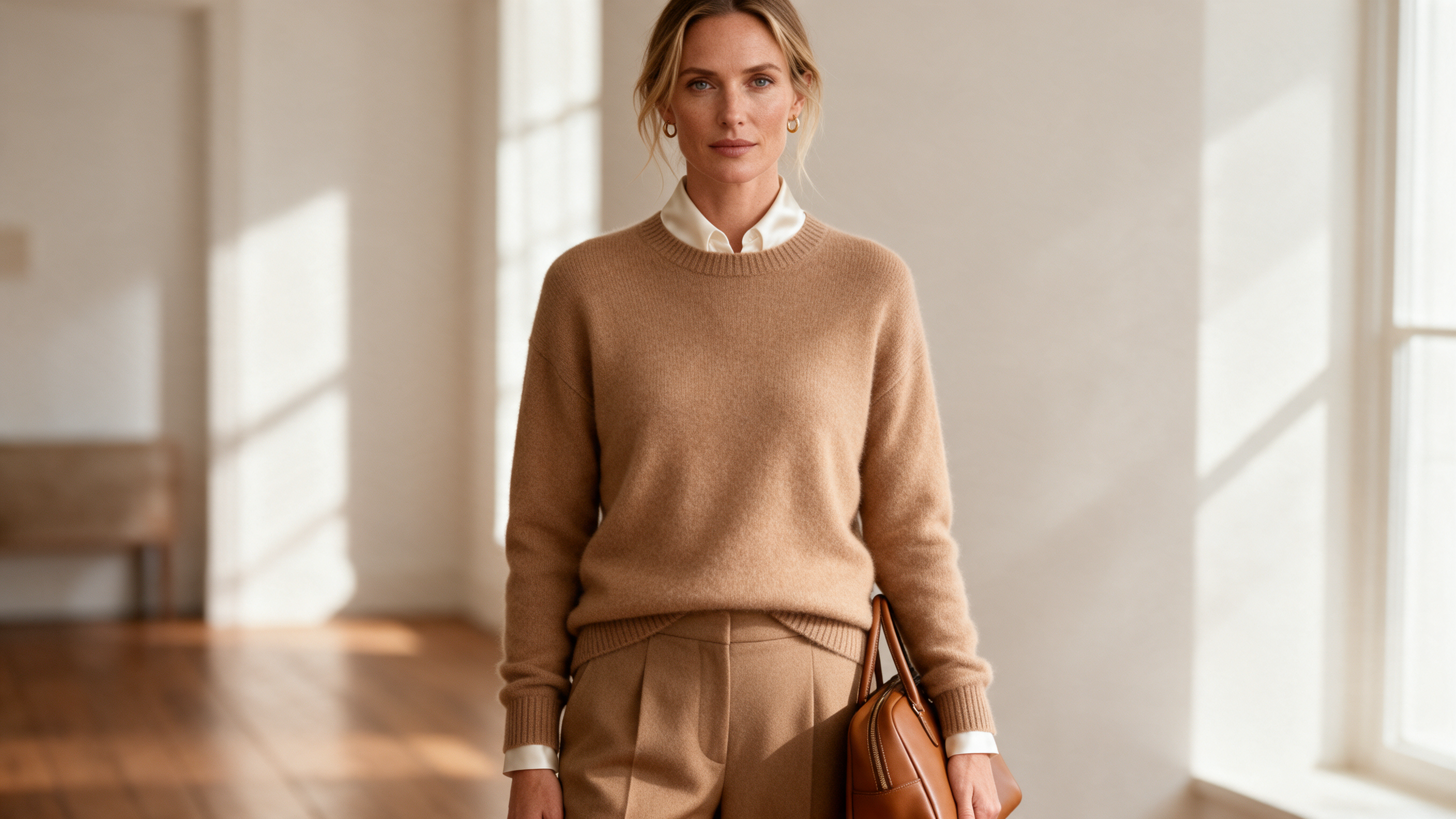
The tonal layer. A mock-neck cashmere sweater in oat, layered under a long wool overcoat with black trousers and a brown leather bag. One saturated accent (burgundy or forest green) keeps the neutrals from going flat.
The smart commute. A fitted cashmere crew under a blazer, with pleated wool trousers and loafers — proof that a cashmere sweater outfit can be boardroom-appropriate without a single stiff fabric.
Ownership note: learning how to wash cashmere properly (cold water, gentle detergent, flat drying) will double the life of your knit — more on care below.
Want to test whether a turtleneck or crewneck suits your face and proportions? Try both virtually on DLOOK with a single photo.
Silk: The Fabric That Catches Light
Momme, mulberry, and the sheen test
Silk is a protein fiber spun by silkworms — almost all commercial silk comes from the Bombyx mori caterpillar fed on mulberry leaves, which is why "mulberry silk" on a label signals consistency rather than marketing. The fiber's triangular prism structure refracts light at different angles, producing that signature luster no synthetic has fully copied. See Wikipedia's silk entry for how the fiber is produced.
The number that matters is momme (mm): the weight of silk per unit area. Everyday blouses sit around 16–19 momme; 22 momme and above is where silk starts feeling substantial and opaque. And if you've ever wondered about silk vs satin: satin is a weave, not a fiber — satin can be polyester. Real silk charmeuse will have a soft, cool hand-feel and a glow rather than a plastic shine. Vogue's fashion coverage has long tracked silk's return as an everyday staple; Vogue.com is a reliable barometer for how designers keep reissuing the silk shirt each season.
Silk OOTD formulas
The power commute. An emerald silk blouse with grey plaid trousers, a structured black bag, and pointed heels. The saturated silk top against neutral tailoring is the single most reliable blouse formula in editorial styling. If you're searching how to style a silk blouse, start here: one glossy piece, everything else matte.
Day-to-dinner. The same silk blouse, half-tucked into straight-leg jeans with loafers by day; swap to a slip skirt and heels by night. One piece, two dress codes.
The full silk moment. A bias-cut silk dress outfit — champagne or black — with minimal jewelry and pointed mules. Bias cutting lets the drape do all the talking.
Silk holds steady search interest all year (a 12-month average of 36 on Google Trends, with a spring spike), making it the most versatile investment of the three fabrics in this guide.
Before buying, see how a silk blouse looks against your coloring — warm ivory vs. cool pearl white changes everything. Check it on DLOOK.
Care Rules That Apply to Every Luxury Fabric
Wash cold, dry flat. Heat is the enemy of protein fibers (cashmere, silk) and the shrinker of plant fibers (linen). Cold water and air drying preserve all three.
Master "how to wash cashmere." Hand wash or machine wash on a wool cycle inside a mesh bag, press — never wring — and reshape flat. Dry cleaning every wear is unnecessary and wears fibers faster.
Learn how to care for silk clothes. Use a pH-neutral detergent, wash inside-out, keep out of direct sun when drying (UV degrades silk protein and fades dyes), and steam instead of ironing.
Rest your knits. Cashmere should rest 24 hours between wears so fibers recover their shape.
Store smart. Fold, don't hang, heavy knits and silk blouses; cedar blocks beat mothballs for cashmere.
Try Before You Buy With AI
The one downside of premium fabrics is that they demand confidence: a $300 cashmere sweater or a silk blouse in the wrong cut is an expensive lesson. That's the gap AI styling tools now close. With DLOOK, you can photograph your own pieces, virtually try on new combinations across linen, cashmere, and silk, and get color analysis before a single purchase. Build the look digitally first — then invest in the fabric that earns it.
Download the DLOOK app to virtual try on outfits, discover your perfect colors, and effortlessly manage your closet and looks.