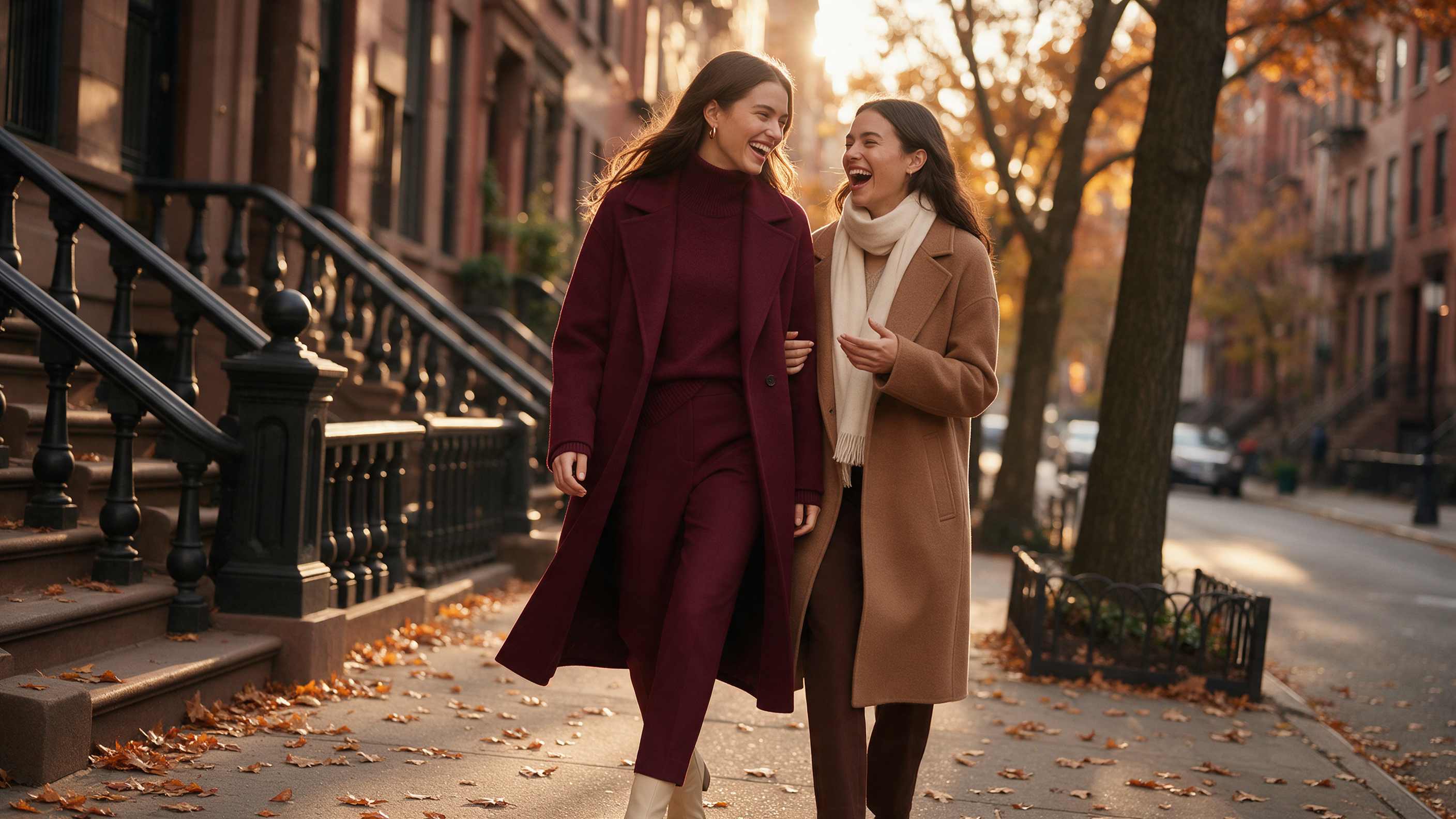
Every few years, a single color quietly takes over the season—and for fall-winter 2026, that color is unmistakably burgundy. Search interest in the burgundy outfit has been climbing steadily, with clear spikes every September through October and a second wave each December as holiday-party season begins. Retailers are restocking burgundy dresses faster than they can photograph them, street-style photographers are filling their memory cards with oxblood coats, and "burgundy tops for women" has been one of the fastest-rising apparel queries of the past five years.
If you have ever stood in front of your closet wondering how to wear burgundy without looking like you are either heading to a winter wedding or channeling a 1990s sitcom, this guide is for you. We are taking a color-first, occasion-second approach: first, the six pairing formulas that make burgundy work (burgundy and ivory, burgundy and denim, tonal burgundy, and more), then five complete head-to-toe looks—office, date night, dinner, weekend city, and holiday party—so you can copy them exactly or adapt them to your own wardrobe. Along the way, we will cover which shade of burgundy suits your skin tone, how the color moves through the season from September to December, and the mistakes that make burgundy outfits look accidental instead of intentional.
Burgundy rewards a little knowledge more than almost any other color. Wear it thoughtfully and it makes you look richer, warmer, and more put-together than the same outfit in black ever could. Wear it carelessly and it can read heavy or dated. The difference is rarely the garment itself—it is the pairing, the proportion, and the shade. That is exactly what the next fifteen minutes of reading will fix.
And if you are not sure burgundy is "your" color, you are not alone. That is exactly the kind of question the DLOOK app was built to answer: try a burgundy outfit on your own photo before you buy a single piece, and see whether oxblood or bright ruby flatters you more.
Why Burgundy Is the Defining Color of Fall-Winter 2026
Burgundy sits in a sweet spot that few colors manage: it is rich enough to feel luxurious, warm enough to flatter most complexions, and neutral-adjacent enough to pair with almost everything already in your closet. Fashion editors have tracked its rise from niche evening color to everyday staple, with Vogue repeatedly featuring burgundy looks in its seasonal street-style and trend coverage, and styling publications like Who What Wear dedicating entire edits to how fashion people are wearing it right now.
Part of the story is tonal. The broader appetite for warm, food-adjacent hues—chocolate brown, caramel, mocha mousse—has primed everyone to embrace deep red-browns. When Pantone named Mocha Mousse its 2025 Color of the Year, it validated an entire palette of warm, grounded tones, and burgundy is the most expressive member of that family. Meanwhile, Gucci's "Rosso Ancora" runway moment pushed an even deeper, more wine-stained red into the trend conversation, giving burgundy a luxury-fashion tailwind that shows no sign of fading.
Technically, burgundy is a dark red hue with purple-brown undertones, named after the wine of France's Burgundy region. Its close cousins—maroon, oxblood, wine, and cordovan—share the same DNA, and you can read about the color's full history on Wikipedia's maroon color entry. For outfit purposes, what matters is this: burgundy reads as sophisticated, seasonless within the cooler half of the year, and surprisingly versatile once you know the pairing rules.
It also photographs better than almost any other autumn color. Under daylight, it looks rich; under restaurant light, it looks expensive; in flash photography, it holds depth instead of washing out. That is one reason street-style coverage keeps returning to it—editors know a burgundy coat will carry a whole image.
Choosing the Right Burgundy for Your Skin Tone
Burgundy is a family, not a single color, and the fastest upgrade you can make is simply choosing the member of the family that flatters you. The rule of thumb is about undertone and depth, and it takes ten seconds to apply.
Warm or olive undertones tend to glow in browner burgundies—oxblood, maroon, and cordovan with their red-brown base. These shades echo the warmth already in your skin instead of competing with it.
Cool or pink undertones usually shine in bluer burgundies—the ones with a wine or berry cast, closer to raspberry than to rust. Bright ruby burgundy is often the winning shade here.
Deep skin tones can carry the full spectrum, and look especially striking in bright, saturated burgundy and in tonal head-to-toe looks where the color has room to work.
Very fair skin is often flattered by deeper, browner burgundies placed away from the face—oxblood trousers or a coat—with ivory or cream near the neckline to keep the contrast soft.
None of these are laws—personal contrast and hair color shift the answer—but they are a reliable starting point. If you want a data-driven version of this process, DLOOK's color analysis can tell you which burgundy family belongs in your wardrobe; discover your personal colors before your next shopping trip.
Burgundy Across the Season: September to December
Because burgundy searches spike twice—once in early autumn and again in December—the smartest way to wear the color is to let it evolve across the season rather than wearing one version on repeat.
September–October: burgundy meets transitional weather. Lightweight knits, silk scarves, and burgundy ballet flats or loafers paired with denim. The color feels fresh against September sunlight.
November: burgundy goes heavy. Wool coats, suede boots, and the first tonal looks—oxblood knit with deeper burgundy trousers. This is the month burgundy functions as a neutral.
December: burgundy turns festive. Brighter shades, satin and velvet textures, sequins, and the holiday-party formulas later in this guide. Search interest in party-ready burgundy peaks here every single year.
If you build your wardrobe in this order—one transitional piece, one cold-weather anchor like a coat or knit, and one festive piece—you will wear burgundy for four straight months without a single repeated outfit.
The Burgundy Family: Know Your Shade
Not all burgundies are created equal, and matching the shade to the occasion is half the battle. Here is the quick map:
Deep burgundy / oxblood — almost brown-red; the most formal and the most forgiving. Ideal for work, dinner, and anyone who finds brighter reds hard to wear.
Classic burgundy — the true wine tone, balanced between red and purple. Your everyday, everything-shade for knits, blazers, and bags.
Bright / ruby burgundy — a punchier, more festive take. Reserve it for holiday parties, evenings, and statement pieces.
Ancora-adjacent shades — the deepest, nearly-black reds from the runway. These act like black but warmer, perfect for minimalist wardrobes.
A useful rule: the deeper and browner the burgundy, the more places it can go. The brighter and bluer the burgundy, the more it wants an evening or a celebration.
Shopping note: retailers name these shades inconsistently. The same dress may be labeled burgundy at one store, wine at another, and merlot or bordeaux at a third—all close cousins, but not identical. When shopping online, judge the flat-lay and model photos rather than the name, and remember that screen warmth distorts red tones. If in doubt, order two shades and keep the one that flatters; returning one sweater costs far less than a season of wearing the wrong red.
What Colors Go With Burgundy Clothes? The 6 Formulas
Before the occasion-by-occasion looks, master these six burgundy color combinations. They are the building blocks of every outfit in this guide—and most burg outfits you will see on the street this season.
1. Burgundy + Ivory
The single most elegant pairing in the fall palette. Ivory (or cream, or ecru) stops burgundy from feeling heavy and gives it a soft, expensive glow. Think a burgundy wool coat over an ivory turtleneck, or a burgundy slip skirt with a cream chunky knit. This is the combination that makes people ask where your outfit is from.
Best for: dinners, the office, and anyone who finds all-dark outfits draining. Watch out for: pure optic white, which can feel clinical against burgundy's warmth—ivory, cream, and ecru are the better partners.
2. Burgundy + Camel
Warm on warm. A camel coat over an all-burgundy look is the unofficial uniform of polished fall dressing, and camel trousers with a burgundy sweater quietly signal that you understand color. Add gold jewelry and you are done.
Best for: work, weekends, and tonal burgundy outfits that need one separating layer. Watch out for: yellow-leaning tans, which can look muddy next to wine tones—choose camel with a touch of brown in it.
3. Burgundy + Denim
The easiest entry point. Medium-wash and dark-wash denim both work; the blue keeps burgundy casual and modern. A burgundy knit with straight-leg jeans and loafers is the no-think weekday uniform, and a burgundy blazer over denim earns you "smart casual" without trying.
Best for: weekends, travel days, and your first burgundy experiment. Watch out for: very light, distressed denim, which fights the color's polish—cleaner washes flatter it.
4. Burgundy + Charcoal Grey
For the office and for minimalists. Grey sharpens burgundy and strips away sweetness—this pairing reads confident and editorial. A charcoal trouser suit with a burgundy silk shirt is power dressing without the black-suit severity.
Best for: interviews, presentations, and formal workplaces. Watch out for: pairing with light heather grey, which can make burgundy look washed out—stay at charcoal or deeper.
5. Burgundy + Black
Yes, it works—contrary to old fashion myths. The trick is texture: pair matte with shine (burgundy satin slip dress with a black leather jacket) or chunky with sleek (black turtleneck under a burgundy tweed coat). Flat burgundy plus flat black can look muddy; mixed textures look intentional.
Best for: date nights, dinners, and evening events. Watch out for: identical matte finishes head to toe—always mix a texture or add a metal accessory to separate the two darks.
6. Tonal Burgundy (Head-to-Toe)
The advanced move, and the one defining 2026's most photographed looks: burgundy on burgundy. Mix shades (oxblood trousers with a brighter burgundy knit) and textures (suede, wool, satin) so the monochrome reads layered rather than matchy. If a single-color outfit feels like a leap, anchor it with one camel or ivory piece—a belt, a bag, a boot.
Best for: fashion-forward offices, gallery evenings, and anyone building a signature look. Watch out for: identical shades in identical fabrics, which reads like a uniform; the whole point is variation within the family.
Burgundy Outfits for Every Occasion
1. The Office: Burgundy at Work
Office dressing is where burgundy quietly outperforms almost every other statement color: it has presence without aggression, warmth without casualness. Google Trends shows "burgundy tops for women" rising sharply over the past five years, and office wear is a big reason why—this is a color that behaves under fluorescent lighting and in a Monday meeting.
The formula: deep-burgundy knit or silk blouse + charcoal grey tailored trousers + ivory or camel blazer + black or burgundy loafers. Add a structured burgundy tote and small gold hoops.
Why it works: the charcoal sharpens the burgundy into "executive," while the ivory blazer keeps the whole look from sinking into winter gloom. If your office leans formal, swap the knit for a burgundy silk shirt and keep the blazer charcoal.
Fabric notes: for work, matte fabrics read more authoritative—wool, crepe, fine knits, and silk in a heavier weight. Save satin and sequins for evening; their shine shifts the register from "competent" to "celebratory" faster than any other variable.
Proportion notes: if you carry burgundy on top (blouse or knit), keep the bottom tailored and quiet—charcoal or camel trousers, nothing competing. If you carry it on the bottom (trousers or a skirt), give it a crisp ivory or white-adjacent top. One statement zone per outfit is the professional rule that never fails.
One-piece shortcut: a burgundy midi dress with long sleeves, worn with a camel coat and knee boots, plus simple studs. It looks like you tried far harder than you did, and it transitions straight to after-work drinks.
Budget tip: this is the one occasion where a single well-chosen burgundy blouse transforms five existing neutral outfits. If you buy only one burgundy piece for work, make it the top—the color sits nearest your face, which is where it does the most work.
2. Date Night: Burgundy After Dark
Burgundy is scientifically (and stylistically) one of the most romantic colors in the wardrobe—deep, warm, and candlelight-friendly. If you have been saving your burgundy dress for "somewhere special," date night is that somewhere.
The formula: classic burgundy satin slip or bodycon midi dress + black leather jacket or longline wool coat + strappy heels or pointed boots + a small shoulder bag. Gold jewelry over silver; burgundy glows against warm metal.
Why it works: satin's light-catching surface turns the color molten, and the black jacket gives the softness an edge. The midi length keeps it modern—the mini version of this look trends younger and more costume-like, while midi reads confident at any age.
A dressed-up alternative: tonal burgundy knit set—a fitted burgundy top with matching midi skirt—under an oxblood coat. The monochrome column is elongating, and it photographs beautifully. This is also the warmest option for outdoor-first dates: coat, scarf, and gloves all in the same family look deliberate rather than bundled.
Footnote on confidence: the best date-night outfit is the one you are not adjusting all evening. Choose the neckline and hem you already know you love in other colors, and let burgundy supply the novelty.
Want to be sure the dress flatters before the date? Use DLOOK's virtual try-on to test the neckline and length against your own photos first—see how outfit previewing works.
3. Dinner & Restaurant: Deep Burgundy, Done Properly
Restaurant dressing has a specific constraint: you will be sitting, under warm light, in close quarters with other well-dressed people. This is the moment for deep burgundy in fluid fabrics—silk, satin, or a fine-gauge knit that drapes rather than creases.
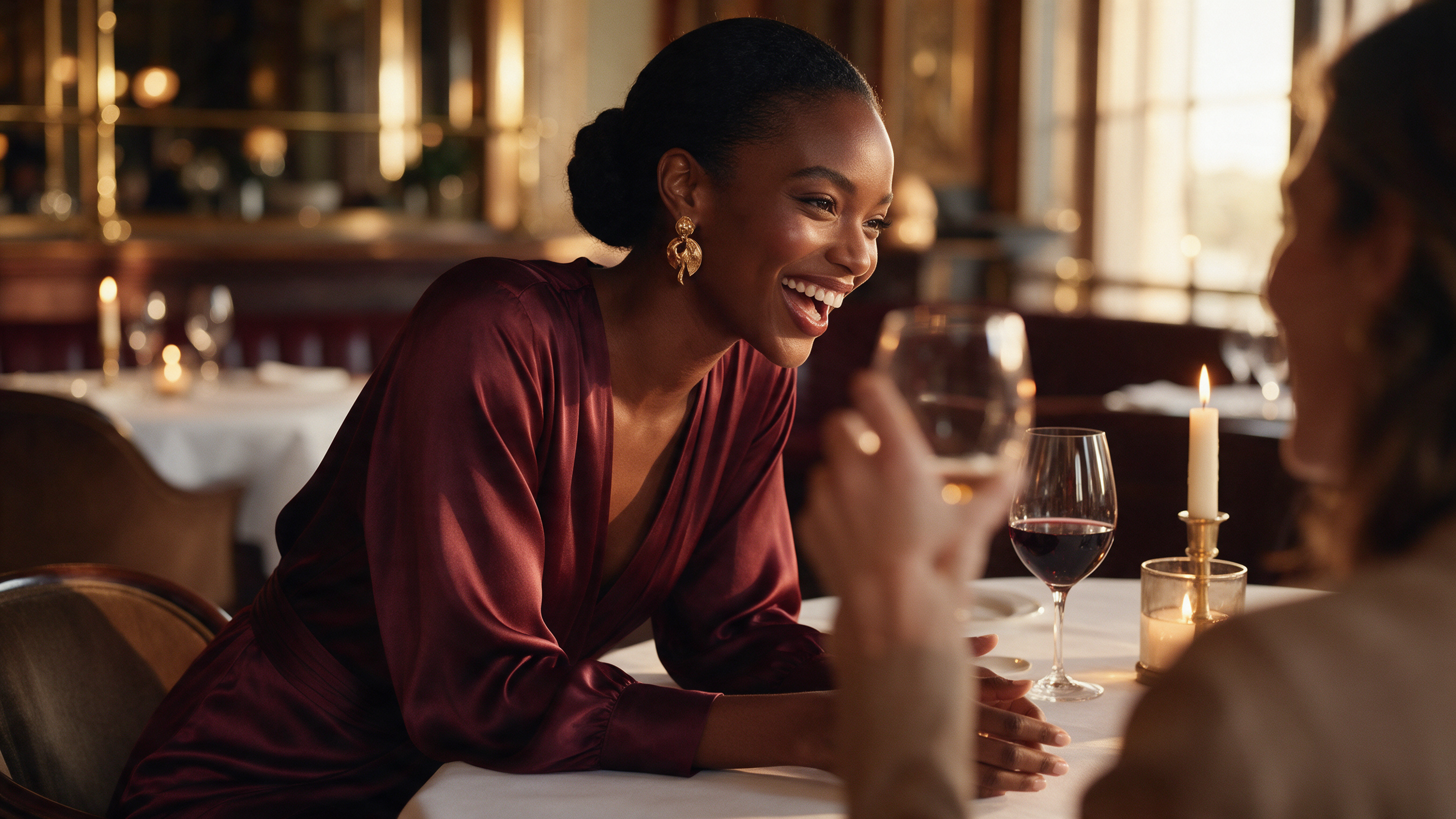
The formula: a deep-burgundy silk midi dress with a subtle cowl or bias cut + understated heels + a clutch in black or tortoise-shell tones + one statement element, like sculptural earrings or a silk scarf tied at the neck. Keep the jewelry minimal—the dress is the sentence; everything else is punctuation.
Why deep over bright: under restaurant lighting, deep burgundy behaves like the most interesting neutral in the room. It flatters candlelight instead of fighting it, and it will not clash with whatever the person across the table is wearing.
The tailoring route: a burgundy satin or crepe blazer worn as a top, half-tucked into wide-leg black trousers, with pointed mules. It reads modern, it survives a three-course dinner, and it stands out in a sea of black dresses without shouting. Add a slim gold cuff and you need nothing else.
Practical details that matter: bias-cut silk forgives a long meal better than anything structured; a midi hem survives both booth seats and bar stools; and a crossbody strap beats a clutch if the evening continues into a walk. Choose the shoe you can stand in for the after-dinner drink, not just the photo at the door.
Color note: deep burgundy pairs effortlessly with everything from ivory accents to your companion's grey suit. If you want more pairing science, our guide to color combinations that always work is a good next read.
4. Weekend City: Burgundy, But Casual
The most-worn burgundy outfit of 2026 will not be a dress at all—it will be a burgundy knit with jeans. "Burgundy outfit" searches spike hardest in September and October, exactly when the weather calls for a sweater and a coat, and this is the look that carries those searches.
The formula: classic burgundy crewneck or half-zip knit + medium-wash straight-leg denim + white sneakers or chestnut boots + a camel or taupe coat thrown over the shoulders. Add a burgundy beanie or a canvas tote for texture.
Why it works: denim supplies the ease, burgundy supplies the point of view, and camel stitches them together. It is the rare outfit that reads put-together at the farmers market and at the impromptu dinner that follows.
The elevated version: tonal burgundy weekend set—burgundy hoodie or knit with burgundy tailored joggers or a matching scarf and coat. Monochrome loungewear-adjacent dressing has moved firmly into "acceptable for brunch," especially in luxe fabrics like merino or cashmere blends. The trick is fit: relaxed but clean, never sloppy.
The jacket play: a burgundy bomber or suede jacket over ivory jeans and a striped Breton top. It borrows the French-girl formula and swaps navy for burgundy, which makes the whole thing feel current rather than costumey. White sneakers keep it grounded; ballet flats push it polished.
Cold-weather upgrade: when November arrives, swap the crewneck for a burgundy turtleneck under a long camel coat, add wool trousers instead of denim, and let the burgundy beanie be the only visible color. The look takes thirty seconds and earns compliments all day.
5. Holiday Party: Bright Burgundy Takes the Room
December is burgundy's second annual spike, and it belongs to the brighter end of the family. Where deep burgundy whispers at dinner, bright burgundy—and its sparkling cousins—announce themselves at the holiday party.

The formula: a bright-burgundy suit (blazer and matching trousers or a skirt) with a simple ivory or black silk camisole underneath, or a burgundy sequin or velvet dress if you want full festivity. Metallic shoes—gold, bronze, or pewter—turn the look up one more notch.
Why the suit wins: a burgundy suit is the rare party outfit you will rewear. Break the pieces apart in January—the blazer over jeans, the trousers with a cream knit—and the cost-per-wear collapses. A sequin dress, glorious as it is, lives for December alone.
The modern alternative: a burgundy satin maxi skirt with a fitted black or ivory knit on top. It splits the difference between "holiday" and "I could wear this again in January," which is the marker of a genuinely good party buy. Add statement earrings and a minaudière.
Texture guide for parties: velvet reads rich and traditional; sequins read celebrational; satin reads sleek and modern. Two textures maximum in one outfit—velvet blazer with satin skirt is dinner-party perfect, but velvet plus sequins plus satin starts to compete with the champagne tower.
Planning several parties this season? Build one burgundy capsule—a dress, a suit or skirt, and two tops—and remix it across every invitation. DLOOK's closet tools let you plan and preview every combination; learn how to build a party capsule wardrobe.
Accessories: The Fastest Way Into the Trend
You do not need a burgundy outfit to wear the trend—you need one burgundy accessory. This is the lowest-commitment, highest-return path into the color, and it works for every occasion above.
Bag: A burgundy shoulder bag or tote upgrades jeans-and-a-tee instantly and works with camel, grey, denim, and black coats alike.
Shoes: Burgundy loafers or ankle boots are the footwear equivalent of red lipstick—small area, big effect. They are also far more versatile than black in autumn.
Scarf & hat: A burgundy scarf over an ivory or grey coat is the classic entry look; a burgundy beanie softens any weekend outfit.
Tights: Burgundy tights under a black or grey mini skirt are the sleeper hit of the season—subtle, warm, and very 2026.
Jewelry & makeup: Keep metals warm (gold, bronze). For makeup, a wine-toned lip or a soft burgundy nail ties the whole look together without matching too literally.
5 Burgundy Pieces Worth Buying in 2026
If this guide has convinced you but your closet has not caught up, these are the five pieces that earn their place—ranked by how many outfits each one unlocks.
1. The burgundy knit. Crewneck or turtleneck, fine merino or a wool blend. It works with denim on weekends, charcoal trousers at the office, and layered under a slip dress at night. Highest cost-per-wear in the entire color story.
2. The burgundy coat. Wool or a wool-blend wrap or tailored style. Worn over all-beige, all-grey, or all-denim outfits, it does the styling for you. This is also the piece street-style photographers zoom in on first.
3. The burgundy satin or silk skirt. Midi length, bias or A-line cut. Dress it up with a camisole, down with a chunky cream knit and boots. It carries both the dinner and the holiday-party formulas above.
4. The burgundy bag. Structured shoulder bag or soft tote. The lowest-risk entry point and the piece that makes neutral outfits look intentional. Leather in oxblood ages beautifully and reads neutral by year two.
5. The burgundy dress. Long-sleeve midi in crepe or velvet, chosen for your calendar: matte for dinners and weddings, velvet or sequin for December. One well-chosen burgundy dress replaces three nearly-right black ones.
Buy in that order if budget is tight, in reverse order if you have a packed December calendar. Either way, prefer natural or quality blended fabrics—burgundy's depth is what sells the look, and depth only exists in fabric with body.
Before any purchase, it is worth five minutes of testing: upload your photo to DLOOK, try the piece virtually, and check the shade against your hair and skin in real daylight—not fitting-room lighting, which lies about red tones more than any other color.
Hair, Makeup & the Finishing Ten Percent
An outfit is a sentence; hair and makeup are the punctuation. With burgundy, the finishing rules are simple. Warm metal jewelry (gold, bronze, copper) almost always beats silver, because it echoes the color's warmth. A wine-toned lip or soft berry stain bridges the outfit and your face; a matching burgundy nail is elegant, not matchy, when the rest of the palette stays neutral. For hair, nothing competes with burgundy like effortless texture—loose waves, a low bun, or a simple tuck behind one ear. Save the elaborate updos for the sequin dress; the knit-and-denim look wants the opposite energy.
Fragrance completes the register: deep colors invite deep scents. A warm vanilla, amber, or woody rose sits naturally beside burgundy in the same way a crisp citrus sits beside white linen.
Common Burgundy Mistakes to Avoid
Burgundy is forgiving, but a handful of recurring errors separate polished looks from near-misses. Scan this list before you leave the house:
Matching too hard. Burgundy shoes, bag, coat, and lip all at once tips from styled into themed. Pick two burgundy elements maximum, and let one of them be small.
Ignoring undertones. A burgundy that fights your skin tone will never look right, no matter how good the outfit. Test shades near your face in daylight before committing.
Flat-on-flat dark dressing. Burgundy and black, or burgundy and charcoal, need at least one texture contrast or a metallic accent to separate the layers.
Wrong-fabric-right-color. A burgundy piece in a cheap, shiny synthetic rarely looks expensive. Burgundy rewards matte, substantial fabrics—if the fabric looks thin, the color amplifies it.
Treating it as only-December. Burgundy is a four-month color from September onward. The biggest style mistake is leaving it in the closet until the party invites arrive.
Quick Reference: 12 Burgundy Outfit Formulas
Occasion | Formula | Pairing |
|---|---|---|
Office | Deep-burgundy knit + charcoal trousers + camel blazer | Burgundy + charcoal |
Office (dress) | Burgundy long-sleeve midi dress + knee boots | Tonal + camel coat |
Date night | Burgundy satin slip dress + black leather jacket | Burgundy + black |
Date night (alt) | Burgundy knit set + oxblood coat | Tonal burgundy |
Dinner | Deep-burgundy silk midi dress + sculptural earrings | Tonal + black accents |
Dinner (alt) | Burgundy satin blazer + wide-leg black trousers | Burgundy + black |
Weekend | Burgundy crewneck + straight-leg denim + sneakers | Burgundy + denim |
Weekend (alt) | Burgundy suede jacket + ivory jeans + Breton stripe | Burgundy + ivory |
Holiday party | Bright-burgundy suit + ivory silk camisole | Burgundy + ivory |
Holiday party (alt) | Burgundy sequin dress + gold heels | Burgundy + metallic |
Anywhere | Any outfit + burgundy bag or boots | Accent strategy |
Outerwear | All-neutral outfit + burgundy coat | Burgundy as the neutral |
Save the table, screenshot it, or better—rebuild these looks with pieces you already own. The formulas are deliberately repetitive in structure: one burgundy anchor, one quiet companion color, one texture or metal accent. Learn that rhythm and you can improvise burgundy outfits for any invitation the season throws at you, from a Tuesday presentation to a New Year's Eve party.
If your closet is full of "nothing to wear," DLOOK can help you rediscover it: organize your closet and see your real options.
Burgundy Outfits 2026: FAQ
What colors go with burgundy clothes?
Ivory, camel, denim blue, charcoal grey, black (with mixed textures), metallics like gold and bronze, and—most of all—other shades of burgundy. Avoid pairing burgundy with very cool pastels or bright oranges, which fight its warm undertones.
Is burgundy still in style for 2026?
Yes—search interest shows burgundy outfit queries peaking each autumn and December, and the wider warm-neutral palette (chocolate brown, mocha mousse, ancora red) that fashion media have covered extensively keeps burgundy firmly in the trend conversation for fall-winter 2026.
Can I wear burgundy to the office?
Absolutely, especially in deeper shades. A burgundy knit with charcoal trousers, or a burgundy midi dress with a camel coat, reads polished and confident. Save the brightest, most festive burgundies for evenings and parties.
What shoes should I wear with a burgundy dress?
Black or nude heels for formal dinners, gold or bronze for parties, and knee boots in black or chestnut for daytime. Burgundy shoes also work when you want a long, uninterrupted line of color.
How do I wear burgundy if I usually wear only neutrals?
Start with accessories (a bag, boots, or scarf), then try burgundy as your outerwear over an all-neutral outfit. From there, graduate to a burgundy-and-denim weekend look—the easiest full outfit for neutral-lovers.
Is burgundy appropriate for a wedding guest?
Yes, especially for fall and winter weddings. A burgundy midi or maxi dress in matte crepe or velvet is seasonally perfect—just keep it away from anything that reads bridal-adjacent (white-adjacent lace, very pale blush tones) and check the dress code first.
Can men wear these burgundy formulas too?
Absolutely. Burgundy knit polos with grey trousers, oxblood loafers with navy suits, and burgundy overcoats over neutral tailoring all follow the same pairing logic—warm color, quiet companions, one texture contrast.
The Bottom Line on Burgundy in 2026
Burgundy is not a trend you need to chase so much as a tool you can learn. Pick your shade by undertone, pair it with one of the six formulas—ivory, camel, denim, charcoal, textured black, or tonal itself—then let the occasion dictate the fabric and the brightness. Master those three decisions and every burgundy outfit you assemble will look considered rather than lucky.
Start this week with the piece you will wear most: the knit for daily life, the dress for a season of invitations. Try it in the mirror, try it in daylight, and if you want a second opinion before you commit, let your phone give you one—DLOOK is built for exactly this moment.
Download the DLOOK app to virtual try on outfits, discover your perfect colors, and effortlessly manage your closet and looks.