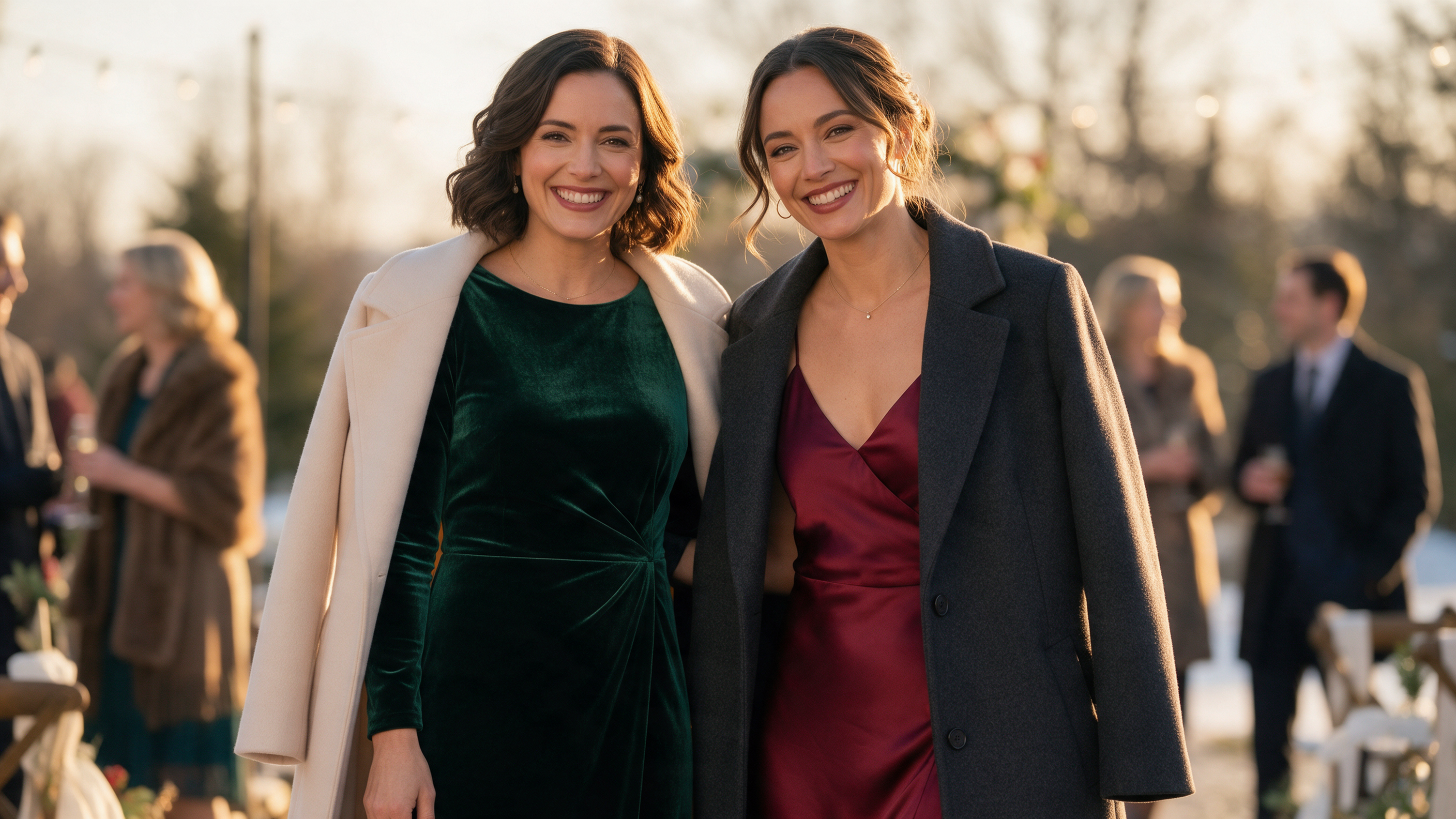
Quick Answer: Wear a midi or maxi dress in a rich jewel tone or winter floral, in a warm fabric like velvet, crepe, or heavy satin — long sleeves are both on-trend and practical. Match the formality to the dress code: floor-length gowns for black tie, cocktail-length dresses for evening receptions, and tailored midis or dressy separates for semi-formal and daytime ceremonies. Always bring a structured coat or wrap for outdoor photos.
Winter weddings have a special kind of magic — candlelit receptions, evergreen backdrops, and guests who actually get to dress up in fabrics that feel luxurious the moment the temperature drops. But they also come with a unique styling puzzle: how do you look elegant in the cold without shivering through the ceremony, and how do you decode a dress code that arrives on an invitation with no further explanation?
You are not alone in asking. Search interest for winter wedding guest dress peaks right now — in the second week of November — and stays elevated through January, as couples take advantage of off-season venue pricing and festive holiday-weekend dates. Whether your invitation says black tie, cocktail, semi-formal, or simply "join us," this guide gives you a complete, practical answer for every scenario, plus fabric, footwear, and plus size advice you will not find on a retail category page.
Consider this your winter wedding survival manual: a dress code decoder, section-by-section outfit formulas, a fabric and warmth guide written for real weather (not just indoor receptions), a dedicated plus size chapter, and a shopping roadmap for every budget — including the retailers winter wedding guests are actually searching for this season.
Why Winter Wedding Dressing Is a Different Skill
Most wedding guest advice on the internet is written for June. Winter guest dressing solves a genuinely different set of problems, and recognizing them upfront saves money and last-minute panic:
Temperature swings: A single wedding day can involve a 30-degree range — a cold parking lot, an overheated church, a drafty cocktail hour on a terrace, and a packed dance floor. Winter outfits must work across all four zones, which is exactly why layering strategy matters more than the dress itself.
Fabric physics: Summer fabrics (chiffon, organza, silk georgette) are engineered for heat. Wearing them in November means goosebumps in photos and a thin silhouette under reception lighting. Winter fabrics — velvet, duchess satin, wool crepe — carry visual weight that reads as intentional elegance.
Venue variety: Winter weddings cluster in venues summer never touches: historic churches, lodges, ski resorts, libraries, and candlelit cellars. Each has its own footwear and outerwear consequences.
The color question: Winter palettes are deeper and more saturated. Guests who default to pastel summer instincts can look washed out against evergreen and candlelight backdrops — and risk blending into the decor in the wrong way.
The good news: once you internalize these four differences, winter wedding guest dressing becomes easier, not harder, than its summer counterpart. Fewer acceptable fabrics means fewer decisions, and the season rewards boldness — a deep emerald velvet gown feels more festive in December than the safest black dress ever could.
The Winter Wedding Dress Code Decoder
Before you open a single shopping tab, find the dress code on the invitation. It is the single most reliable signal of what to wear, and winter versions of each code come with their own texture and length rules. Here is the fastest decision path:
Black tie (evening, formal venue): Floor-length gown in velvet, heavy satin, or embellished crepe. Dark jewel tones and winter metallics are ideal. Long sleeves or an elegant wrap handle the cold.
Black tie optional: A floor-length gown or a very polished midi in a luxe, weighty fabric. When in doubt, dress up rather than down.
Cocktail: Knee-to-midi length in a dressy fabric — satin, velvet, brocade, or structured crepe. Statement heels and a clutch finish the look.
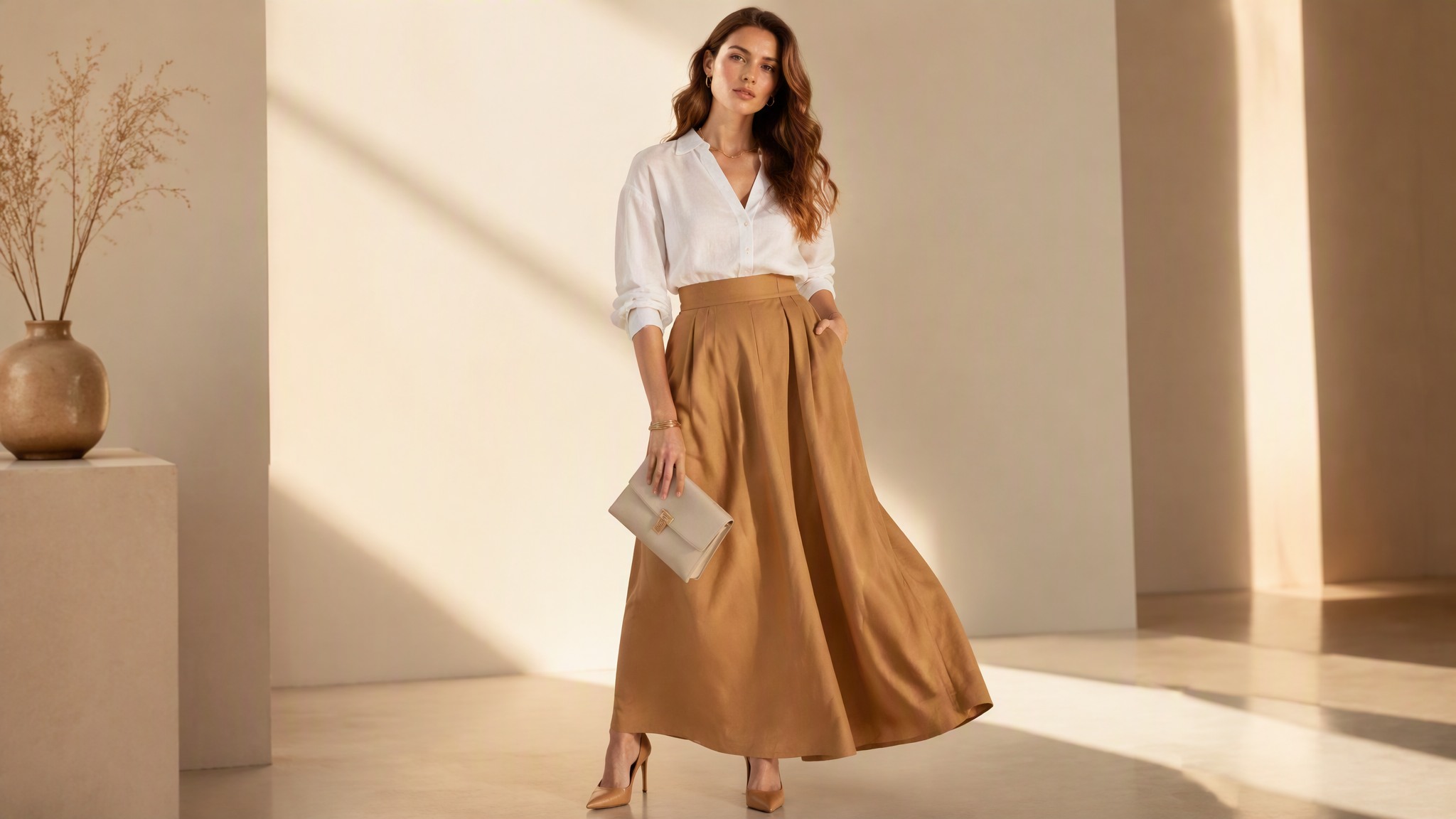
Semi-formal: A refined midi dress, a knit column dress, or dressy separates (slip skirt plus a fine-gauge sweater or tailored blazer). Block heels or elegant boots both work.
Daytime, rustic, or barn: Tea-length or midi dresses in richer textures — wool crepe, corduroy-trimmed styles, heavyweight florals. Dressy boots and a coat you actually like are fully appropriate.
If there is no dress code listed, use the time and venue as your guide: anything after 5 p.m. at a hotel, ballroom, or estate leans cocktail-to-black-tie; afternoon ceremonies at gardens, farms, or restaurants lean semi-formal or daytime. When still unsure, a midi dress in a jewel tone with closed-toe heels is the single safest winter wedding guest outfit in existence.
How to confirm when the code is ambiguous: Check the wedding website for an FAQ or attire page — couples increasingly specify exact guidance there. A quick, polite message to the wedding party ("What are you wearing? Want to make sure I match the formality") is always acceptable and far better than guessing. One more reliable signal: look at the invitation's design language. A letterpress, gold-foiled card signals a more formal event than a casual digital invite, and winter black tie weddings almost always say so explicitly — hosts know velvet gowns are not an accidental purchase.
Black Tie Winter Wedding Guest Dresses
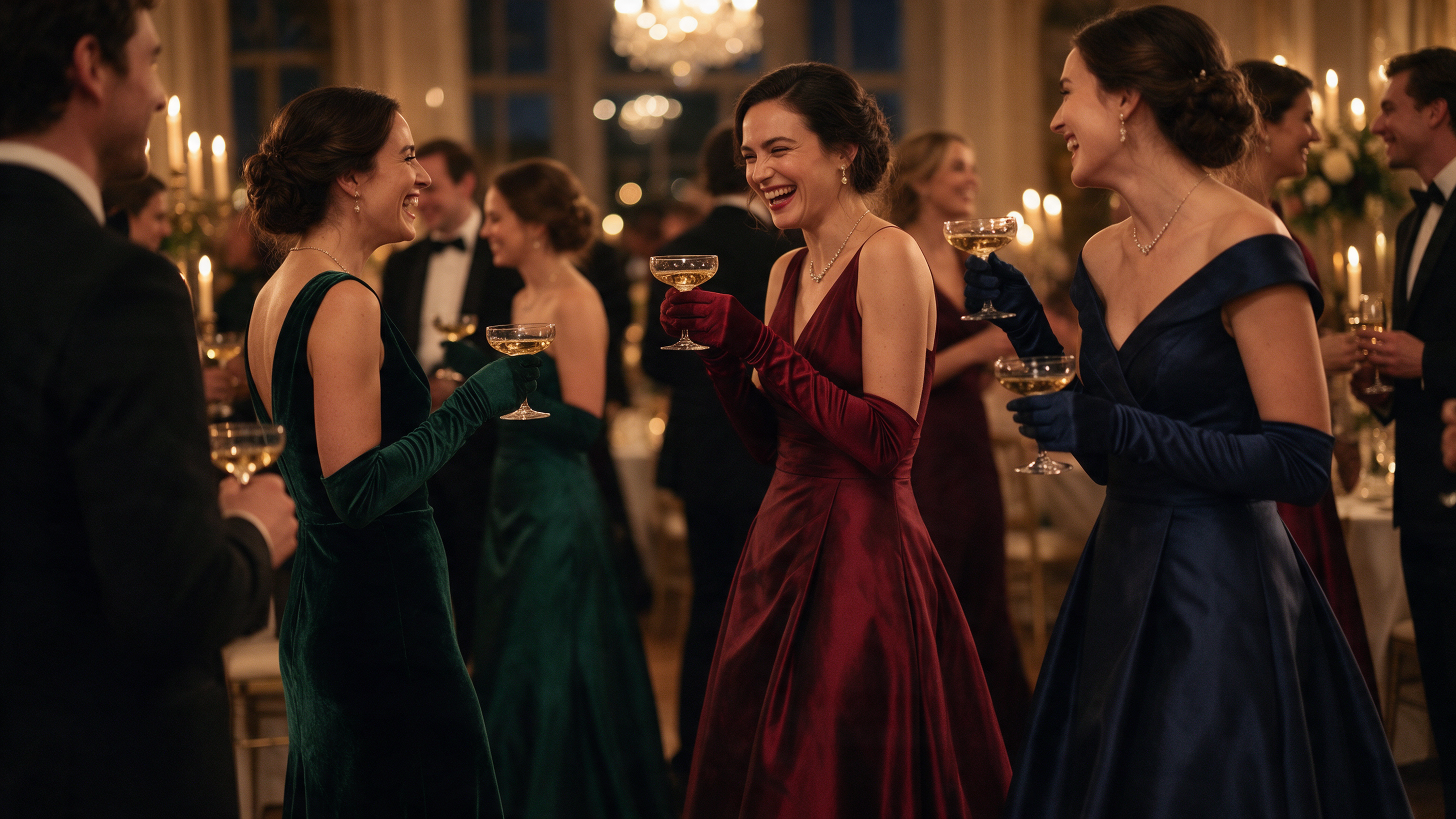
Black tie is where winter weddings truly shine. While summer black tie can feel repetitive — yet another floaty chiffon gown — winter black tie opens the door to the most glamorous fabrics in eveningwear: plush velvet, liquid heavy satin, and metallic brocade. Editors at Glamour UK consistently favor exactly these fabric-forward silhouettes in their seasonal edits of the best winter wedding guest dresses, and for good reason: nothing photographs better against candlelight and evergreen decor than a deep-toned velvet gown.
What to wear:
Floor-length gown in velvet, duchess satin, or crepe — this is the one dress code where maxi is the expectation, not the exception.
Color palette: emerald, sapphire, burgundy, plum, forest green, or winter metallics like bronze and gunmetal. Save pale champagne-adjacent tones for careful styling only.
Sleeves: Long sleeves are fully black-tie appropriate in winter — a bishop sleeve in velvet or a fitted long sleeve in satin reads formal, not casual.
Necklines: Portrait necklines, V-necks, and high necks all work; just plan a wrap or structured coat for any outdoor portion.
Footwear: Closed-toe heels are the default. Ankle-strap styles stay secure on winter floors — see our guide to how to wear ankle strap heels for pairing and comfort strategies that survive a six-hour reception.
What to avoid: anything that reads beachy (light chiffon, strappy sundress silhouettes), anything in white, ivory, or near-white, and overly casual knits. A floor-length gown in a lightweight summery fabric is still summery — fabric weight matters as much as length at this formality level.
Accessorizing black tie in winter: This is the dress code where jewelry can go maximal. A deep neckline in velvet invites a statement necklace or chandelier earrings; a high neckline calls for dramatic earrings and an updo instead. For handbags, think small and structured — a beaded or satin box clutch in a metallic tone. And plan your exit: a formal coat check or a reserved seat near the door means your outerwear never has to compete with the gown in photos.
Cocktail Attire Winter Wedding Guest Dresses
Cocktail is the most common winter wedding dress code, and the most forgiving. The formula: a knee-to-midi dress in a dressy fabric, elevated shoes, and one deliberate layer for warmth. Winter is where cocktail dressing gets interesting, because the season allows textures that would feel heavy in July — think velvet midi dresses, satin slip styles with long sleeves, and jacquard A-lines in dark florals.
Winning cocktail combinations for 2026-27:
A burgundy satin midi with long sleeves and a square neckline — arguably the single most photographed winter cocktail look of the season.
A velvet wrap midi in emerald or navy, paired with gold jewelry and a sleek low heel.
A brocade or jacquard A-line dress in a winter floral — festive without edging into holiday-party territory.
A long-sleeve crepe midi with a subtle cowl neck, in black or a deep jewel tone, for minimalist dressers.
Length sweet spot: just below the knee to mid-calf. Shorter hemlines are acceptable at cocktail if the fabric is elevated — a velvet mini with opaque tights and heeled boots is a genuinely chic winter formula — but when the couple, venue, or family skews traditional, the midi is the safer, more elegant bet.
Semi-Formal Winter Wedding Guest Outfits
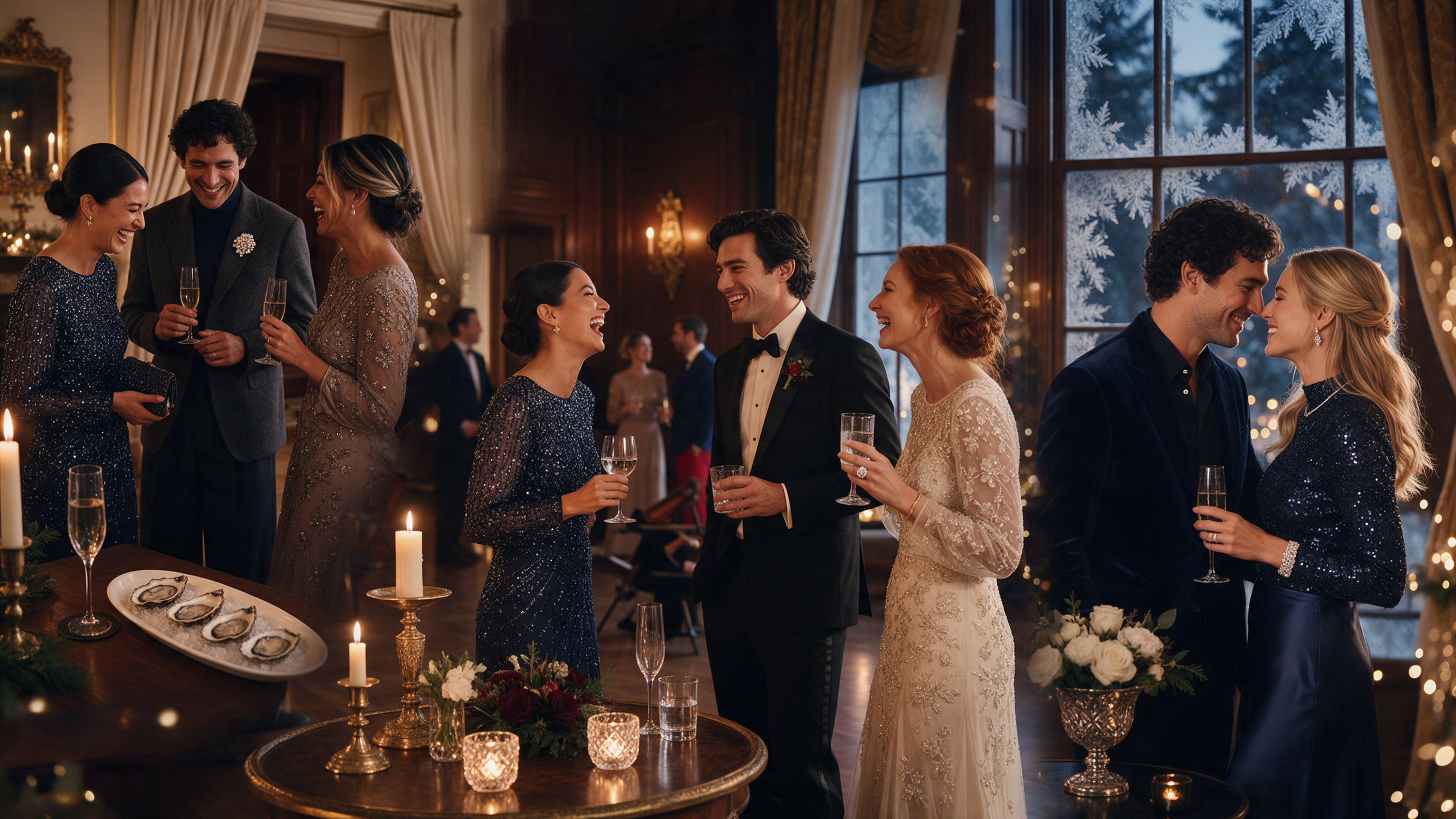
Semi-formal sits deliberately in the middle: more polished than daytime, less rigid than cocktail. In winter, this code rewards texture and smart separates more than any other. A refined midi dress works everywhere, but so does a column of tonal pieces — a fine knit top tucked into a satin slip skirt, or tailored trousers with a dressy blouse and a longline coat.
Reliable semi-formal formulas:
The knit midi: A fitted or gently flared midi dress in a fine merino or ribbed knit, in forest green, rust, or navy. Warm, elegant, and almost impossible to get wrong.
Slip skirt plus sweater: A bias-cut satin midi skirt with a fine-gauge fitted turtleneck. Add heeled ankle boots and statement earrings.
The suit alternative: A tailored blazer and matching wide-leg trousers in wool crepe, worn with a silk camisole. Fashion-forward and completely code-compliant.
Footwear at semi-formal can relax: block heels, heeled loafers, and polished ankle boots are all appropriate. The one rule that does not relax is color — keep white and ivory for the couple, and treat very pale pastels with caution unless the fabric is clearly winter-weight.
Daytime and Rustic Winter Wedding Guest Outfits
Daytime and rustic winter weddings — barns, lodges, vineyards, garden venues with heated tents — invite a softer, more practical interpretation of wedding guest style. This is the one category where boots are not just acceptable but often the smartest choice, and where a beautiful coat becomes part of the outfit rather than a cover-up you discard at the door.
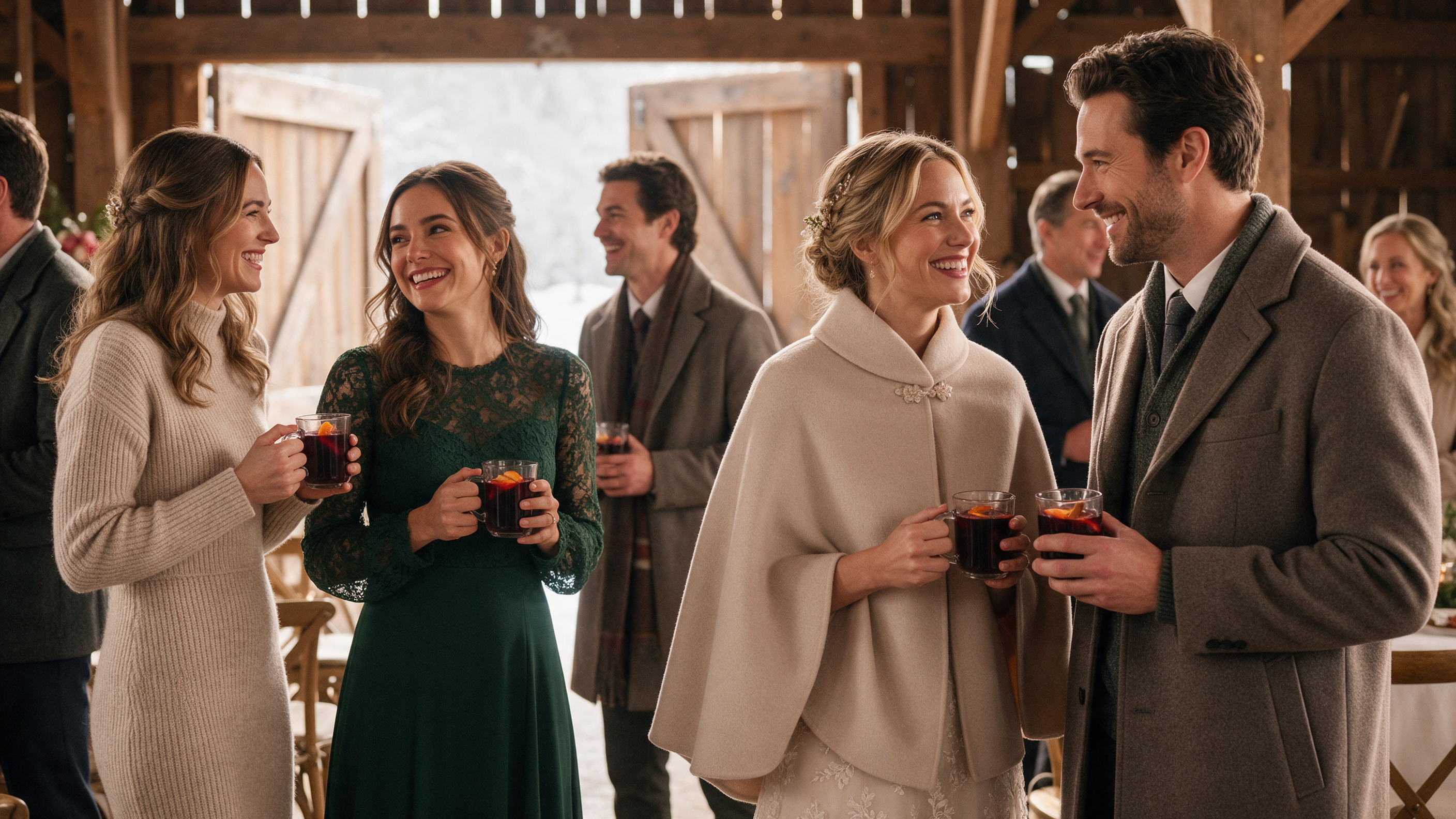
What works at daytime and rustic winter weddings:
Tea-length and midi dresses in wool crepe, corduroy-accented styles, or heavyweight winter florals.
Rich autumn-winter tones: terracotta, olive, mustard, rust, and pine green photograph beautifully against wood and evergreen settings.
Dressy ankle boots or weather-appropriate block heels — check the venue surface. Grass, gravel, and packed snow all punish stilettos.
A tailored wool or faux-fur-trimmed coat you are happy to wear in photos; a puffer, even a nice one, reads too casual for the ceremony itself.
For styling inspiration rooted in real celebrations, Green Wedding Shoes publishes curated looks from actual winter weddings, which is the fastest way to calibrate your outfit to the venue's real formality level.
Winter Wedding Guest Outfit Ideas by Venue
Dress codes tell you the formality; the venue tells you the practicalities. Here is how to translate both into a finished look for the five most common winter wedding settings:
Historic church or cathedral ceremony: Modesty matters more here than anywhere else. Choose a midi or floor-length dress with sleeves or a high neckline, bring a structured coat for the steps outside, and keep hemlines and necklines ceremony-appropriate even if the reception is more relaxed. A faux-fur stole is both warm and traditionally correct.
Hotel ballroom or grand estate: Standard black tie or cocktail rules apply, with one addition: polished floors favor heels with real soles, not stilettos that slip. A wrap dress in heavy satin travels exceptionally well for destination winter weddings.
Ski lodge or mountain resort: Embrace alpine textures — a knit midi with heeled boots, a wool coat with a faux-fur collar, or even an elevated sweater dress under a long puffer for transit. Apres-ski touches like a ribbed beanie in your bag for outdoor photos are charming here in a way they would never be at a cathedral.
City rooftop or loft: Edgier silhouettes are welcome: a satin slip dress with a longline blazer, a column midi with statement earrings, or tailored separates in winter whites (never bridal ivory) for the fashion-brave. Watch wind exposure on exposed terraces — a weighted hemline and a secure updo are your friends.
Barn, vineyard, or farm: Covered in the daytime section above, but the footwear point bears repeating: if the venue involves grass, gravel, snow, or a mud-prone path between parking and ceremony, heeled boots are not a compromise — they are the correct answer. The couple chose a rustic venue; nobody expects stilettos sinking into a field.
Accessories: Jewelry, Clutches, and Cold-Weather Extras
Winter accessories do more work than summer ones because the season adds genuine functional requirements. Build your accessory stack in this order:
Jewelry: Dark winter fabrics are a backdrop, not a competitor. Gold tones glow against emerald and burgundy; silver and gunmetal flatter navy and black. One rule for winter: if the dress has a busy neckline (ruffles, embellishment, high neck), skip the necklace entirely and let earrings carry the look.
Tights: The most underrated winter wedding accessory. A 60-80 denier opaque tight in black or a tone matched to your shoe is invisible as a fashion statement but transformative for warmth and confidence. Skip sheer nude tights below cocktail formality — in winter, opaque looks intentional and sheer looks like an afterthought.
Clutch: Small and structured. Winter allows richer finishes — velvet clutches, beaded minaudieres, and satin box bags all feel seasonal. If you must carry phone, keys, and makeup, choose a clutch with a wrist chain rather than upsizing the bag.
Wraps and stoles: A pashmina in a matching or metallic tone is the classic solution for drafty churches and terrace photos. For black tie, upgrade to a faux-fur stole or capelet — it photographs like part of the gown.
Gloves: Fully optional, but a short velvet or leather glove with a cocktail dress is an elegant, functional choice for outdoor photo windows. Remove them indoors.
The Winter Fabric and Warmth Guide
Winter wedding dressing is fundamentally a fabric decision. The right textile keeps you warm through outdoor photos and a drafty cocktail hour, while the wrong one leaves you clutching a pashmina all night. Here is what to look for on the label:
Velvet. The undisputed king of winter wedding fabrics. Warm, light-absorbing, and photographically rich, velvet works for every dress code from cocktail to black tie. Choose crushed velvet for cocktail and semi-formal, and smoother cotton or silk-blend velvets with a subtle sheen for black tie. Note the care label — most velvet gowns need steaming, not ironing.
Heavy satin and duchess satin. Structured, lustrous, and substantial enough to hold shape in cold weather. Heavy satin is the winter answer to silk chiffon — same elegance, three times the warmth.
Crepe and wool crepe. Matte, tailored, and quietly expensive-looking. Wool crepe dresses and suiting are ideal for semi-formal and daytime codes, and they layer beautifully over thin thermal base layers without adding bulk.
Brocade and jacquard. Woven patterns with metallic threads read festive and formal simultaneously. A brocade midi in a dark floral or paisley is one of the most distinctive winter guest looks available.
Color is warmth, too. Deep jewel tones do double duty in winter: they align with the season's palette and they hide the inevitable dusting of snow or raindrops far better than pastels. Burgundy in particular is the season's signature — our deep dive into burgundy outfits for 2026 covers exactly which shades and pairings flatter every skin tone.
Layering secrets no one tells you:
Thin thermal tops and leggings (the silk-blend kind) are invisible under crepe and velvet and add genuine warmth.
Opaque tights in 60-80 denier are winter-formal appropriate with cocktail and semi-formal dresses — choose a shade close to your shoe color to lengthen the leg.
Stick-on body warmers placed along the lower back outperform any wrap during outdoor photos.
Ask the couple or wedding party whether the ceremony is outdoors. Fifteen minutes on a heated terrace and a full outdoor ceremony are completely different wardrobe problems.
Plus Size Winter Wedding Guest Dresses
Plus size guests deserve the same fabric-first strategy — and this season, the options have never been better. Interest in plus size winter wedding guest dresses has risen sharply year over year, and brands have responded with extended-size velvet gowns, long-sleeve satin midis, and structured crepe dresses that go far beyond the shapeless wrap dresses of a few seasons ago.
The most flattering winter silhouettes, by dress code:
Black tie: An A-line or empire-waist velvet gown with a V or portrait neckline. The empire line highlights the narrowest point under the bust while the skirt skims beautifully — and velvet's structure provides built-in smoothing without shapewear gymnastics.
Cocktail: A wrap or faux-wrap midi in satin or velvet. Adjustable ties mean a perfect fit through the bust and waist, and the surplice neckline is universally flattering.
Semi-formal and daytime: A fit-and-flare knit midi or a tailored crepe column with strategic ruching at the waist. Both layer comfortably over thermal bases.
Where to find extended sizes this season: Meshki's curve edit has become a breakout search term this year for good reason — their satin and knit midis run thoughtfully graded rather than simply scaled up. Nordstrom and Dillard's both carry extended-size ranges from Eloquii, Adrianna Papell, and Alex Evenings, and Nordstrom Rack is a genuinely underrated source for last-season velvet gowns at a fraction of the original price. Order two sizes if you are between them; winter fabrics with structure forgive nothing, and a quick at-home try-on beats a stressful exchange deadline every time.
One fit note that applies across sizes: winter fabrics do not stretch like summer jersey. If a dress feels tight across the shoulders in the fitting room, it will feel tighter after a three-course dinner — size for the shoulders and bust first, then tailor the waist if needed.
Plus size fabric strategy deserves its own emphasis: Structure is your ally. Velvet, brocade, and crepe hold their shape and skim rather than cling, which is why they dominate plus size winter edits. Be cautious with thin, high-stretch satins and bodycon knits in lighter weights — they show every line of a thermal base layer underneath. If warmth is the priority, a structured A-line in a mid-weight velvet over invisible thermals will always outperform a slinky dress plus a heavy coat you are afraid to take off.
Sleeves as a plus size superpower: Long sleeves are consistently the most requested feature in plus size winter wedding guest searches, and for good reason — they solve warmth, coverage preference, and elegance in one design decision. Look for flutter sleeves that drape without volume at the bust, bishop sleeves balanced by a fitted bodice, and three-quarter sleeves as the universally flattering compromise.
Footwear, Outerwear, and the Cold-Weather Reality Check
Two decisions make or break a winter wedding outfit more than the dress itself: what is on your feet, and what you wear over the dress between the car and the coat check.
Footwear: Closed-toe is the winter default for every dress code. For black tie and cocktail, a heeled pump or ankle-strap sandal with a thin-but-warm construction works indoors; for semi-formal, daytime, and rustic venues, a block heel or heeled ankle boot is the smart play. If snow or rain is in the forecast, consider wearing commuter boots and switching to heels at the venue — packable ballet flats as a backup have saved more wedding guests than any other single item.
Outerwear: The coat rule is simple: it should look like part of the outfit. A tailored wool coat, a longline wrap coat, or a dressy faux-fur jacket all pass; a ski parka, even an expensive one, undercuts everything underneath it. If your dress is black tie and the coat is merely functional, plan to check it immediately and accept a few cold minutes for photos.
Where to Buy Winter Wedding Guest Dresses Right Now
Search behavior around this topic is heavily retail-driven, which tells you something useful: shoppers want concrete, shoppable answers. Here is how to shop smart for each budget and timeline:
Meshki: The fastest-rising brand name in winter wedding guest searches this season. Their satin midis and long-sleeve column dresses hit the cocktail-to-semi-formal sweet spot, and the curve edit extends the same silhouettes. Order early — popular sizes in seasonal colors sell through quickly.
Nordstrom: The best single destination for trying multiple price points at once, from $98 crepe midis to $400 designer velvet gowns, with extended sizes and an excellent formal dress edit. Their in-house styling services can shorten the decision process if you are shopping under time pressure.
Dillard's: A strong, frequently overlooked source for classic cocktail and black tie dresses from Adrianna Papell, Alex Evenings, and Vince Camuto — particularly good for guests who prefer a more traditional silhouette.
Nordstrom Rack: The value play. Last season's velvet and satin gowns appear here at 40-60% off, which matters because winter wedding guest dresses are typically single-wear purchases.
Whatever you buy, build in one week of buffer for tailoring or exchanges. January weddings especially catch shoppers off guard — the season's search interest stays high through the first weeks of the new year precisely because the winter wedding calendar runs long.
A budget framework: For a dress you will likely wear once, the value sweet spot is $80-180 — enough for real fabric weight and construction, low enough to justify the single wear. Above $300, prioritize versatility: a solid-color velvet or satin gown in navy or burgundy can serve black tie galas, holiday parties, and future weddings for years. Below $80, inspect the lining — unlined satin in winter is cold, staticky, and unforgiving in photos. And regardless of budget, dry-clean before wearing; nothing ruins a new gown's drape like factory creases.
Rental and resale as smart alternatives: Rental platforms have substantially expanded their winter wedding guest sections, and a $600 designer velvet gown rents for a fraction of retail — sensible for black tie events where you suspect the guest list will be fashion-literate. Resale apps are equally strong in the reverse direction: winter wedding guest dresses are among the most commonly listed occasion garments, often worn once and dry-cleaned.
What Not to Wear to a Winter Wedding
A few rules hold across every dress code and venue, rooted in long-standing wedding etiquette around keeping attention on the couple:
White, ivory, cream, and champagne: reserved for the couple, full stop. This convention exists across cultures precisely to avoid visual competition with the wedding party, as noted in the historical overview of wedding traditions on Wikipedia.
Summery fabrics and prints: light chiffon, eyelet, tropical prints, and strappy silhouettes read seasonally wrong even in a formal cut.
Anything too casual for the code: denim, leggings-as-pants, sneakers (unless the invitation explicitly says otherwise), and visible athletic outerwear.
Overcompensating with sparkle: a hint of metallic or sequin is festive; a fully sequined gown edges toward competing with the wedding party — save the head-to-toe shimmer for New Year's Eve events.
Impractical shoes chosen over sensible ones: if you cannot walk from the parking lot to the venue in them, they are the wrong shoes, no matter how good they look in the mirror.
One more seasonal note: if you attended summer weddings this year, you already know the guest-dressing basics — the winter version simply swaps lightness for weight, pastels for jewel tones, and bare shoulders for sleeves and wraps. Our guide to summer wedding guest outfits makes a useful reference if you are building a year-round occasion wardrobe.
Your Winter Wedding Guest Timeline
Occasion dressing rewards the prepared. Here is the countdown that eliminates almost every winter wedding outfit disaster:
Four to six weeks out: Lock the dress. This leaves time for shipping, exchanges, and tailoring — and for popular seasonal sizes and colors that sell through by late November.
Two weeks out: Confirm shoes are broken in (blister-free is a form of respect for the dance floor), tights are the right denier, and the coat-and-dress pairing actually works in daylight.
One week out: Steam or press the dress, dry-clean if new, and lay out the full look — jewelry, clutch, wrap, thermals — for a five-minute mirror check.
The day before: Check the forecast hour-by-hour for the ceremony window specifically, pack the backup flats and body warmers, and set a photo of the complete outfit on your phone so last-minute panic packing has a reference.
That is the whole system. With the dress code decoded, the fabric chosen for warmth, and the timeline under control, the only thing left to do is celebrate — and maybe keep the velvet gown in rotation, because winter weddings have a way of putting you on next season's guest list, too.
Frequently Asked Questions
What do you wear to a wedding as a guest in winter?
Choose a midi or maxi dress in a warm fabric like velvet, heavy satin, or crepe, in a jewel tone or dark floral. Match the length to the dress code: floor-length for black tie, knee-to-midi for cocktail and semi-formal, tea-length or midi for daytime. Add closed-toe shoes and a tailored coat or wrap for any time spent outdoors.
What does a woman wear to a winter wedding?
The most reliable option is a long-sleeve midi dress in a jewel tone, paired with block heels and a structured coat. For formal evening weddings, upgrade to a floor-length velvet or satin gown. Dark colors, rich textures, and sleeves are all fully appropriate and practical in winter.
What are the trends for wedding guest dresses in winter 2026?
The dominant trends for the 2026-27 winter wedding season are long sleeves, velvet in deep jewel tones (especially emerald and burgundy), satin midis with square or cowl necklines, and refined knit dresses for semi-formal and daytime codes. Brocade and dark winter florals are the standout pattern direction.
Can you wear black to a winter wedding?
Yes — black is not only acceptable at most modern winter weddings but is one of the most elegant choices for evening and black tie events. For daytime ceremonies, soften black with texture, a colorful accessory, or a jewel-toned coat so the overall look reads celebratory rather than somber.
Can you wear velvet to a winter wedding?
Absolutely — velvet is one of the best fabrics for a winter wedding guest dress. It is seasonally appropriate, photographs beautifully, and works for nearly every dress code. Reserve heavier crushed velvets for cocktail and semi-formal, and smoother, higher-sheen velvets for black tie.
What should I wear to an outdoor winter wedding ceremony?
Prioritize warmth while keeping the dress code: choose a heavier fabric, add invisible layers like silk-blend thermal leggings and body warmers, wear opaque tights with boots or block heels, and finish with a dressy wool or faux-fur coat. Keep indoor heels in a bag if the ceremony is on snow or grass.
Is it okay to wear pants to a winter wedding?
Yes, as long as the look stays formal. A tailored wide-leg trouser in wool crepe or heavy satin, paired with a silk blouse, a structured blazer or dressy top, and heels, is fully appropriate for semi-formal, cocktail, and even black tie optional dress codes. Choose a polished monochrome palette and elevated fabric so the overall effect reads occasionwear rather than office wear.
Written by the DLOOK Fashion Editor Team | Updated November 2026. The DLOOK team covers seasonal occasion dressing, fabric science, and fit strategy, combining editorial research with AI-assisted styling technology.
Not sure which dress code look suits you best? Try DLOOK, the AI outfit planner: photograph pieces from your own wardrobe or browse curated winter wedding guest looks, and see them styled on your body type before you buy or pack. Get started with DLOOK and take the guesswork out of winter wedding guest dressing.