
Every winter, the same thing happens: the temperature drops, you open your closet, and you realize the one thing standing between you and a pulled-together cold-weather wardrobe is a pair of boots you do not own yet. This year you do not have to guess. This boot styles guide for 2026 decodes the seven boot styles that actually matter this season — knee-high, ankle, chelsea, combat, riding, moto, and western — and tells you exactly who each one flatters, where each one earns its keep, and what you should realistically pay during the upcoming Black Friday boot sale.
Why trust this timing? Because search data is unambiguous: interest in winter boots women search hardest during Thanksgiving week — historically hitting the top of the annual chart right around Black Friday — and then decays fast. Boots are one of the highest-ticket items in a winter wardrobe, which is exactly why retailers discount them so aggressively. Buy at the right moment and you can realistically land a premium pair for mid-range money. Buy in January and you will pay full price for leftovers. If you want to build your whole winter wardrobe for under $500 this Black Friday, boots are the single biggest lever you have.
A quick note on scope: this guide focuses on the styles most relevant to US shoppers heading into the 2026 holiday season, with price tiers quoted in dollars and sale patterns based on American retail cycles. The styling principles, however — shaft height, calf fit, line continuity — are universal, and readers in other markets can apply the same framework to their local winter.
One more reason this guide exists now: knee-high boots are having a genuine resurgence. A widely covered celebrity styling moment around Katie Holmes wearing knee-high boots sent related searches soaring this fall, and the style is sitting at four times its summer search baseline as we head into winter 2026. Meanwhile, searches for chelsea boots women and waterproof winter boots have spiked dramatically year over year. The silhouettes below are not a random list — they are the styles the data says people will actually be wearing.
How to Decode a Boot Before You Buy
Before we get into the seven styles, it helps to speak the language. Five measurements decide whether a boot looks expensive or awkward, and none of them are the brand name.
Shaft height is where the boot ends on your leg. Ankle boots sit at or just above the ankle bone; mid-calf boots hit the widest part of your calf, which is the hardest place for a boot to flatter unless it is fitted precisely; knee-high boots end just below the kneecap. A boot shaft that ends at the widest point of your leg cuts the line of the leg in half, while a shaft that ends at a narrow point — the ankle or just under the knee — elongates it.
Calf circumference and stretch matter more than most shoppers realize. Standard shafts are built for an average calf measurement, and if your calves are athletic or you are shopping for boots for wide calves, look for stretch back panels, elastic gore, lace-up fronts you can loosen, or styles explicitly sold in wide-calf versions. A boot that gaps at the calf never looks polished no matter how much it cost.
Toe shape quietly changes the entire attitude of a boot. A pointed toe reads dressy and lengthens the leg but narrows the fit; an almond toe is the versatile middle ground; a round or square toe reads modern and gives your toes room. If you are between sizes or plan to wear thick socks, favor almond or round.
The sole and weatherproofing decide whether a boot is a look or a tool. A lug sole grips ice and rain; a leather sole looks refined and slips on wet pavement. For genuinely waterproof winter boots, look for sealed seams, treated leather or rubber uppers, and a gusseted tongue — marketing words like weather-resistant mean water-resistant, not waterproof.
Heel height is a wear-time calculation, not a style statement. A block heel between one and two inches is the sweet spot for all-day wear; a stiletto above three inches is an evening tool.
Material honesty is the last checkpoint. Full-grain leather molds to your foot, lasts for years, and takes weatherproofing treatments well; corrected-grain and split leather look similar on day one and age twice as fast. Suede is beautiful and winter-fragile unless treated. Faux leather has improved enormously — the best 2026 versions are indistinguishable at arm's length and handle rain better than suede — but budget versions can crack at the flex points within a single season. Whatever the material, check the sole construction: a boot that is glued together can still be excellent value on sale, but a stitched welt or Goodyear construction is what makes a discounted premium boot a genuine long-term investment.
Keep those six factors in mind and every style below becomes much easier to evaluate — and much harder to buy wrong during a flash sale.
1. Knee-High Boots: The 2026 Statement

Knee-high boots are the headline act of winter 2026. The style has existed for decades — the knee-high boot has a long history that runs from equestrian utility to mod-era fashion — but this season it has been re-energized by celebrity styling and a wave of sleek, refined designs. If you buy one statement boot this year, this is it.
Fit decoding: The shaft should end just below your kneecap and fit snugly through the calf without pinching. A slightly slouchy leather shaft reads relaxed and expensive; a stiff, gaping shaft reads borrowed. For shoppers searching for boots for wide calves, knee-highs are actually one of the friendliest categories: many 2026 versions include stretch back panels or adjustable lace-up backs, and the slouch silhouette is intentionally forgiving. When in doubt, size the shaft, not the foot.
Who they flatter: Knee-highs are leg-lengthening machines on almost everyone because the long shaft creates one unbroken vertical line. They are especially good for petite frames when worn with a heel and a hem that ends above the knee, and for taller frames with flat soles and midi skirts. If you have shorter calves, check the shaft height measurement against your own before ordering — a shaft that lands mid-knee instead of just below it will buckle.
Outfit formulas: The classic knee high boots outfit is a mini skirt or sweater dress with tights — this is the look that flooded street style this fall. For daytime, try them over straight-leg jeans or under a long wool coat with the hem grazing the boot top. Black leather knee high boots are the highest-searched variant this season and the most versatile: they work with everything from tailoring to slip dresses. Suede knee-highs in taupe or chocolate are the softer, weekend-leaning alternative.
Occasions: Campus days, office-to-dinner, gallery openings, date nights, and anywhere you want to look intentional with minimal effort. They are not a hiking-boot substitute — leave them home in slush.
Black Friday play: Knee-highs are premium-tier boots with premium-tier discounts. Expect 40–60% off at major retailers and department stores during Black Friday week, which is when last season's leather knee-highs get cleared to make room for spring. Budget $60–$120 for a good mid-range pair on sale, $150–$250 for designer leather. This is the single best boots deals 2026 category to watch.
2. Ankle Boots: The Workhorse

Ankle boots are the highest-mileage boot you will ever own. They are the only style on this list that works twelve months a year — with dresses in spring, with jeans every single day, and under trousers in the office. Search interest stays steady all year, peaking in spring and again during fall wardrobe resets, which tells you this is not a trend item; it is infrastructure.
Fit decoding: The shaft should sit right at the ankle bone — any higher and it visually shortens the leg, any lower and it stops supporting the foot. The critical detail is the vamp: the lower the cut across the top of the foot, the longer your legs look. A bootie with a low vamp and a slight heel is the single most leg-flattering configuration in footwear. Check that you can slip a finger behind your heel; ankle boots that are slightly tight across the instep never stretch enough.
Who they flatter: Everyone, with one styling rule: show some ankle-adjacent skin or keep a continuous line. Ankle boots plus cropped straight jeans with a small gap of skin (or a matching sock) elongate; ankle boots plus a flared jean hem pooled on top of the boot shorten. Petite frames should favor a pointed or almond toe and a heel of one inch or more.
Outfit formulas: Ankle boots with straight or slim jeans cuffed once; ankle boots with a midi skirt and a tucked knit; ankle boots with everything in a capsule wardrobe, honestly. The corner coffee shop is practically this boot's natural habitat — that is why our styling scene above shows them in exactly that context.
One sizing nuance specific to ankle boots: because there is no shaft to hold them up, they rely entirely on ankle tension. If you have slim ankles, look for styles with a small side zipper or an elastic panel so the boot grips rather than floats. If you have fuller ankles, a slightly higher shaft — one that lands an inch above the ankle bone — is noticeably more comfortable and looks intentional rather than tight.
Black Friday play: Ankle boots are so universal that every retailer discounts them, which means competition drives prices down hard. Solid leather pairs from mid-range brands regularly drop to $50–$90 during Black Friday week, and even premium brands hit 30–40% off. If you only buy one boot this year at full quality but discounted price, make it this one.
3. Chelsea Boots: The Polished Slip-On
The chelsea boot is the most quietly intelligent design in footwear: no laces, no zipper, no hardware — just an elastic side panel, a pull tab, and a clean silhouette that has survived since the Victorian era. The chelsea boot's history runs from Victorian riding boots to 1960s London mod culture to today, which is exactly why it never looks dated. This season's updates are a chunkier lug sole, a squared-off toe, and — most importantly for winter — waterproof builds.
Fit decoding: The elastic gore should hug the ankle snugly without bulging, and the boot should feel secure through the heel with no lift as you walk. Because there are no laces to adjust, fit is binary: it either fits or it does not, so try before you commit during a sale. A slightly roomier fit is fine if you plan winter socks; a tight chelsea boot is a blister machine.
Who they flatter: The low shaft and clean line flatter every leg type, and the slip-on ease makes them the friendliest option for anyone who finds tall shafts constricting. They are the rare boot that looks as correct with tailored wool trousers as with weekend denim.
Outfit formulas: Waterproof chelsea boots with raw-hem jeans and a chunky sweater for rainy commutes; sleek leather chelseas with a blazer and straight trousers for the office; suede chelseas with a corduroy skirt for weekends. The lug-sole 2026 version pairs surprisingly well with feminine midi dresses — the contrast is the point.
Black Friday play: Searches for women's chelsea boots and waterproof chelsea boots spiked dramatically this fall, and retailers have stocked accordingly — which means Black Friday markdowns will be deep. Waterproof winter boots in the chelsea shape are the smart buy: budget $70–$130 for a weatherproof pair on sale, and do not pay full price for leather — 30–50% off is standard during boots deals 2026 events.
4. Combat Boots: The Edge-Giver
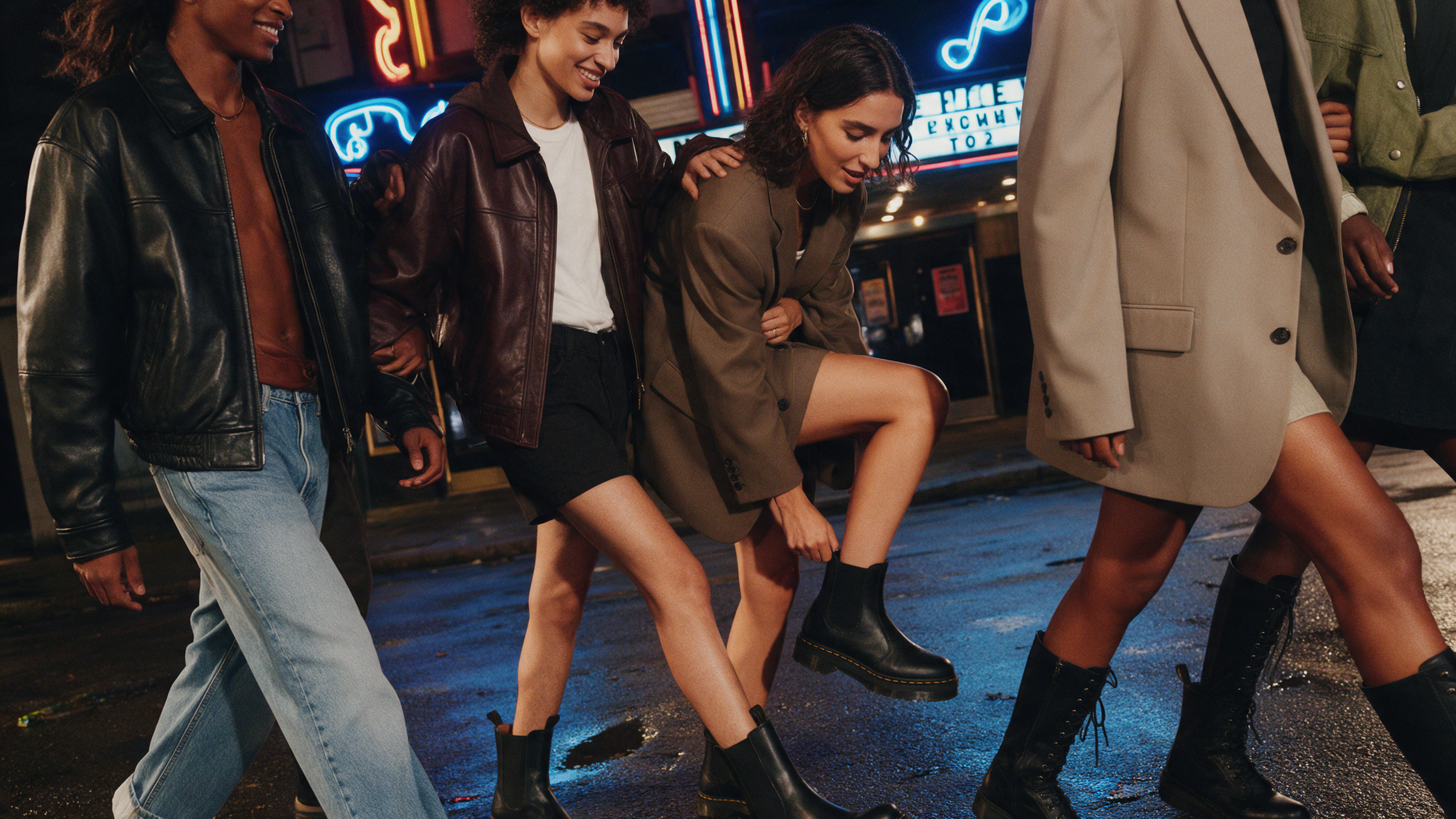
Combat boots bring instant attitude to anything they touch. Rooted in military footwear — the combat boot originated as standard military issue — the fashion version keeps the utilitarian DNA (rugged sole, speed-lace hooks, durable leather) and softens nothing. That is the appeal.
Fit decoding: Combat boots should feel secure through the heel with generous room in the toe box — they are built for long wear. The lace-up front is a hidden blessing for wide calves and high insteps: you control the fit along the entire shaft. Many wearers size up half a size for thick socks; check the brand's guidance before a sale purchase.
Who they flatter: The chunky sole adds visual weight, which balances broader shoulders, oversized coats, and long skirts beautifully. Petite frames should look for a slimmer lug sole so the boot does not overwhelm the leg. Because you can loosen the lacing, combats are one of the easiest answers to the boots for wide calves problem in the mid-shaft category.
Outfit formulas: Combat boots with a floaty midi dress — the classic hard-soft contrast; combat boots with straight jeans and a leather jacket for concerts and night streets; combat boots with tailored trousers when you want an office look with a spine. They are the designated boot of the concert queue, the night market, and every evening that might end somewhere unexpected.
Black Friday play: Combat boots sit in the accessible-luxury sweet spot: iconic enough to discount, practical enough to justify. Expect 30–50% off during Black Friday week, with budget-friendly lug-sole versions dropping under $60. Budget $70–$140 for leather that will actually last.
5. Riding Boots: The Timeless Classic
Riding boots are the quiet aristocrat of this list. Borrowed directly from equestrian gear — the riding boot was designed for horseback riding — they bring structure, tradition, and an equestrian polish that reads expensive without trying. When knee-high trends feel too fashion-forward, the riding boot is the conservative-chic alternative.
Fit decoding: Riding boots are defined by a tall, straight shaft, a low heel (traditionally under one inch), and minimal decoration. The shaft should stand up on its own and fit close through the calf — this is a boot that relies on precision, not slouch. Many brands offer them in multiple calf widths, which makes them a strong candidate for wide-calf shoppers who want a tailored look rather than a stretch look.
Who they flatter: The low heel and clean shaft are kind to taller frames and to anyone who wants knee-high polish without the trend quotient. They are office-appropriate in ways fashion boots sometimes are not, and they ground A-line skirts and riding-style jackets perfectly.
Outfit formulas: Riding boots with skinny or straight jeans tucked in; riding boots with a wool skirt and trench; riding boots with a quilted jacket and corduroys for weekend apple-picking energy. Keep the palette classic — black, brown, or oxblood leather.
Black Friday play: Riding boots are a department-store staple, and department stores compete hardest on Black Friday. Discounts of 40–60% on leather riding boots are common during the event, with good pairs landing at $80–$160. They also hold value — a classic riding boot bought on sale is a five-to-ten-year purchase.
6. Moto Boots: The Cool Minimalist
Moto (motorcycle) boots are the black leather jacket of footwear: utilitarian roots, permanent cool. The motorcycle boot was built to protect riders, and the fashion version keeps the buckles, straps, and low stacked heel that made it iconic.
Fit decoding: Moto boots typically hit mid-calf or just below the knee with a low, walkable heel and decorative straps across the ankle and shaft. Fit priority goes to the ankle — straps should sit flat, and the boot should not gape. Because the shaft is often structured, check calf measurements carefully; unlike combat boots, most moto boots do not adjust.
Who they flatter: The low heel and sturdy build make moto boots ideal for anyone on their feet all day, and the mid-calf shaft flatters legs that feel swallowed by knee-highs. They bring edge to soft pieces — silk skirts, oversized knits — without the bulk of a combat boot.
Outfit formulas: Moto boots with a slip dress and an oversized blazer; moto boots with black skinny jeans and a long coat for the city uniform; moto boots with a pleated midi when you want texture contrast. This is the boot for gallery nights, dinner reservations, and travel days when you want one pair that handles everything.
Black Friday play: Moto boots from premium brands see their deepest discounts of the year during Black Friday week — 40–50% off is realistic, putting quality leather pairs in the $100–$180 range. Budget brands drop under $50. If you have been eyeing a designer pair all season, this is the week.
7. Western Boots: The Wildcard
Western boots went from regional staple to mainstream fashion statement over the past few seasons, and they are fully settled into the 2026 winter lineup. The cowboy boot's distinctive silhouette — angled heel, pointed or snip toe, decorative stitching — brings personality no other boot on this list can.
Fit decoding: Western boots fit differently from anything else: the toe box is long (that pointed toe extends well past your actual toes), the heel should slip slightly as you walk, and the instep should feel snug. A little heel slip is correct, not a defect. Sizing is the opposite of most boots — many people size down half a size.
Who they flatter: The angled Cuban heel and elongated toe lengthen the leg dramatically, which petite frames love. The statement factor is high, so this boot rewards confident minimalism everywhere else in the outfit.
Outfit formulas: Western boots with a denim midi skirt and a cream knit; western boots under wide-leg jeans with the toe peeking out; western boots with a simple sweater dress and let the boots do all the talking. Save them for dry weather — intricate stitching and leather soles dislike slush.
Black Friday play: Western boots are trend-adjacent, which means retailers over-ordered and discount hard. 40–60% off is common during Black Friday week, with authentic craft brands holding closer to 20–30% off. Budget $80–$150 for a quality pair on sale. This is a style where waiting for the sale genuinely pays.
The Evening Wildcard: Heeled & Pointed-Toe Boots

Not a category of its own so much as a finish applied to any shaft, the heeled pointed-toe boot deserves its own moment because it solves a specific problem: how to wear boots to a party without looking like you are dressed for the commute. A knee-high or ankle boot on a slim two-to-three-inch heel with a pointed toe reads as evening footwear — elegant, deliberate, and far more walkable than a stiletto pump on cold pavements.
The formula is simple: keep the rest of the look minimal. A slip dress or a tailored mini with sheer tights, one strong coat on top, and the pointed boot carrying the polish. If your evening calendar fills up in December, this is the configuration to hunt during Black Friday — heeled boots are heavily discounted because they sit outside the practical-winter mainstream, which means less competition for your size.
The Styling Principle That Ties All Seven Together
Step back from the individual styles and one rule governs all of them: every boot is creating a line, and your job is to decide where that line starts and where it ends. A knee-high boot draws a long line from hem to knee. An ankle boot draws a short line and leaves the rest of the leg to the eye. A combat boot draws a horizontal line at the ankle and then sends the eye upward. Once you see boots as line-drawing tools, styling stops being memorized formulas and starts being intent. Ask what line you want today — long and sleek, short and grounded, broken and edgy — and the right boot from the seven above picks itself. This is also why the same boot can look wrong on Tuesday and right on Friday: the outfit around it changed the line, not the boot.
How to Make Your Black Friday Boots Last Five Winters
A discounted boot you destroy by February is not a deal. Ten minutes of setup and a two-minute weekly habit will double the life of any pair on this list.
Before first wear: apply a waterproofing spray to leather and suede, even if the box says weatherproof — factory treatments wear off within weeks. Let it dry overnight. Insert cedar shoe trees into leather boots; they absorb moisture, hold the shape of the shaft, and prevent the creases at the ankle that age a boot fastest.
Weekly: wipe salt and slush residue off with a damp cloth the day you get home — road salt is chemically hungry and will dry-crack leather within a single season if it sits. Let wet boots dry at room temperature, never on a radiator or heater vent; fast heat cooks the leather and separates glued soles.
Monthly: condition leather with a cream conditioner to replace the oils winter steals. Re-apply waterproofing spray before each forecast storm, not after. Rotate between at least two pairs if you can — leather needs a day to release moisture between wears, and the rotation costs nothing but a shelf.
Do this and a $90 pair of sale boots routinely outlasts a $250 pair that was worn hard and stored wet. The discount is only half the savings; the care is the other half.
Five Black Friday Boot-Buying Mistakes to Avoid
The deals are real, but so are the traps. After watching seasons of boot sale cycles, these are the five errors that turn a bargain into a return — or worse, a closet orphan.
Mistake one: buying for the fantasy, not the calendar. A heeled pointed-toe knee boot at 60% off is only a deal if your actual winter includes places to wear it. Match each purchase to at least three real occasions on your schedule before checkout.
Mistake two: ignoring the calf measurement. Shaft circumference is the number one reason boots get returned, and sale items are more likely to be final sale. Measure your calf at its widest point, in the afternoon when legs are at their largest, and compare against the product chart — never assume your usual size translates.
Mistake three: chasing the deepest discount instead of the right boot. A 70%-off boot in the wrong silhouette is not cheaper than a 40%-off boot you will wear a hundred times. Decide your style from the seven above first; then hunt the discount.
Mistake four: forgetting weather reality. If your winter involves slush, salt, and dog walks at dawn, one genuine waterproof winter boot belongs in the cart before any fashion pair. Wet socks ruin more outfits than boring shoes ever will.
Mistake five: shopping the sale alone. Boots are the bottom anchor of your entire winter silhouette. The shoppers who get the most compliments are the ones who chose boots and coat together, using a single plan for the whole season rather than two separate impulse buys.
Which Boot for Which Leg? A Quick Match Guide
Fit is personal, but patterns repeat. After mapping the seven styles against the most common fit questions we see — petite proportions, wider calves, all-day comfort needs, genuine snow duty — a clear mapping emerges. Use this table as a starting filter, then confirm the details with the fit notes in each section above. No table can replace trying a boot against your own leg, which is exactly why checking return windows before a Black Friday purchase matters so much.
Your frame or need | Best styles | Why |
|---|---|---|
Petite (under 5 foot 4) | Ankle boots with low vamp, heeled knee-highs, western boots | Continuous lines and low vamps visually add leg length |
Tall frames | Riding boots, flat knee-highs, moto boots | Long shafts finally fit; flat soles balance height |
Wide calves | Stretch-back knee-highs, lace-up combats, wide-calf riding boots | Adjustable or stretch construction forgives where rigid shafts pinch |
Athletic legs | Knee-highs, slouch boots | Snug shafts show off definition; slouch adds softness |
All-day comfort | Chelsea boots, moto boots, low-heel riding boots | Low heels, walkable soles, easy on-off |
Snow and slush | Waterproof chelsea, lug-sole combat | Sealed seams and grip soles over everything else |
Remember that boots do not exist in isolation — they anchor the bottom of a whole winter silhouette. Use this guide together with our companion piece to pair these boot styles with the right winter coat, and the two decisions stop competing with each other.
Black Friday 2026: When to Buy and What to Pay
Boots reward patience more than almost any other wardrobe category, because the discount calendar is so predictable. Here is the playbook for boots deals 2026.
Early November (now): Start tracking. Add your target pairs to wishlists, note current prices, and check calf-fit reviews. Retailers begin teaser markdowns of 20–30% in the first week of November — rarely the best price, but useful for size checking before the rush.
Thanksgiving week through Black Friday: The main event. Search data shows winter boots interest hits its annual peak precisely this week, and retailers respond with their deepest footwear markdowns. Expect 30–50% off mid-range brands, 40–60% off premium knee-highs and riding boots, and doorbuster ankle boots under $60. Shop early in the week for full size runs; by Black Friday itself, popular sizes in popular styles are gone.
Cyber Monday: Historically the best single day for boots specifically — the leftover premium inventory gets a final push. If a pair survived Black Friday weekend, Monday is when it hits its lowest price.
Where to watch: Search behavior heading into the season shows shoppers aggressively hunting retailer-specific deals — queries about whether major boot retailers are holding Black Friday sales spiked sharply this fall, alongside searches for department-store and brand-direct boot deals. The practical translation: check the specialty boot retailers for the deepest western and work-boot markdowns, the department stores for riding and knee-high discounts, and brand websites directly for the full size run that marketplaces have already picked over. Signing up for a brand's email list in early November typically unlocks an early-access code that beats the public doorbuster by a day.
Price cheat sheet: ankle boots $50–$90 on sale; waterproof chelsea boots $70–$130; combat boots $70–$140; riding boots $80–$160; knee-high boots $100–$250; moto boots $100–$180; western boots $80–$150. Pay more than that on sale only for exceptional leather you have touched in person. And one warning born of experience: verify the return window before buying final-sale boots online. A boot that does not fit your calf is not a deal at any discount.
If you are building a full winter wardrobe from scratch, the smartest move is to decide your boot budget inside a bigger plan — our $500 Black Friday capsule wardrobe challenge shows exactly how two carefully chosen boots can anchor twelve pieces and forty-eight outfits.
Frequently Asked Questions
What are the most popular boot styles for women in 2026?
The seven styles defining the season are knee-high, ankle, chelsea, combat, riding, moto, and western boots — with knee-highs leading thanks to celebrity styling momentum, and waterproof chelseas dominating the practical end.
How do I find boots for wide calves?
Look for stretch back panels, elastic gore, lace-up fronts, or explicit wide-calf versions. Measure the widest part of your calf and compare it with the brand's shaft circumference chart before ordering, especially for final-sale Black Friday purchases.
Are chelsea boots still in style for 2026?
Completely. They are a design that never truly leaves — and this season's lug-sole, weatherproof updates have search interest for chelsea boots women at multi-year highs.
When is the best time to buy winter boots on sale?
Black Friday week, with Cyber Monday often the single deepest day. Avoid January — selection is picked over and prices climb back up.
What boots should I wear with a winter coat?
Match shaft height to coat length: knee-highs under long overcoats, ankle and chelsea boots with mid-length parkas, moto and combat boots with cropped jackets. Aim for one continuous vertical line.
How many pairs of boots do I actually need for winter?
Two covers most lives: one weatherproof everyday boot and one statement pair. Add an insulated third if you get real snow. Quality over quantity wins every time — and Black Friday is how you get the quality at quantity prices.
About the author: This guide was written by the DLOOK Fashion Editor Team — stylists and wardrobe researchers who track seasonal search trends, fit science, and retail pricing cycles across the US and Japanese fashion markets. DLOOK is an AI-powered outfit styling app that helps you virtual try on looks, discover your perfect colors, and manage your closet. Every price range and trend callout in this article reflects November 2026 market data.
Download the DLOOK app to virtual try on outfits, discover your perfect colors, and effortlessly manage your closet and looks.