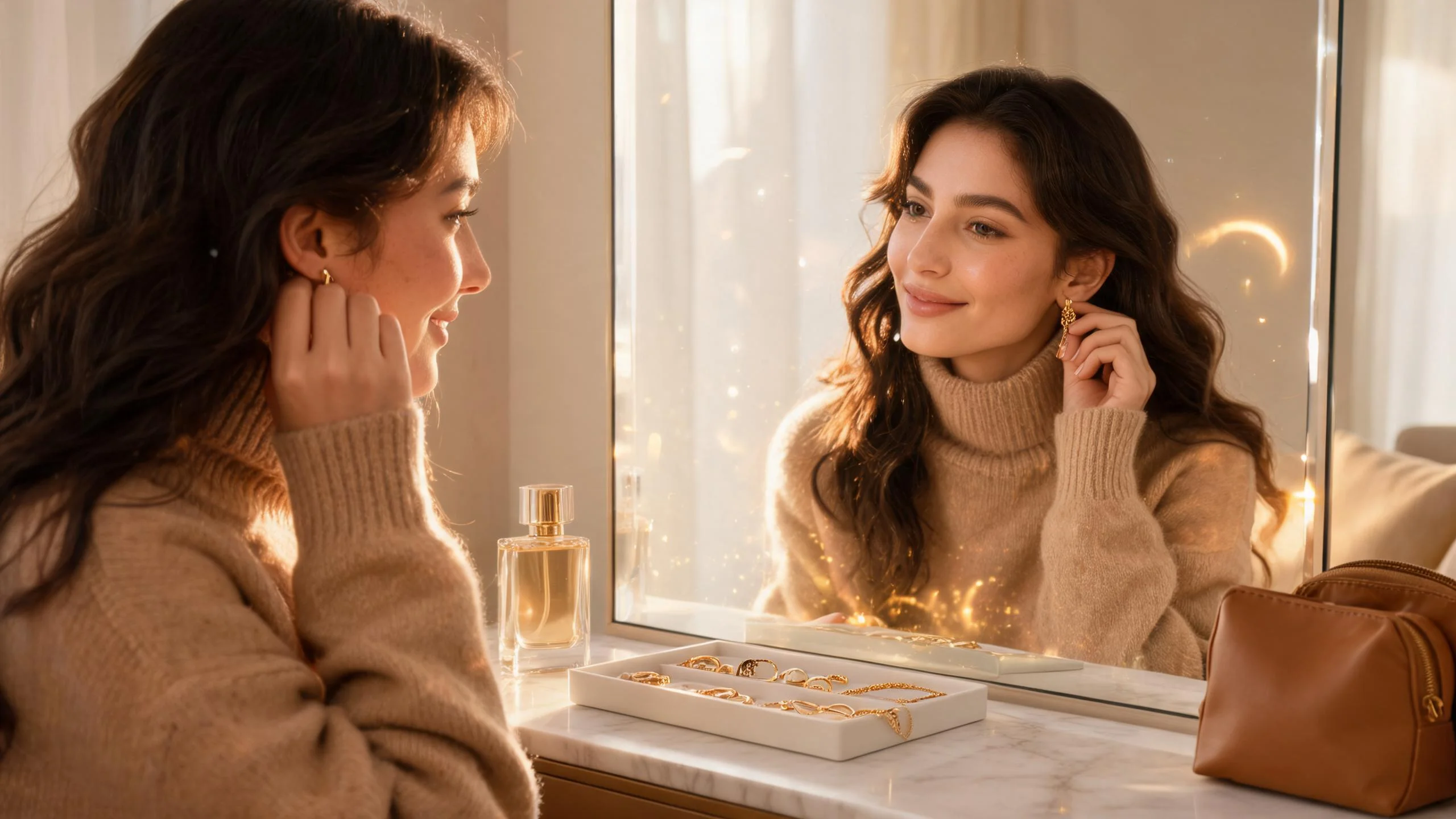
Accessories are the punctuation marks of personal style. A well-chosen belt, the perfect pair of statement earrings, or a meticulously coordinated bag-and-shoe combination can transform an outfit from ordinary to unforgettable. Yet for many women, styling accessories remains one of fashion's most intimidating challenges. Enter AI accessory styling—a rapidly maturing technology that is democratizing expert-level styling advice for everyday consumers across the United States.
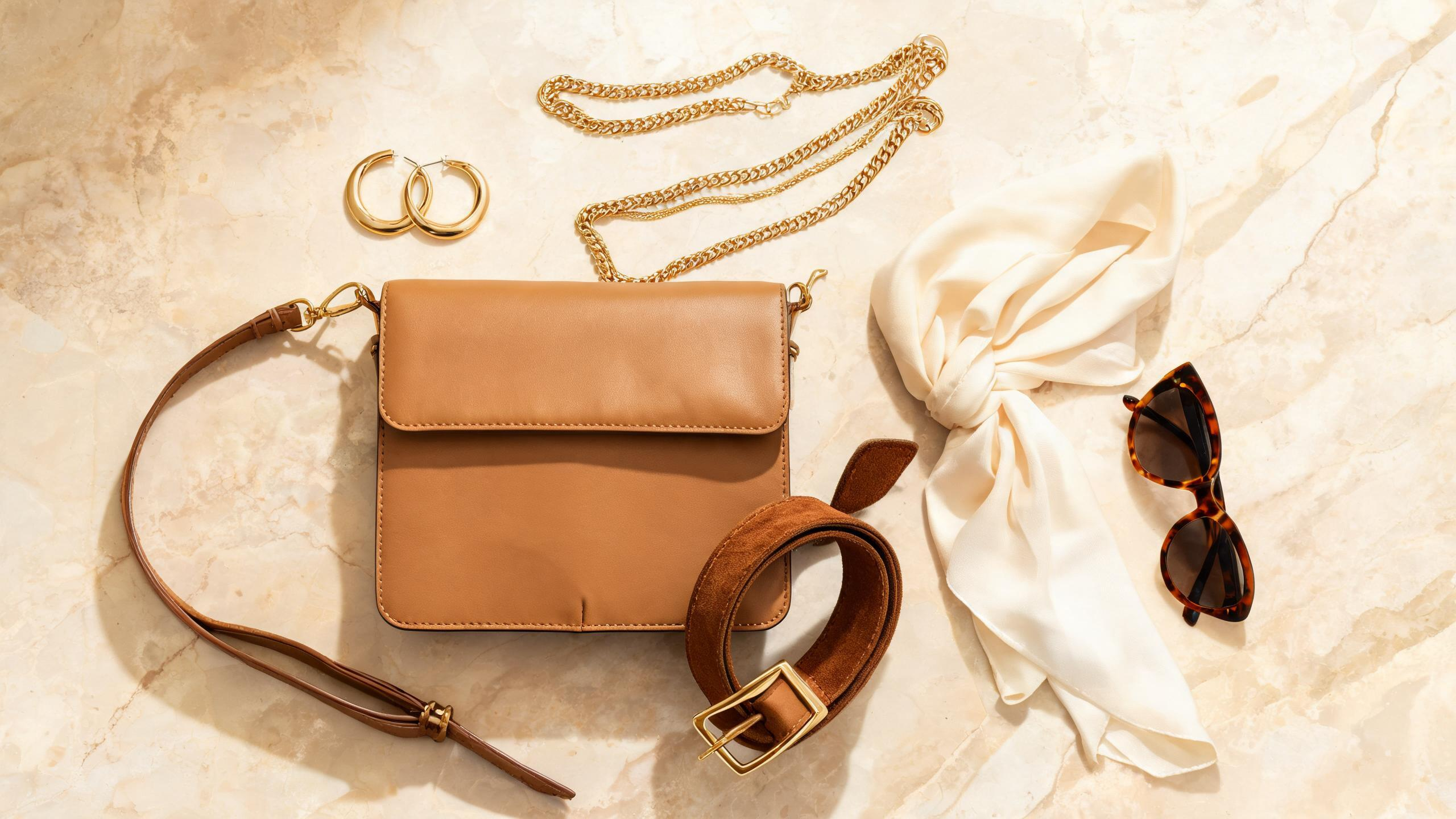
Why Accessory Styling Matters More Than Ever in 2026
The global fashion accessories market continues to expand, driven by consumer demand for personalization and self-expression. According to industry analysis from Vogue Business Technology, artificial intelligence is becoming the single most important tool bridging the gap between fashion inspiration and practical execution. Where consumers once relied on stylists or endless trial-and-error, AI-powered platforms now deliver hyper-personalized accessory recommendations in seconds.
Accessory styling has historically required what fashion insiders call an 'editor's eye'—the instinctive ability to balance proportions, harmonize colors, and layer jewelry without overwhelming a look. For the average consumer, developing this skill takes years. AI styling tools compress that learning curve into minutes, analyzing body type, skin tone, personal preferences, and current wardrobe to generate tailored recommendations.
How AI Accessory Styling Actually Works
Modern AI fashion platforms like DLOOK use a combination of computer vision, natural language processing, and recommendation algorithms to solve accessory coordination challenges. The technology has evolved significantly from early virtual try-on tools that simply overlaid images on static photos.
Today's systems process multiple data inputs simultaneously:
Visual Recognition: AI analyzes the color palette, fabric texture, neckline, and silhouette of your base outfit to identify compatible accessory categories
Body Proportion Analysis: Algorithms recommend necklace lengths, belt widths, and earring sizes that complement your specific frame
Color Theory Modeling: Machine learning models trained on thousands of professionally styled looks suggest metal finishes and color combinations that flatter your skin undertone
Context Awareness: The AI considers occasion, weather, and cultural factors—recommending a structured leather tote for work but a woven crossbody for weekend brunch
As Who What Wear has documented in their extensive accessory styling guides, the most successful looks follow invisible rules of proportion and harmony that AI can now decode and replicate at scale.
Mastering the Fundamentals: How to Match Shoes and Bag
One of the most common accessory dilemmas is the shoe-and-bag coordination question. Traditional advice insisted on perfect matching—same color, same material, same finish. Modern styling has moved beyond this rigid rule, but the replacement principles can feel even more confusing.
AI accessory styling simplifies this by applying what stylists call 'intentional coordination' rather than 'exact matching.' The algorithms analyze:
Tonal Harmony: A camel tote can pair beautifully with cognac loafers even if the leathers differ slightly in shade, because they share the same warm color family
Texture Contrast: Smooth patent heels with a slouchy suede bag create visual interest that monochromatic matching cannot achieve
Occasion Alignment: A structured top-handle bag and pointed pumps signal professionalism; a canvas tote and espadrilles communicate casual ease
Platforms like DLOOK take this further by showing you three to five shoe-and-bag combinations for any outfit, explaining the visual logic behind each pairing. This educational approach—teaching users why certain combinations work—builds lasting styling confidence rather than creating dependency on the tool.
Jewelry Pairing Guide: AI-Powered Metal Mixing and Layering
Jewelry layering has dominated fashion trends for years, but executing it well requires understanding scale, weight distribution, and metal tempering. The 'rule' that you cannot mix gold and silver has been thoroughly debunked by stylists, yet many consumers still hesitate to combine metals.
AI jewelry pairing guides solve this by analyzing your existing collection and suggesting combinations that would never occur to most wearers. The technology considers:
Neckline Geometry: V-necks call for pendant necklaces; crew necks favor collar styles; off-shoulder silhouettes demand statement earrings instead of neckpieces
Metal Gradients: AI can suggest bridging pieces—like a two-tone watch or mixed-metal chain—that make silver and gold look intentional rather than accidental
Layering Density: For delicate necklaces, algorithms recommend spacing between pendants and chain lengths to prevent tangling while maintaining visual flow
According to Who What Wear's jewelry trend analysis, the most sophisticated accessorizers in 2026 are those who use AI to experiment with combinations they would never have tried independently, then refine the suggestions based on personal taste.
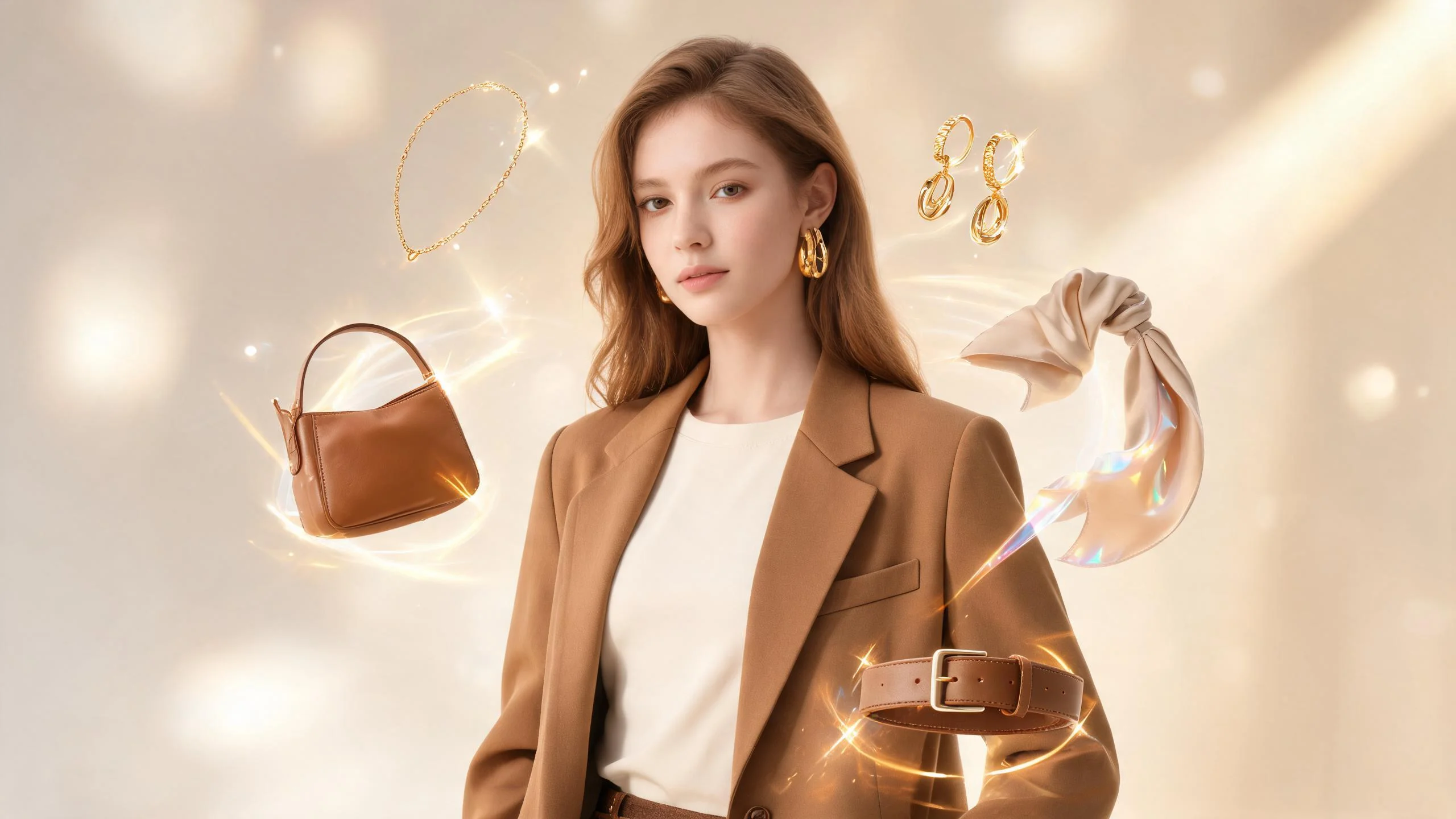
Belt Styling Outfit Ideas: The Most Underrated Accessory
Belts are perhaps the most overlooked accessory category, yet they offer the highest styling ROI. A well-placed belt can define a waistline, add color contrast, introduce texture, or transform the silhouette of an entire garment.
AI styling tools are particularly valuable for belt recommendations because belt selection involves complex proportion calculations:
Width Rules: Narrow belts (under 1 inch) elongate the torso; wide belts (over 2 inches) create dramatic waist definition but can shorten the appearance of the midsection
Placement Mathematics: Wearing a belt at the natural waist versus the hip changes the perceived leg-to-torso ratio by significant margins
Color Anchoring: A belt in a contrasting color creates a 'color block' effect that can either flatter or disrupt your overall silhouette depending on body proportions
AI systems trained on professional styling data can instantly calculate which belt width, color, and placement will achieve your desired effect—whether that is lengthening legs, creating an hourglass illusion, or adding a pop of color to a monochromatic ensemble.
Statement Accessories 2026: Bold Choices Made Smarter
Statement accessories—oversized earrings, sculptural bags, architectural belts—are defining fashion in 2026. But the risk of statement pieces is that they can overwhelm rather than elevate. This is where AI accessory styling proves its most practical value.
By analyzing the visual weight of your base outfit, AI can determine exactly how much 'statement' your look can handle. A minimalist white shirt and jeans can support a dramatic chandelier earring or an oversized sculptural clutch. A printed midi dress with ruffled sleeves needs more restrained accessories to avoid visual chaos.
As documented in Glamour's accessory trend reports, the most successful statement accessory moments in 2026 share one characteristic: the bold piece feels like a natural extension of the outfit rather than a competing element. AI achieves this harmony by analyzing the 'visual rest' in your ensemble—those areas of neutral space where a statement piece can live without competition.
Virtual Try-On Accessories: The Technology Revolution
Virtual try-on technology has moved beyond novelty to become a genuinely useful shopping tool. For accessories specifically, the technology solves a unique problem: unlike clothing, where fit is the primary concern, accessory try-on must evaluate color harmony, scale, and movement.
Advanced virtual try-on for accessories now includes:
Dynamic Lighting Simulation: See how gold versus silver jewelry reflects against your skin tone under different lighting conditions
Movement Physics: Earring swing, necklace drape, and bag strap drop are all rendered with realistic physics
Stack Previews: Layer multiple rings, bracelets, or necklaces simultaneously to test combinations before purchasing
Research from Vogue Business Sustainability indicates that virtual try-on technology is also reducing return rates by up to 40% in accessory categories, making it environmentally and economically beneficial beyond its convenience factor.
Complete the Look: AI Fashion as Your Personal Stylist
The phrase 'complete the look' has become the rallying cry of AI fashion platforms, and for good reason. Most consumers can assemble a basic outfit—top, bottom, shoes—but struggle with the final 10% of styling that elevates an outfit to editorial quality.
That final 10% typically consists of:
The third layer (blazer, cardigan, or vest) that adds structure
The scarf or belt that introduces color or texture
The jewelry that draws attention to your best features
The bag that ties the color story together
The shoe that grounds the entire silhouette
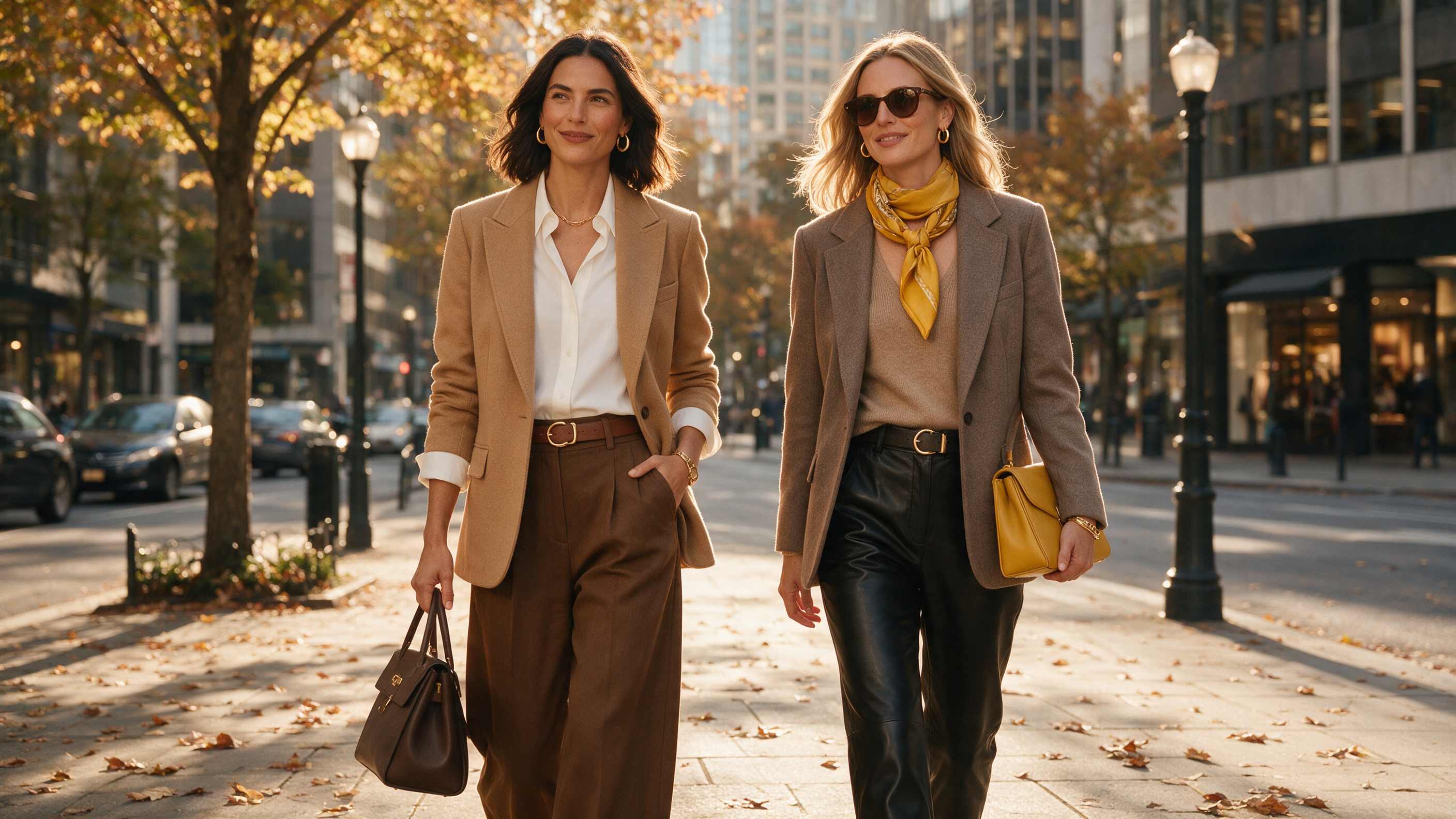
AI styling tools excel at this completion stage because they view the outfit as a total system rather than individual items. When you input a base look—say, a navy midi dress and white sneakers—AI doesn't just suggest 'a bag.' It suggests a structured cognac leather crossbody that picks up warm undertones in your skin, worn with gold hoop earrings that echo the round shape of the bag's hardware, and a thin belt in matching cognac that creates a color bridge between the bag and any warm-toned elements in your dress print.
This systems-thinking approach to styling is what separates amateur accessorizing from professional styling, and AI has made it accessible to anyone with a smartphone.
Building Your 2026 Accessory Wardrobe with AI
As Glamour's fashion trend coverage and Who What Wear's trend forecasts have both emphasized, the modern accessory wardrobe is moving away from quantity toward strategic versatility. AI helps identify which pieces offer the highest coordination potential within your existing closet.
A smart 2026 accessory wardrobe built with AI guidance typically includes:
The Neutral Foundation: One black leather bag, one brown leather bag, and one woven or textured bag for summer months
Metal Flexibility: Rather than committing to all gold or all silver, invest in two-tone pieces and one statement item in each metal
Belt Architecture: A slim black belt, a medium-width tan belt, and one statement belt (western, chain, or oversized buckle)
Scarf Versatility: One large silk square, one lightweight oblong, and one textured winter-weight scarf
Shoe Anchors: Neutral pumps, casual sneakers, ankle boots, and one statement shoe (metallic, sculptural heel, or bold color)
AI analysis of your existing clothing palette can determine which neutral shades will coordinate with 90% of your wardrobe, eliminating the guesswork from accessory investment.
The Future of AI Accessory Styling
Looking ahead, AI accessory styling is poised to become even more sophisticated. Emerging capabilities include augmented reality mirrors that show real-time accessory overlays, predictive algorithms that suggest accessory purchases before you realize you need them, and collaborative filtering that shows you how people with similar body types and style preferences are wearing the same pieces.
What will not change is the fundamental truth that accessories are the most efficient way to express personal style. A basic white t-shirt and jeans can look minimalist, bohemian, corporate, or glamorous depending entirely on the accessories chosen. AI simply gives every consumer the ability to make that choice with confidence and precision.
Ready to transform your accessory game? Download DLOOK on the App Store or Google Play and discover how AI accessory styling can elevate every outfit in your wardrobe.
About the Author
Editorial Team — This guide was produced by the DLOOK fashion editorial team in collaboration with certified stylists and AI researchers. All recommendations are based on current styling principles and verified technology capabilities. Data sources include Vogue Business Technology, Who What Wear, and Glamour. Last updated July 2026.