Winter on campus is a styling exam nobody studies for: sleet on the quad, a three-hour library block and a 7 p.m. group project meetup can all land in the same day. The fix isn't a bigger budget; it's a system. These winter campus outfits for 2026 are built as 12 copyable layering formulas, each mapped to a real scenario: the cold walk to class, the 8 a.m. lecture, library study days, finals week, coffee between classes and slushy wet-campus days. Start with the three-layer system, then steal the formulas.
The 3-Layer Winter Campus System
Every formula in this guide is a variation of one method: thermal base + knit mid + weather outer. Master it once and you can build a warm winter college outfit in the dark at 7:40 a.m. without thinking.
Layer 1 — The thermal base. A fitted long-sleeve thermal top and thermal leggings (or long johns) under everything. This is the layer that actually keeps you warm; everything else is management. Choose a thin merino or waffle-knit thermal — thick enough to trap heat, thin enough to disappear under a sweater. If you only fix one habit this winter, make it this one. It does more for your comfort than any single coat purchase, and it costs a fraction of one.
Layer 2 — The knit mid. Crewneck sweaters, cable knits, quarter-zips and knit vests. The mid layer is your visual identity indoors — it's what people see in a lecture hall or library when your coat comes off. Build a small rotation in colors that echo each other (more on the hero-color trick below) and your outfits assemble themselves.
Layer 3 — The weather outer. A wool walker coat, a quilted puffer or a water-resistant parka. The outer layer is chosen by forecast, not by outfit: dry cold gets wool, wet cold gets technical fabric, deep-freeze weeks get the long puffer. If you want a deeper comparison of coat silhouettes as formula components, see our guide to which winter coat style fits your campus formula.
This three-layer logic is the same reason your fall campus rotation worked — fall campus athleisure staples like quarter-zips and hoodies simply move down one tier and get a thermal base tucked underneath. Nothing gets retired; everything gets re-layered. For a broader look at how fashion editors build winter looks around exactly this kind of layer math, Who What Wear's layering guide is a solid companion read.
12 Named Winter Campus Outfit Formulas
Each formula below is written to be copied exactly: base, mid, outer, bottom, shoes, bag and the color echo that ties it together. Swap pieces for what's in your closet — the structure is what matters.
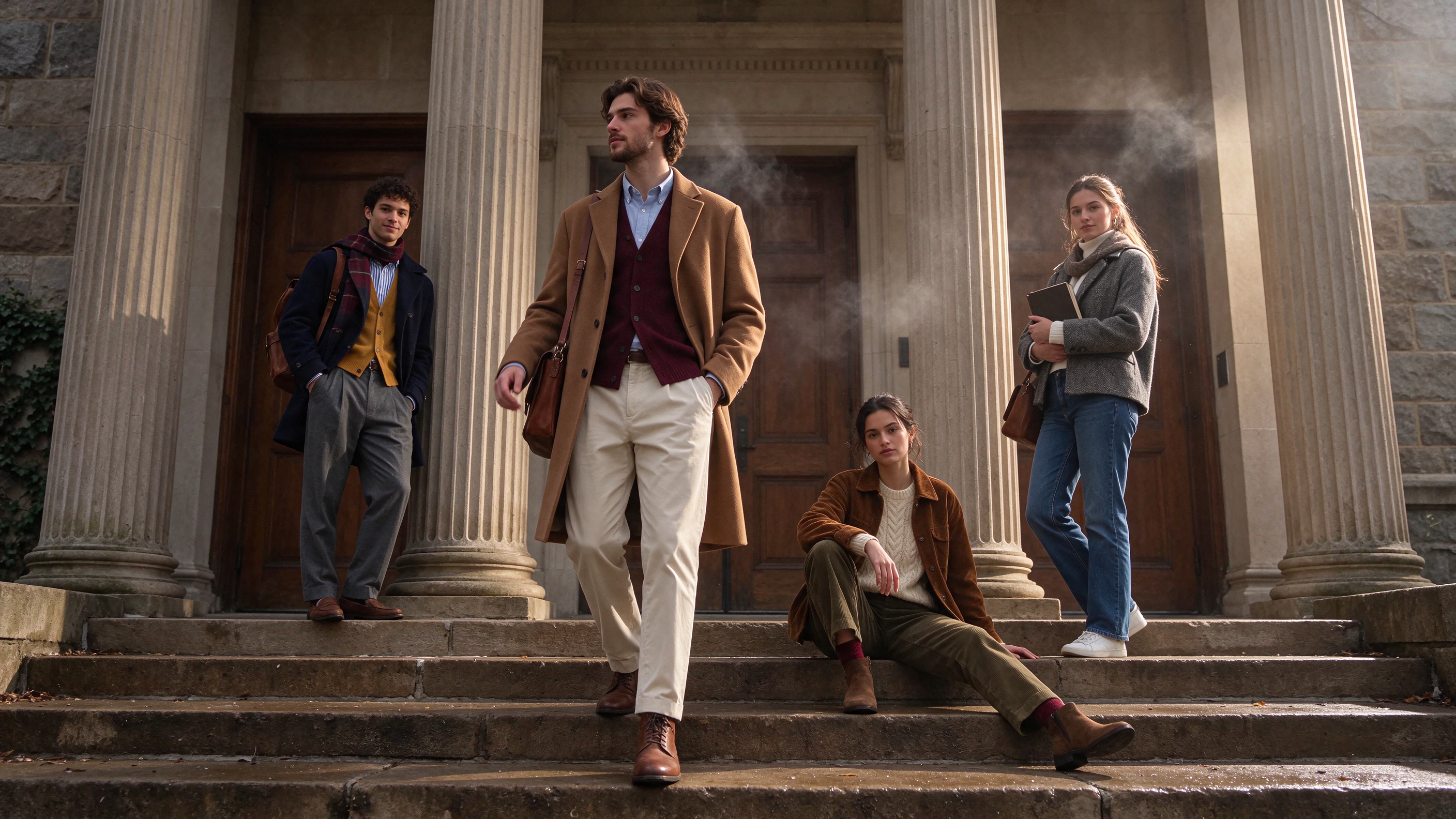
Quick trend context for college winter fashion in 2026: the looks dominating campus right now are quiet-polish pieces worn casually — sweater vests over Oxford shirts, lug-sole boots with trousers instead of jeans, burgundy and forest green replacing last year's grey-everything, and long wool coats over hoodies instead of puffers-over-puffers. Every formula below already speaks that language, so copying them won't date your rotation by February.
Group A — The Commute & Early Classes
1. The Ten-Minute Trudge (cold walking-to-class commute). Thermal base top and leggings under a cream cable-knit sweater, straight-leg jeans, a knee-length camel wool coat, wool socks and waterproof leather boots with real tread. Leather or nylon backpack; beanie that matches your scarf. The camel coat is the hero, so echo it once more — boot leather or the bag strap — and let everything else stay neutral. This is the formula for the 15°F mornings when the walk feels twice as long as it is.
2. The 8 A.M. Lecture. Sleepy but polished: a striped Oxford shirt under a burgundy knit cardigan, grey pleated trousers over thin thermal leggings, a navy wool-blend short coat, and loafers with wool socks. The trick is the collar — a crisp shirt peeking out of a soft cardigan reads "awake and prepared" even when you're neither. Tote bag, not backpack: it's the fastest way to look like you meant to be there.
3. The Frozen Quad Shortcut. For cutting across open space where the wind finds you: a long quilted puffer over a half-zip fleece, thermal base underneath, straight dark jeans, lug-sole boots, and a ribbed beanie pulled low. Keep the palette to one dark family — charcoal, navy or black — so the silhouette does the styling. Fleece under puffer is the college answer to expedition layering, minus the expedition.
Group B — The Study Zones: Library & Finals Week

4. The Library All-Day (library study day). Built for six-hour sits: a patterned knit vest in forest green or burgundy over a white button-down with the hem and cuffs showing, straight jeans, and loafers. Carry your camel coat over your arm — indoors it lives on the chair back, and the vest-and-shirt combo is your working look. Soft layers only: nothing with a hood, nothing that crackles, nothing that announces itself across a silent reading room. Add wool socks; library chairs are cold.
5. The Finals Week Marathon. Comfy-chic is the brief: comfort × confidence, nothing that makes you feel like you gave up. Start with thermal leggings, add relaxed wide-leg sweatpants or soft corduroy trousers, a half-zip knit in oatmeal, and a long cardigan worn open over it. Clean white sneakers, a canvas tote, hair claw, and a big water bottle. The rule: two soft pieces max, then one structured piece — the cardigan or a chore coat — so the look stays intentional. Your future self at hour nine will thank you. (If you're building a whole finals-week rotation, Harper's Bazaar's winter outfit ideas are a good source of elevated comfy references.)
6. The 24-Hour Carrel. For all-nighters and 12-hour library blocks: matching knit set (soft wide-leg pants + fitted top) under a chunky fisherman sweater, wool socks, and slip-on clogs or sneakers. Bring one "public layer" — a structured wool blazer or a clean fleece-lined jacket — for the coffee-run moments when you leave the study bubble. The set handles comfort; the public layer handles dignity.
Group C — Coffee Between Classes & Campus Social-Daytime
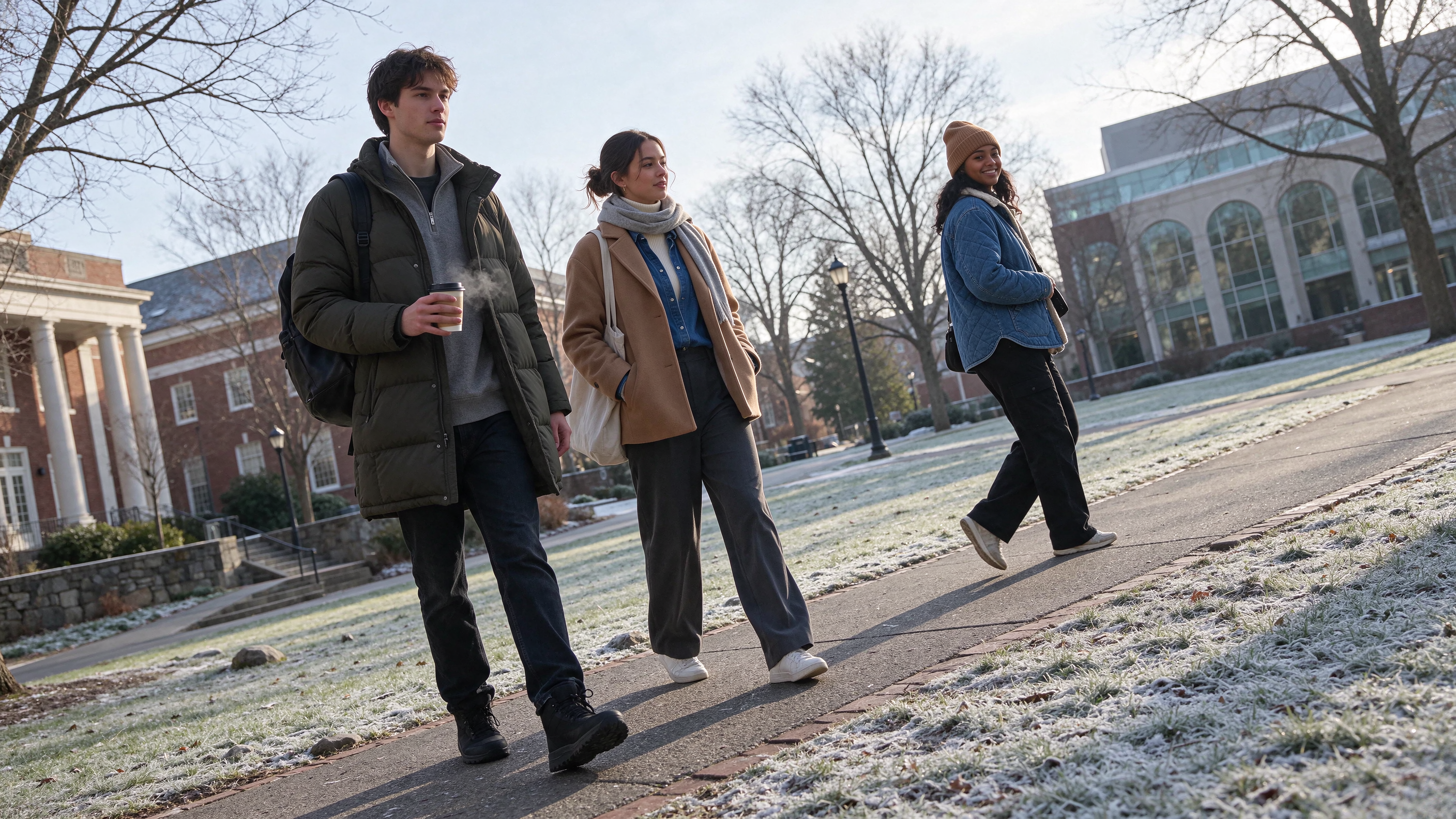
7. The Coffee Between Classes. The ten-minute campus-social formula: a grey hooded sweatshirt or half-zip fleece layered over a cream turtleneck — three necklines deep, which is the whole point — dark straight jeans, a knee-length puffer or black wool walker coat, thick-soled boots, leather backpack, and a to-go cup as the accessory. Camel is the anchor color here: one camel piece (coat, beanie or boot sole) against the grey-and-denim-blue cold light of a winter morning reads effortlessly put-together.
8. The Group-Project Meetup. Slightly sharper than everyday: a fine-gauge turtleneck under a tailored wool blazer, dark wide-leg trousers, loafers, and a structured crossbody. Add the long coat on top for outside; the blazer carries the meeting indoors. This is the outfit that says "I have opinions about the slide deck" — and it's comfortable enough to sit on a lounge floor for two hours.
9. The Office Hours. For professor meetings, advising appointments and campus job shifts: a crisp white shirt under a fine merino crewneck (collar out, cuffs out), straight dark jeans or wool trousers, a clean short wool coat, and minimal white sneakers or loafers. Quiet, warm, adult. Echo the shirt white once — socks, tee hem, or tote — and keep everything else in navy, grey or chocolate brown.
Group D — Weather Days & Everyone Else
10. The Light-Snow Day (wet-campus formula). When the ground is slush and the sky can't decide: a water-resistant parka or waxed field jacket over a thermal base and a fleece quarter-zip, straight jeans cuffed above the boot, and waterproof boots with real grip — this is their moment. Wool beanie, water-resistant backpack or a coated canvas tote. Keep hemlines and cuffs clear of the melt line: wet denim hems are the fastest way a good winter outfit quits on you. Choose your outer layer by today's forecast, not by the coat you love most — a wool coat in sleet and a parka in a dry deep-freeze are both wrong answers.
11. The Wind-Tunnel Bridge. Every campus has one — the walkway between buildings that channels wind like a wind tunnel. Formula: a long belted wool coat worn closed (the belt is the seal), thermal base, a thick ribbed turtleneck as the mid, straight trousers, and tall boots. Gloves with touchscreen fingertips so you never fully expose a hand. Belted-and-closed beats open-and-layered in wind every single time.
12. The No-Fuss Guys' Formula. For a straightforward masculine-leaning rotation: thermal base top, a grey or oatmeal half-zip knit, dark straight jeans, a navy or olive parka, waterproof boots, and a canvas backpack. Add one echo — burgundy socks against the navy coat, or an olive beanie against the parka — and the outfit is done. This same skeleton handles every scenario above: swap the half-zip for a sweater vest for the library, or the parka for a wool topcoat for office hours.
Color & Texture Pairing Rules for Winter Layers
Formulas get you dressed; these three rules make the outfits look designed rather than assembled.
Rule 1 — One hero color, echoed twice. Pick one accent — burgundy, mustard, forest green — and place it exactly twice: the cardigan and the scarf, the socks and the beanie, the vest and the bag strap. Everything else stays in the neutral family (cream, grey, camel, navy, chocolate). This is the single highest-impact habit in campus dressing, and it costs nothing. Editors at Who What Wear build whole winter stories around one accent color for exactly this reason.
Rule 2 — Mix one hard texture with one soft. Cable knit with waxed cotton. Corduroy with wool. Fleece with leather boots. Two soft textures together (fleece + sweatpants + knit) drift into pajama territory; two hard ones (tweed + denim + leather) feel stiff. One of each is the sweet spot — it reads intentional from across the lecture hall.
Rule 3 — Anchor with one warm neutral. Camel, chocolate brown or cream should appear in every winter campus outfit, ideally in the largest visible piece: the coat, the sweater or the boots. It warms up black-and-grey palettes, photographs well in flat winter light, and ties disparate layers into a single look. Good Housekeeping's winter outfit roundups lean on the same warm-neutral anchors season after season.
What to Skip
The coat-only strategy. A big coat over a single cotton tee is the most common winter campus mistake — you're cold indoors and overheated outdoors. Fix the base layer first.
Cotton against wet cold. Wet cotton holds moisture and chills you. On slush days, synthetics, wool and technical fabrics beat your favorite cotton hoodie.
All-hoodie layering. Hoodie over hoodie over hoodie adds bulk, not warmth, and reads shapeless. Replace the inner hoodie with a thermal base and reserve one hooded piece maximum.
Thin leggings as pants on freezing days. Leggings are a base layer. Wear trousers or jeans over them, or at minimum choose fleece-lined leggings with a long coat.
Fashion sneakers on untreated ice. One slip costs more than any outfit saves. On wet-snow days, shoes are a safety item first — see our breakdown of boot styles that handle slush for component-level guidance.
FAQ
What should I wear to class in winter college?
Use the 3-layer system: a thermal base, a knit mid layer, and a weather-appropriate coat, with straight jeans or trousers and grippy boots. Formulas 1–3 above cover the morning-lecture commute, and the same skeleton adapts to any class scenario.
What should I wear to the library in college?
Soft, quiet layers that survive long sits: a knit vest or sweater over a shirt, comfortable trousers or jeans, and loafers or sneakers with warm socks. Bring your coat to drape over the chair — the library is always either freezing or boiling, never in between.
How do you layer clothes for winter campus without looking bulky?
Thin warm layers beat thick ones: a fitted thermal base adds real warmth with zero visual bulk, and the mid layer should be one proper knit, not two hoodies. Keep the coat as your only oversized piece and let everything underneath follow your silhouette.
What are good finals week outfits that are comfy but still put-together?
Comfy-chic: two soft pieces maximum, then one structured layer like a long cardigan or chore coat. Matching knit sets, wide-leg corduroy and clean sneakers all work — the structured third piece is what keeps the look intentional at hour nine.
What shoes work for winter campus besides snow boots?
Waterproof leather boots with a lug sole handle most campus winters, and classic loafers with wool socks work for dry, cold days indoors-heavy schedules. On icy or slushy days, though, tread matters more than style — wet pavement doesn't grade on effort.
How do college students stay warm walking to class in winter?
A thermal base layer under everything, a coat chosen by forecast (wool for dry cold, technical fabric for wet), and small pieces that seal the gaps: beanie, scarf and gloves. Most heat escapes from the head, neck and hands — cover those three and a 15-minute walk feels ten degrees warmer.
When the semester's social calendar finally replaces the syllabus, the winter formulas here hand off neatly to our sister guide on college party outfits for 2026 — same copy-the-formula logic, completely different dress code.
Download the DLOOK app to virtual try on outfits, discover your perfect colors, and effortlessly manage your closet and looks.