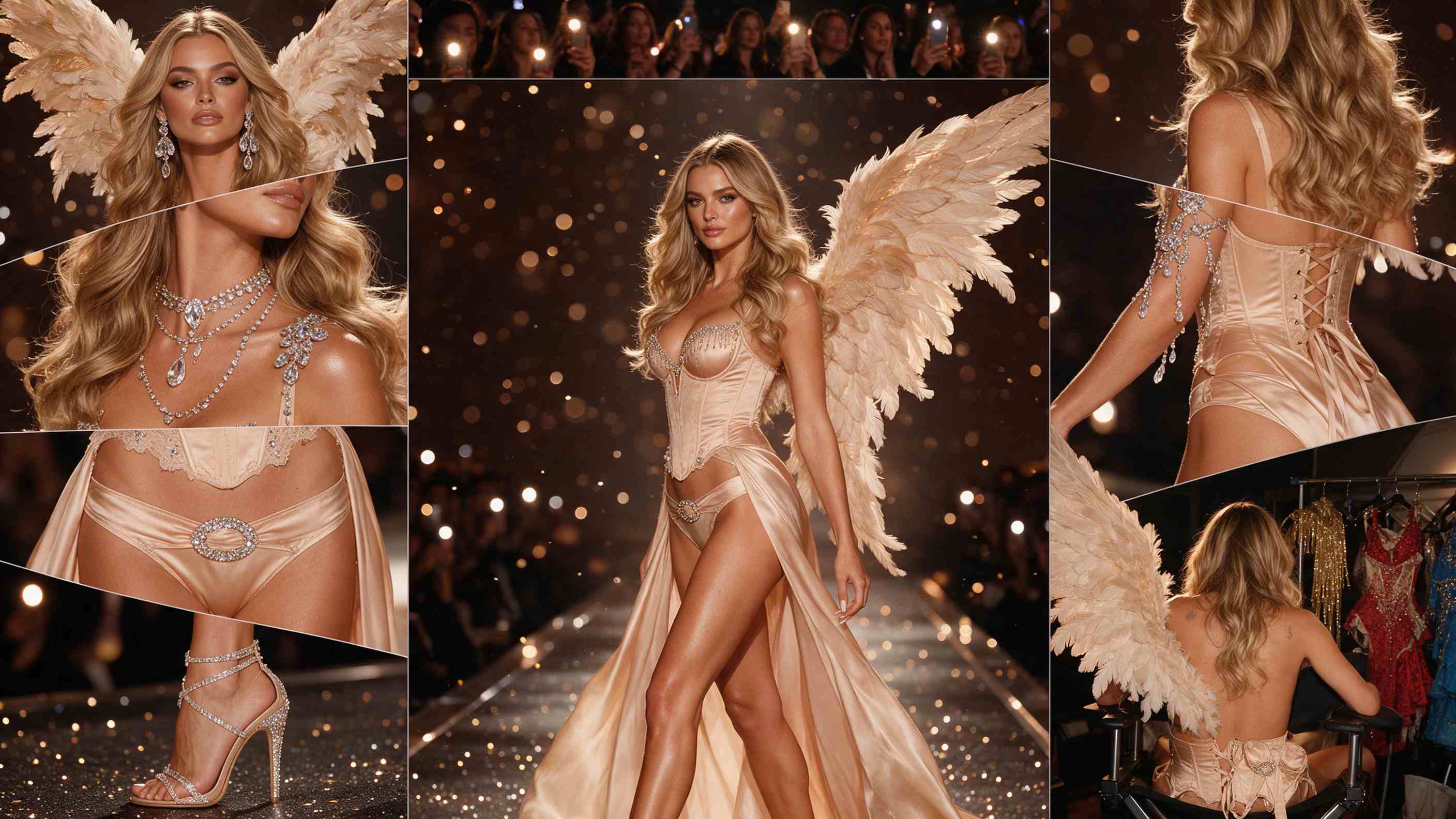
On Sunday, October 18, 2026, the Victoria's Secret Fashion Show returned to Los Angeles for the first time in years—and it did not come quietly. The brand that invented the televised lingerie spectacle traded New York grit for LA gloss, stacked the runway with supermodel legends and first-timers alike, and closed the night with the most expensive Fantasy Bra the company has ever produced. If your feed has been a wall of wings, crystals, and corsetry ever since, you are not alone.
But here is the thing most recaps will not tell you: the 2026 show was not really about wings. It was a masterclass in lingerie construction. Nearly every look that walked the runway was built from a recognizable, wearable category—the push-up bra, the balconette, the bustier, the teddy, the slip, the open-cup bodysuit—executed at couture level. That is exactly why this moment matters for your closet. What Angel-tier styling proves, again and again, is that the difference between "underwear" and "a look" is fit, proportion, and styling.
There is a reason runway shows have always doubled as retail forecasts. The silhouette that closes a show in October is the shape sitting in mall windows by February. The 2026 edition made that pipeline unusually explicit: this was lingerie worn as clothing, not lingerie hidden under clothing. Corsets as tops, bodysuits as eveningwear, slips as gowns—the show effectively issued a styling syllabus, and this article works through it chapter by chapter.
In this guide, we break down every major lingerie and bra style seen on the 2026 runway, explain what each piece actually is (and what it is not), and translate it into real-life outfit formulas: which dress length works, which jewelry balances it, and how to wear it off the catwalk. Whether you are shopping for your first balconette or trying to figure out if that vintage-looking piece is a corset or a bustier, consider this your runway-to-real-life decoder.
First, the 5 Moments Everyone Is Talking About
Before we decode the garments, here is the context that made this show a cultural event—verified against reporting from ELLE and Who What Wear.
1. Kylie Jenner walked—in a $50 million Fantasy Bra
The biggest surprise of the night was Kylie Jenner making her Victoria's Secret runway debut as the wearer of the 2026 Fantasy Bra. Valued at $50 million and created in collaboration with Jacob & Co (with design input from Adam Selman), it is the most expensive Fantasy Bra in the brand's history—an honor that says as much about the era of spectacle we are living in as it does about the garment itself. Coverage from Vogue and Forbes the morning after the show focused as much on the jewelry-house craftsmanship as on the casting coup: dozens of carats of hand-set stones engineered onto a bra silhouette. Whether or not a gem-encrusted push-up is in your future, the styling lesson is universal—a structured, lifted bust line is the foundation of the entire VS aesthetic.
For context on why this landed so hard: the Fantasy Bra tradition dates back to 1996, when the first million-dollar piece appeared on the runway, and over three decades the concept became the show's single most anticipated reveal. Some years the Fantasy Bra sells; most years it is a halo object designed to make everything else on the runway look attainable by comparison. The 2026 edition weaponized that psychology perfectly—the most expensive version ever, on the most-watched debut casting in years.
2. The show came home to Los Angeles
Victoria's Secret confirmed on July 16 that the 2026 edition would take place in Los Angeles—departing New York, where the previous post-hiatus editions were staged. The show ran at 4:30 PM PT (7:30 PM ET) on October 18 and streamed live on the brand's YouTube channel and official social accounts, making it the most globally accessible edition yet. LA also mattered symbolically: this is the city of red-carpet lingerie dressing, of the naked dress, of underwear-as-outerwear on sidewalks rather than just runways. The location was a thesis statement.
3. The performers turned the runway into a concert
The musical lineup was engineered for the algorithm: Katseye brought K-pop precision, Megan Thee Stallion brought Houston energy, Tate McRae delivered choreographed pop, and Megan Moroney added country polish. Four genres, one runway—a programming choice that told you exactly who Victoria's Secret wants back in the audience (and the comment section). The cross-genre bill also shaped the styling: looks had to read as convincingly pop-concert as they did couture runway, which is why so many of the pieces decoded below skew toward versatility.
4. Barbara Palvin returned six weeks after giving birth
On October 16—two days before the show—Barbara Palvin confirmed her return to the runway just six weeks postpartum. It was one of the most talked-about stories of the week, and it reframed the show's body conversation entirely: this was a runway explicitly designed for women at every stage, not a single sample-size fantasy. Palvin's casting also echoed the show's broader body-inclusivity arc, which has included curve and plus-size models on the runway since the show's post-2019 reinvention.
5. Bella, Adriana, and Vittoria shared one runway
Who What Wear's post-show coverage singled out three iconic faces of the night: Bella Hadid, Adriana Lima, and Vittoria Ceretti walking the same runway. Layer that over a casting list that already included Gigi Hadid, Candice Swanepoel, Ashley Graham, Paloma Elsesser, Anok Yai, Imaan Hammam, Alex Consani, Devyn Garcia, and Abby Champion, and you get a generational crossover—the 2000s Angel era, the social-media era, and the new editorial era in a single show. Adriana Lima's presence was particularly loaded: one of the most decorated Angels in history, closing a chapter of the brand she defined.
How to Read a Runway Look Like a Stylist
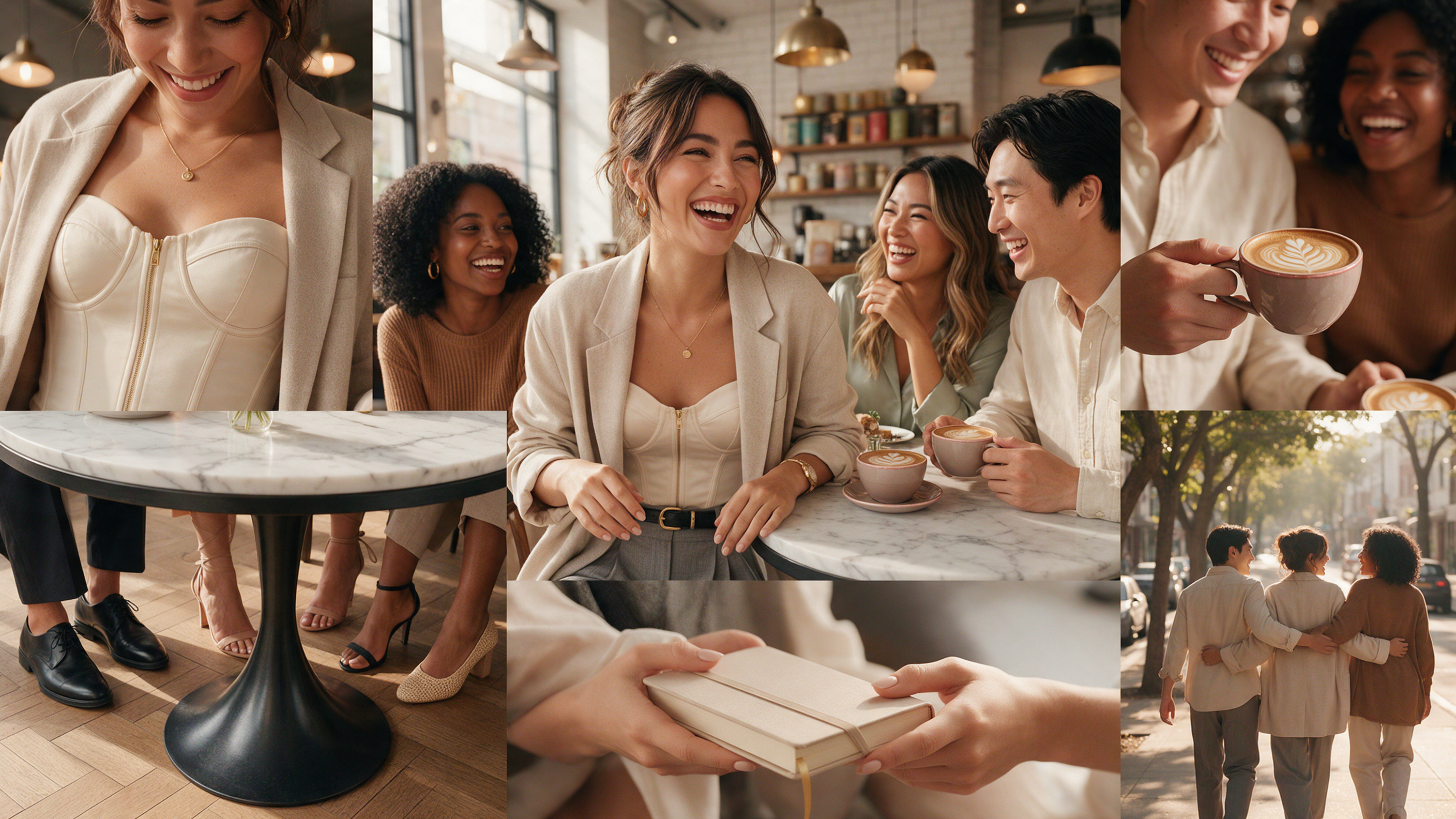
Before the decoding begins, one skill separates people who copy runway looks from people who translate them: identifying the base garment. Stylists never see "a winged costume." They see a balconette bra under a harness, or a bustier inside a crystal bodice. Strip away the embellishment and you are left with a handful of foundational pieces, each with its own rules.
Keep three questions in mind for every look in this article:
What is the base garment? The structural piece that determines fit, support, and silhouette.
What is the reveal strategy? How much of the lingerie is meant to show—fully visible, partially hinted, or entirely hidden?
What does it need around it? The dress length, layer, or accessory that makes the proportion work in real life.
This lens also protects you from the most common runway-translation trap: buying the embellishment instead of the garment. A $40 satin corset from a mall brand and a $4,000 couture bodice obey the same styling rules. The crystals, wings, and gemstone settings on the 2026 runway were styling—the engineering underneath was retail. Once you learn to see the structure, every look in this article becomes something you can recreate, resize, and reprice to your own life. That is the entire premise of runway-to-real-life translation, and it is why a lingerie show is genuinely useful shopping research rather than pure spectacle.
Now, the six decodes.
Runway Decode #1: The Fantasy Bra Silhouette (Push-Up Bra & Balconette Bra)
The 2026 Fantasy Bra sat on a foundation any lingerie drawer already knows: the push-up bra, with clear DNA from the balconette family. Understanding these two styles is step one of decoding the entire show, because almost every winged look on the runway was built on the same lifted, rounded, horizontal bust line they create.
What is a push-up bra?
A push-up bra uses angled padded cups—foam, gel, or "cookie" inserts at the base and sides of the cup—to lift the breasts upward and inward, creating cleavage and a rounded shape even under the lowest necklines. The padding is graded by "level": Level 1 adds subtle lift (roughly half a cup), Level 2 gives moderate cleavage (about one cup up), and Level 3 delivers dramatic, red-carpet depth (up to two cups). On the runway, Fantasy Bras and their couture cousins are essentially Level-3 engineering with jewelry on top.
Fit is where push-ups live or die. Because the cups move tissue, a band that is even slightly loose will ride up and defeat the entire mechanism—the lift comes from the band, not the straps. The golden rule: you should be able to slide two fingers under the band, no more. Cups should fully contain tissue with no "quad-boob" spill at the top and no gaping at the strap. If you are between band sizes, go down a band and up a cup (the sister-size principle) before abandoning the style.
Wear it IRL: push-ups are the answer to plunging necklines, deep V dresses, and any look where you want definition without visible structure. The mistake most people make is wearing a push-up under a high neckline, where the lift fights the fabric—match it to a low or scooped neck instead. For everyday versions, look for memory-foam-lined cups, which mold to your shape and disappear under T-shirts far better than rigid push-ups of the 2000s.
What is a balconette bra?
A balconette (or "balcony") bra cuts horizontally across the bust with a lower cup and wide-set straps, lifting from below—like a balcony—rather than pushing from the sides. The result is a natural-looking, upper-fullness shape that peeks perfectly under square, straight-across, and sweetheart necklines. Because the center gore is low and the straps sit wide, balconettes are virtually invisible under open-neck tops.
Balconettes come in padded and unlined versions. The padded balconette is the workhorse of evening dressing; the unlined lace balconette is what you reach for when you want shape without bulk under silk. Strap width matters more than people realize: wide-set straps only stay put if they are anchored to a snug band, so size the band honestly.
Push-up vs. balconette, in one line: a push-up moves tissue inward and up for cleavage; a balconette lifts straight up for an open, lifted shelf of a shape. The 2026 runway used both constantly—the balconette under square-neck corsetry, the push-up under plunging illusion gowns. If you only buy two bras this season, buy one of each: the push-up for deep Vs, the balconette for everything else.
Runway Decode #2: Corsetry on the Catwalk (Corset vs. Bustier)
Corsets were the structural backbone of the 2026 show—and not as costume. Worn as tops, under sheer gowns, and as the chassis for winged looks, they appeared in satin, brocade, and crystal-mesh. To shop or style this look, you need to know the difference between the two pieces everyone confuses.
What is a corset?
A true corset is a structured garment built around rigid boning (historically whalebone, today steel or plastic) and often a lace-up back or front, designed to cinch the waist and reshape the torso. It extends below the bust—usually to the hip or upper thigh—and its job is architectural: compression, posture, silhouette. On the runway, corsets appeared as statement bodices, frequently worn as outerwear over trousers or under open jackets.
The corset has one of fashion's longest résumés. Structured bodices appeared in European courts in the 16th century, were refined into the hourglass instruments of the Victorian era, were condemned and abandoned in the 1920s, and then returned with a vengeance in the late 20th century—Vivienne Westwood's historical revivals, the punk lacing of the 1970s, and finally the 1990s moment when lingerie fully crossed into outerwear. Every one of those lives was visible on the 2026 runway: brocade court corsets, punk-laced satin, and minimalist modern waist-cinchers sharing one catwalk.
What is a bustier?
A bustier is the corset's lighter, bust-focused sibling. It stops at or just below the waist, emphasizes and supports the breasts with built-in cups or padding, and typically closes with a zipper or hook-and-eye rather than lacing. Where a corset sculpts the torso, a bustier lifts the bust. Think of it as a strapless bra with a very confident hemline.
Corset | Bustier | |
|---|---|---|
Primary job | Cinch waist, shape torso | Lift and support bust |
Length | Hip or upper thigh | Waist length or shorter |
Structure | Full boning, lace-up closure | Lighter boning, zipper/hook closure, built-in cups |
Runway use 2026 | Worn as bodices and layering pieces | Foundation under gowns and winged looks |
IRL styling | Over trousers, under blazers, with maxi skirts | With high-waist jeans, under sheer shirts |
Wear it IRL: treat a corset as a top, not underwear—pair it with wide-leg trousers and a longline blazer for evening, or with a denim maxi skirt for day. A bustier works hardest under strapless and one-shoulder dresses, where a strapless bra would show. Fit note for both: you should be able to sit, breathe, and eat in a fashion corset. If you cannot, size up—runway pain is not a personality. And if you are shopping vintage, measure your underbust, not your bust: corset sizing follows the ribcage, while bustier sizing follows bra logic.
Runway Decode #3: One-Piece Wonders (Teddy vs. Bodysuit)
The one-piece looks of the night ranged from sweet to outright provocative, and they came from two adjacent categories that shoppers constantly mix up.
What is a teddy?
A teddy is a loose, lingerie-intended one-piece—essentially a very short romper or a camisole-and-tap-pant fused into one garment. It skims rather than sculpts, usually in silk, satin, lace, or mesh, and it is designed to be seen in intimate contexts (or styled boldly as outerwear, a la the runway). Teddies drape; they do not compress.
The teddy's lineage runs through early 20th-century loungewear: the "teddy bear suit" of the 1910s was named for its cozy, unstructured feel, and by the 1930s the one-piece step-in had become the default undergarment beneath bias-cut dresses. It faded when two-piece sets took over in the 1950s, then returned with the lingerie-as-fashion wave of the 1990s—the era that taught everyone a slip of lace could be a top.
What is a bodysuit?
A bodysuit is a fitted, snap-crotch one-piece engineered like a second skin. Bodysuits can be lingerie (lace, sheer, cupless) or ready-to-wear (ribbed knit, thong-back for seamless layering), but they always fit close to the body and anchor into place with gusset snaps. Where a teddy floats over the body, a bodysuit maps it.
The bodysuit descends from dancewear and swimwear—the leotard logic of "garment that cannot untuck"—and entered everyday wardrobes through sport and 1980s power-dressing, when a bodysuit under a suit guaranteed a permanently crisp line. Fashion's modern bodysuit does the same job with far less fabric.
The decoder rule: if it drapes and ties, it is a teddy; if it fits like a swimsuit and snaps underneath, it is a bodysuit. The 2026 show deployed both—diaphanous teddies floated down the runway in the opening section, while sculpted bodysuits carried the high-drama middle acts, some with open cups, sheer panels, and strategic crystal placement.
Wear it IRL: a lace or satin bodysuit under an open blazer and straight-leg trousers is the single easiest way to translate this runway energy to dinner. A teddy can go outerwear-forward too: layer it under an oversized knit or an unbuttoned silk shirt, letting the hem read as a top. Keep the bottom structured—a teddy is soft, so everything around it should be tailored to avoid reading as sleepwear. One practical warning: bodysuit torso lengths vary wildly between brands. If you have a long torso, look for "tall" or adjustable-strap versions, or the snaps will wage permanent war on your shoulders.
Runway Decode #4: The Slip Returns (Slip & Mini Slip Styling)
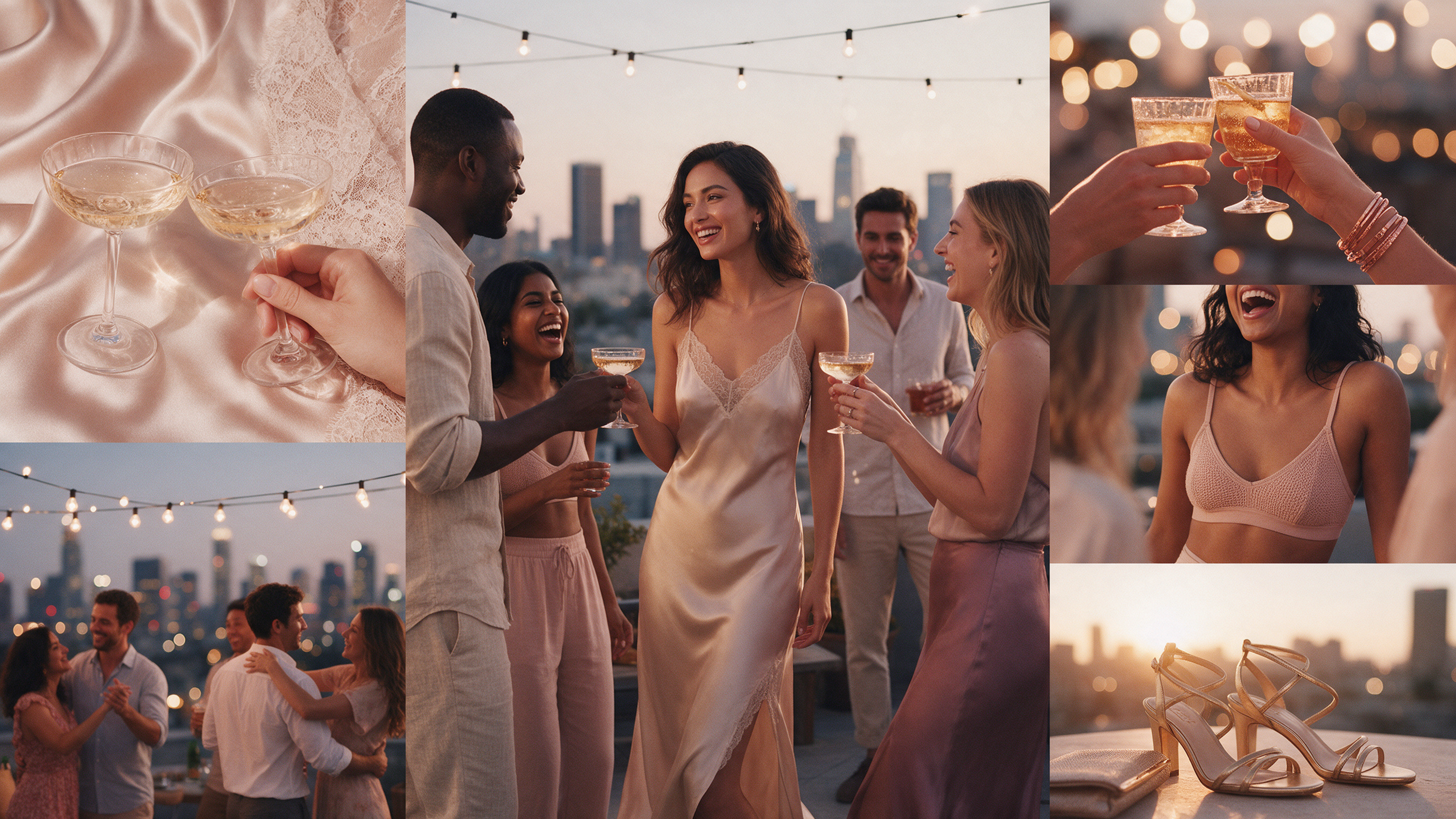
Slip dresses have been simmering as a trend for seasons, and the 2026 VS show pushed them firmly into evening territory: bias-cut silk slips, mini slips with lace hems worn as dresses, and slip-skirt separates styled with corset bodices. The slip is lingerie's most successful export into everyday fashion—and it is wonderfully low-commitment to try.
The slip dress carries serious fashion history. Madeleine Vionnet pioneered bias-cutting in the 1920s and 1930s, the technique that makes silk fall in liquid diagonal folds rather than stiff vertical ones. The bias-cut slip then lay dormant until the 1990s, when minimalism turned it into the decade's defining dress—slouchy, spaghetti-strapped, worn with nothing but attitude. That 90s template is exactly what the 2026 runway revived, minus the grunge layering and plus corsetry.
Fabric is the slip's entire personality. Silk charmeuse is the gold standard—heavy enough to skim, fluid enough to move. Satin (polyester) mimics the look at a fraction of the price but clings and generates static; look for satins with some weight. Crêpe de chine and sandwashed silk sit in between, matte and forgiving. For a mini slip, structure matters more: a slight A-line hem keeps it from riding up, and lace at the hemline signals "dress," not "underwear."
Two runway formulas worth stealing:
The mini slip + corset. A thigh-grazing slip with a structured corset layered over or under it—proportion play between hard and soft. Add knee-high boots and the look translates directly to a night out.
The midi slip + bustier. A bias-cut midi slip with a bustier replacing the bra entirely, finished with a long pendant and slicked hair. This is the "I woke up expensive" uniform, and it requires exactly two garments.
Wear it IRL: the rule of slip styling is contrast. If the slip is silky and revealing, ground it with something heavy or tailored—an oversized blazer, a wool coat, chunky loafers. If the slip is a micro-mini, keep the neckline modest and let the hem do the talking. And always check the lighting: silk and flash photography are best friends, so a slip that looks demure in daylight may be fully sheer under club lighting. Plan your base layer (a bodysuit works perfectly) accordingly.
Runway Decode #5: The Bra Wardrobe, Decoded (Plunge, Demi Cup, Unlined & Open-Cup)
Beneath the couture, the 2026 show quietly showcased the full vocabulary of bra construction. Four styles did most of the work:
Plunge bra
A plunge bra has a deep, angled center gore and padded, inward-pushing cups built for very low necklines—think V-necks that drop below the sternum. On the runway, plunges sat under the deepest neckline cuts, creating a continuous line from neck to waist. IRL, it is the only bra that truly disappears under a deep-V dress.
The plunge's superpower is its center wire: cut low and angled, it sits between the breasts rather than on top of the sternum, so it stays hidden where a regular bra's gore would peek out. The trade-off is side support—plunges move tissue center-ward, so very full or wide-set shapes sometimes prefer a plunge with a side-sling panel.
Demi cup bra
A demi bra covers roughly half to three-quarters of the breast, with cups cut lower across the top. It creates a natural, lifted, slightly open shape—less engineered than a push-up, more polished than a bralette. Demis are the workhorse under scoop necks, boat necks, and square necks, and they were everywhere under the show's tailoring-heavy looks.
Because demi cups sit lower, they suit shallower upper-bust shapes beautifully and can gape on very full-on-top tissue—if you spill out of demis, you are not sized wrong; you may simply be a balconette person.
Unlined bra
An unlined bra has no molded foam padding—just fabric (lace, mesh, or cotton) shaped by seams or stretch. It follows your natural shape rather than constructing a new one, which is why it reads as the most modern, body-neutral option on the runway. Unlined bras were the base under many of the show's sheer and minimal looks, where bulk of any kind would show.
The unlined bra rewards honest sizing. Without foam to mask fit issues, a too-small cup is instantly visible as dented lace, and a too-large band shows as floating underwires. Many unlined styles run snug in the band and generous in the cup—read reviews before ordering.
Open-cup (cupless) bra
The runway's boldest recurring detail was the open-cup or cupless bra—a frame of straps, underband, and underwire with the cups removed or rendered in minimal strapping. It is lingerie as architecture: support and silhouette without coverage. On the catwalk it appeared under sheer bodysuits and open corsetry, letting the garment's structure do the visual work.
Wear it IRL: open-cup styles are, candidly, bedroom or boudoir photography territory for most people—but the styling principle behind them transfers perfectly: when a garment is sheer, let a structured under-layer provide the geometry. A strappy unlined bra or a cage-style bralette under a sheer blouse gives the same runway effect at brunch-appropriate opacity.
The neckline-matching cheat sheet
Neckline | Best bra | Why |
|---|---|---|
Deep V / plunge | Plunge bra | Low gore stays hidden; angled cups follow the neckline |
Square / straight-across | Balconette | Horizontal cup edge mirrors the neckline |
Scoop / boat | Demi cup | Moderate coverage peeks naturally without showing |
Strapless / one-shoulder | Bustier or strapless | Built-in cups + longline band replace strap support |
Sheer / lace top | Unlined or bralette | No foam bulk; lace-on-lace reads intentional |
The Runway-to-Real-Life Styling Matrix
Here is the full translation in one table: each runway item, the dress length that flatters it most, and the jewelry and hair that finish the look.
Runway item | Best dress length | Jewelry | Hair |
|---|---|---|---|
Push-up bra (under plunge necklines) | Mini or midi with deep V or sweetheart neck | Delicate pendant following the neckline; skip the choker | Soft waves or a low bun to keep the neckline open |
Balconette bra | Mini or midi with square/straight-across neck | Chunky hoops or a cuff bracelet—wide neckline, wide accessories | Sleek ponytail or clipped-back lengths |
Corset (as top) | Maxi skirt or trousers (no dress needed); mini skirt for night | Statement earrings; keep the neck bare | Slicked-back bun or wet-look waves |
Bustier | Midi skirt or high-rise wide-leg pants; under strapless maxi | Layered chains at the collarbone | Face-framing layers down |
Teddy | Mini under an oversized blazer; worn alone as a mini dress | Minimal—one sculptural ring or ear cuff | Tousled, air-dried texture |
Bodysuit | Midi or maxi skirt; trousers for day-to-night | Gold hoops + a watch | Straight blowout or slick bun |
Slip / mini slip | Slip IS the dress—mini for night, midi for dinner | Long pendant or drop earrings; pearls for the midi | Claw clip updo or old-Hollywood waves |
Plunge bra | Maxi gown or midi wrap with deep V | Body chain or lariat that traces the neckline | Side part, tucked behind one ear |
Unlined / open-cup styling | Sheer maxi or slip layered over structured base | Ear stack, no necklace—let the layering speak | Natural texture, headband optional |
Building Your Runway-Inspired Lingerie Capsule
You do not need a walk-in wardrobe of couture to wear this show's lessons. Five pieces cover every formula in this article:
One padded balconette in a skin-adjacent shade—your invisible workhorse under square and scoop necklines.
One plunge bra for deep-V dresses and wrap silhouettes. If you own nothing else from this list, own this.
One fashion corset (comfort-first, zipper or stretch-panel back) to wear as a top with trousers and skirts.
One fitted bodysuit in black lace or satin—blazer-ready, dinner-ready, and a flawless base under sheer pieces.
One slip dress, bias-cut, mid-calf, in black or champagne—the single most versatile evening garment in existence.
Shopping strategy: invest in the two bras (fit is everything, and a well-fitted bra reshapes every garment you own), save on the corset and slip (trend pieces rotate fast), and split the difference on the bodysuit. Try everything with the actual necklines you own—a balconette that vanishes under one square-neck top may peek out of another.
Finally, a note on color strategy for the capsule: build around two neutrals before any fashion shade. Black does the evening work; a tone matched to your skin—not "nude" as a single concept, but your nude—does the disappearing act under light and sheer fabrics. Champagne, cocoa, espresso, and chestnut are all valid "invisible" shades depending on complexion, and matching here matters more than matching the dress. Add one statement color (a red bodysuit, a burgundy slip) only after the neutrals are sorted; that single piece will do more styling work than five trendy shades.
And a note on care, because nothing ruins a capsule faster: hand-wash or machine-wash bras in a mesh bag on cold, always clasped, and never tumble-dry—heat murders elastic, and elastic is the entire technology. Lay flat to dry, rotate between at least two bras so each rests a day, and replace a bra when the band rides up on the loosest hook: that is the moment support is gone, no matter how new it looks.
FAQ: 2026 VS Show & Runway Lingerie, Answered
When and where was the 2026 Victoria's Secret Fashion Show?
The show took place on Sunday, October 18, 2026, in Los Angeles, starting at 4:30 PM PT / 7:30 PM ET. Victoria's Secret had confirmed the LA move on July 16, and the show streamed live on the brand's YouTube channel and official social platforms.
Who wore the 2026 Fantasy Bra and how much is it worth?
Kylie Jenner wore the 2026 Fantasy Bra during her surprise Victoria's Secret runway debut. The piece is valued at $50 million—making it the most expensive Fantasy Bra ever produced—and was created with jewelry house Jacob & Co. As Vogue and Forbes both noted in their post-show coverage, it surpasses every previous Fantasy Bra on record.
What is the difference between a corset and a bustier?
A corset is a fully boned, torso-length garment designed to cinch the waist and shape the entire midsection, usually with a lace-up closure. A bustier is shorter, lightly structured, and built around built-in cups that lift and support the bust. Corsets sculpt the torso; bustiers lift the bust.
Teddy vs. bodysuit: which one should I buy?
Buy a teddy if you want something soft, draped, and lingerie-first—it floats over the body like a short romper. Buy a bodysuit if you want a fitted, snap-crotch piece that works as a smoothing base layer or a sleek top under trousers and skirts. When in doubt: draping equals teddy, second-skin fit equals bodysuit.
How do I wear runway lingerie looks during the day?
Follow the contrast rule: one lingerie element per outfit, grounded by tailoring. A bodysuit under a blazer, a slip under a wool coat, or a bustier under an open button-down all read as fashion rather than costume. Add structured shoes and minimal jewelry, and reserve fully sheer or open-cup styling for evening.
The Bottom Line
The 2026 Victoria's Secret Fashion Show will be remembered for its $50 million headline and its supermodel reunion—but its real gift to the rest of us is a reminder that lingerie is fashion's most versatile building block. Every decoded silhouette above—the balconette, the corset, the bodysuit, the slip—already exists in approachable form, waiting for the right dress length and the right finishing touches. You do not need wings. You need fit, proportion, and one confident layer.
Download the DLOOK app to virtual try on outfits, discover your perfect colors, and effortlessly manage your closet and looks.