As summer 2026 approaches, thousands of college students across the United States are preparing to trade lecture halls for office floors. The transition from campus hoodies to corporate attire can feel overwhelming—especially when you are navigating dress codes you have never encountered before. Whether you are heading to a tech startup in San Francisco, a finance firm in New York, or a creative agency in Los Angeles, your internship outfit choices send a message before you ever speak a word.
According to fashion editors at Who What Wear, business casual remains the dominant dress code for American workplaces, yet interpretations vary dramatically by industry and region. Understanding these nuances is essential for making a confident first impression. This guide breaks down everything you need to know—from decoding dress codes to leveraging AI tools that plan your weekly wardrobe in seconds.
What to Wear for Your First Day
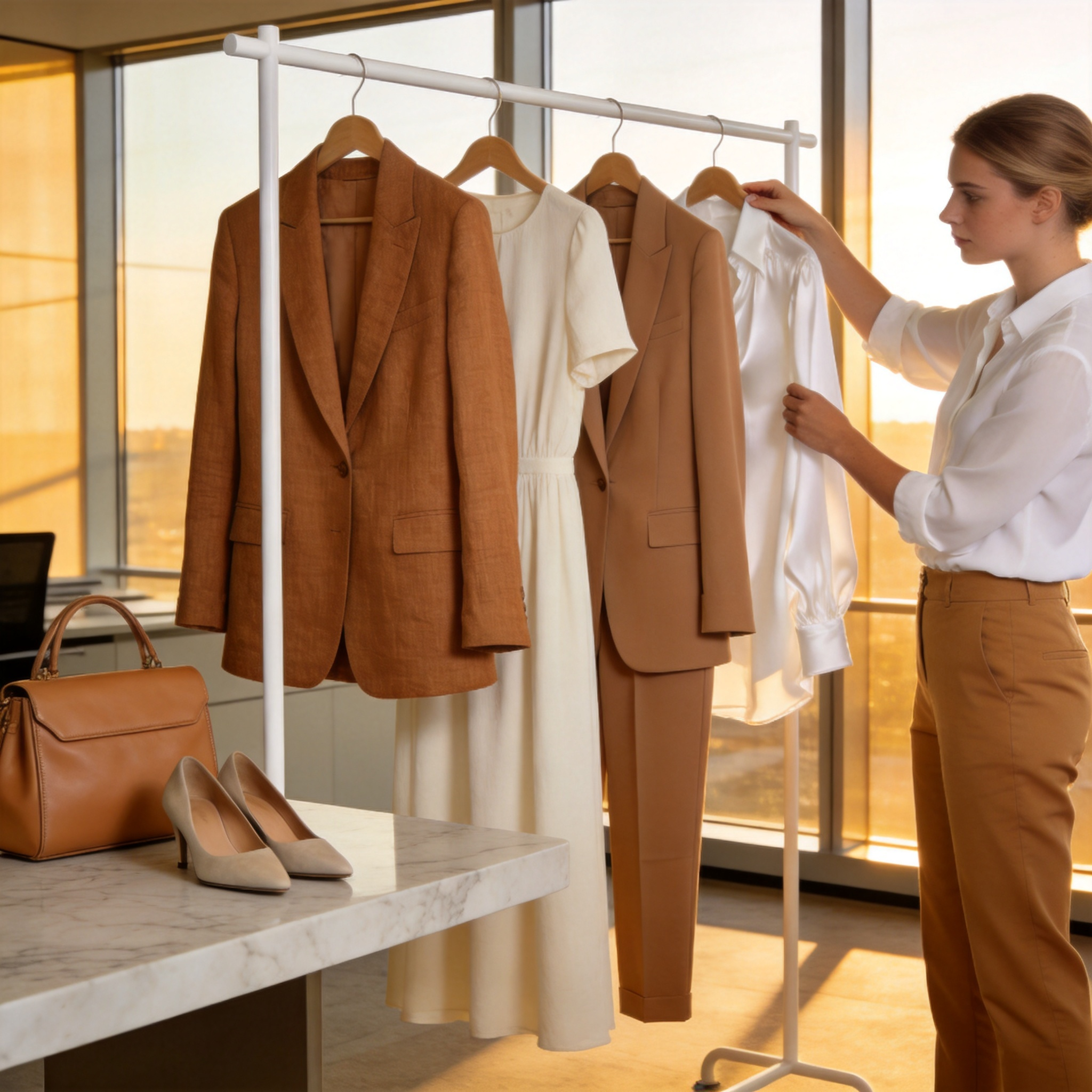
Your first day sets the tone for your entire internship. Workplace fashion experts recommend choosing an outfit that sits slightly more formal than your everyday campus style—but still feels authentically you. Think of it as "elevated casual" rather than full corporate formalwear.
For most summer internships in 2026, a safe first-day formula includes:
Bottoms: Tailored trousers, a midi skirt, or dark-wash jeans (only if the office culture is confirmed casual)
Tops: A crisp button-down shirt, structured blouse, or polished knit polo
Footwear: Clean loafers, minimal sneakers (for creative environments), or low-block heels
Layers: A lightweight blazer or structured cardigan for air-conditioned offices
The key is preparation. Check the company's social media, Glassdoor reviews, or even email your recruiter ahead of time. As styling guides from Who What Wear emphasize, observing what current employees wear gives you the most reliable dress code benchmark.
Business Casual vs Smart Casual for Interns
Understanding the distinction between business casual and smart casual can save you from wardrobe anxiety. While the terms are often used interchangeably, they carry subtle differences that matter in professional settings.
Business Casual is the middle ground between formal business attire and casual wear. It typically excludes jeans, sneakers, and graphic tees. For women, this means slacks or skirts with blouses or sweaters. For men, chinos with collared shirts and optional blazers. Glamour's fashion team notes that business casual has relaxed slightly post-2020, but internships still demand a polished presentation.
Smart Casual offers more flexibility. It allows dark jeans, clean white sneakers, and creative layering—provided everything looks intentional and well-fitted. This dress code is common at tech companies, marketing agencies, and startups. Vogue editors describe smart casual as "looking like you made an effort without trying too hard."
For interns, the safest approach is to start on the business casual side of the spectrum and gradually match your outfits to what you observe in the office during your first week.
Summer Fabrics That Keep You Cool & Professional
July heat and office air conditioning create a unique challenge: staying cool during your commute while looking professional at your desk. Fabric choice is your secret weapon.
Summer fashion coverage from Who What Wear highlights these internship-friendly fabrics for 2026:
Lightweight Cotton: Breathable, easy to care for, and universally appropriate. Look for Egyptian or Pima cotton for a softer, more elevated feel.
Linen Blends: Pure linen wrinkles easily, but linen-cotton blends maintain structure while offering airflow. Perfect for blazers and trousers.
Tencel / Lyocell: This eco-friendly fabric drapes beautifully, resists wrinkles, and feels cooler than traditional synthetics. Increasingly popular in Gen Z wardrobes.
Merino Wool (Lightweight): Surprisingly cool in summer, naturally odor-resistant, and machine-washable. Ideal for knit polos and thin sweaters.
Performance Fabrics: Tech-enhanced materials with moisture-wicking properties are now acceptable in business casual settings, especially at hybrid workplaces.
Avoid heavy polyester and cheap rayon blends—they trap heat and can look shiny or cheap under fluorescent lighting. As Harper's Bazaar fashion editors advise, investing in quality basics made from natural fibers pays off in both comfort and longevity.
How AI Outfit Planners Help Interns
Planning five professional outfits a week while juggling classes, commute, and internship tasks is exhausting. This is where AI outfit planners are transforming how Gen Z approaches work wardrobes. TechCrunch's AI coverage documents how machine learning is being applied across lifestyle industries—and fashion is one of the fastest-growing categories.
DLOOK AI Outfit Stylist is built specifically for this challenge. The app analyzes your existing wardrobe, local weather, and your internship's dress code to generate daily outfit recommendations. Instead of staring at your closet every morning, you get a curated suggestion in seconds.
Key features that help interns specifically:
Dress Code Detection: Upload your company's style guide or sample outfits, and DLOOK learns the appropriate formality level.
Weather Integration: Summer thunderstorms and heatwaves are factored into every recommendation.
Wardrobe Maximization: The AI shows you how to remix 15 core pieces into 40+ unique outfits—perfect for interns with limited budgets.
Shopping Suggestions: When gaps exist in your wardrobe, DLOOK recommends specific pieces that match your style and budget.
Download the app today: App Store (iOS) or Google Play (Android). You can also explore more style tools at DLOOK.
5 Outfit Formulas for Every Internship Scenario
Building a capsule internship wardrobe does not require a massive shopping spree. Elle's fashion editors recommend focusing on versatile formulas that you can remix with minimal pieces. Here are five proven combinations for summer 2026:
1. The Classic Business Casual (Finance, Consulting, Law)
Formula: Tailored trousers + structured blouse + blazer + loafers
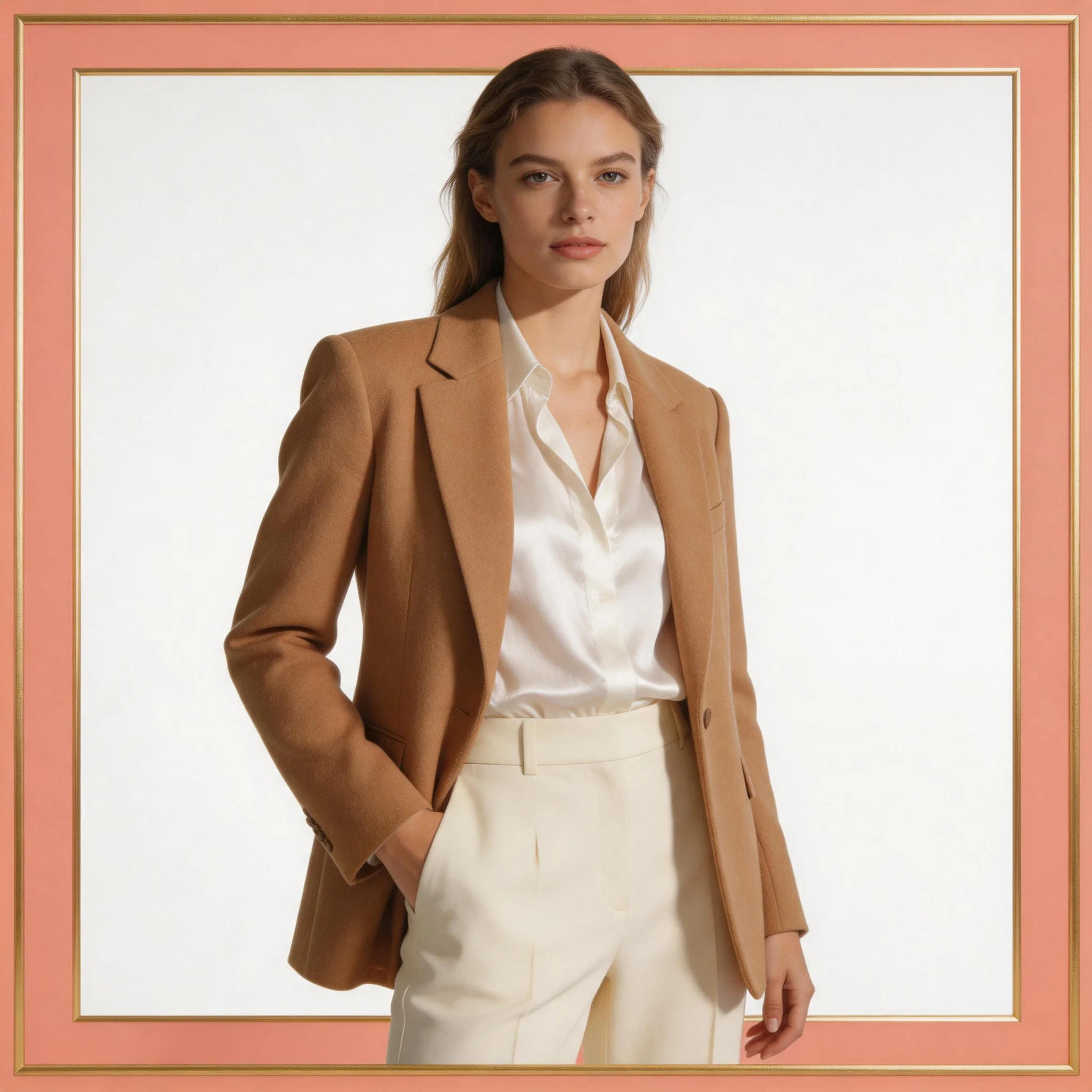
This timeless combination works in any conservative office. Choose navy, charcoal, or camel trousers. Add a silk or cotton blouse in white, cream, or soft blue. Finish with leather loafers and minimal jewelry.
2. The Tech Startup Uniform (Software, Product, Design)
Formula: Dark jeans or chinos + knit polo or Oxford shirt + clean sneakers + unstructured blazer
Smart casual at its finest. Dark indigo jeans are acceptable if the office culture supports it. A knit polo in merino wool looks polished but feels casual. White leather sneakers (kept spotless) complete the look.
3. The Creative Agency Look (Marketing, Media, Fashion)
Formula: Midi skirt or wide-leg trousers + fitted tee or tank + statement blazer + ankle boots or mules
This formula balances personality with professionalism. A bold blazer color or texture becomes your signature piece. GQ style editors note that creative industries reward individual expression—within reason.
4. The Hybrid Office Combo (Remote + In-Person Days)
Formula: Tencel jumpsuit or dress + light cardigan + ballet flats or loafers
One-piece outfits save decision-making energy. A well-fitted jumpsuit in black, navy, or olive transitions from video calls to in-person meetings. Add a cardigan for temperature changes.
5. The Client-Facing Upgrade (Sales, PR, Events)
Formula: Pencil skirt or slim trousers + silk blouse + tailored blazer + pointed flats or low heels
When meeting external clients, elevate slightly above the office baseline. A silk blouse adds luxury without ostentation. Keep accessories minimal and professional.
Color Psychology for Professional Impressions
The colors you wear influence how colleagues and supervisors perceive you—often subconsciously. Research documented by the American Psychological Association shows that color associations play a measurable role in first impressions and perceived competence.
Here is how to strategically use color in your internship wardrobe:
Navy Blue: Conveys trustworthiness, stability, and authority. The safest power color for any industry. Ideal for first days, presentations, and client meetings.
Charcoal Gray: Signals professionalism and neutrality. Less intimidating than black, more serious than navy. Perfect for analytical or technical roles.
White / Cream: Represents cleanliness, organization, and simplicity. Best as a base layer—too much white can look sterile.
Earth Tones (Camel, Olive, Rust): Warm browns and greens project approachability and creativity. Excellent for collaborative team environments.
Soft Pastels (Blush, Sage, Powder Blue): Friendly and open without being childish. Appropriate for creative and client-facing roles.
Black: Powerful and sophisticated, but can read as severe in summer settings. Use strategically rather than as a default.
As Psychology Today resources explain, cultural and industry context matters—what signals authority in finance may read as rigid in a design studio. Observe your workplace and calibrate accordingly.
Conclusion: Dress for the Career You Want
Your summer internship is more than a resume line—it is your introduction to professional life. The outfits you choose each morning communicate respect for the opportunity, attention to detail, and self-awareness. By understanding dress codes, selecting breathable fabrics, and applying color psychology, you remove wardrobe stress and free mental energy for the work itself.
In 2026, you do not have to figure this out alone. AI tools like DLOOK AI Outfit Stylist turn your smartphone into a personal stylist, helping you build confidence one outfit at a time. Ready to upgrade your internship wardrobe?
Get started now:
Visit DLOOK for style inspiration
Download on iOS: App Store
Download on Android: Google Play
Written by the DLOOK Fashion Editor Team. Last updated May 2026.