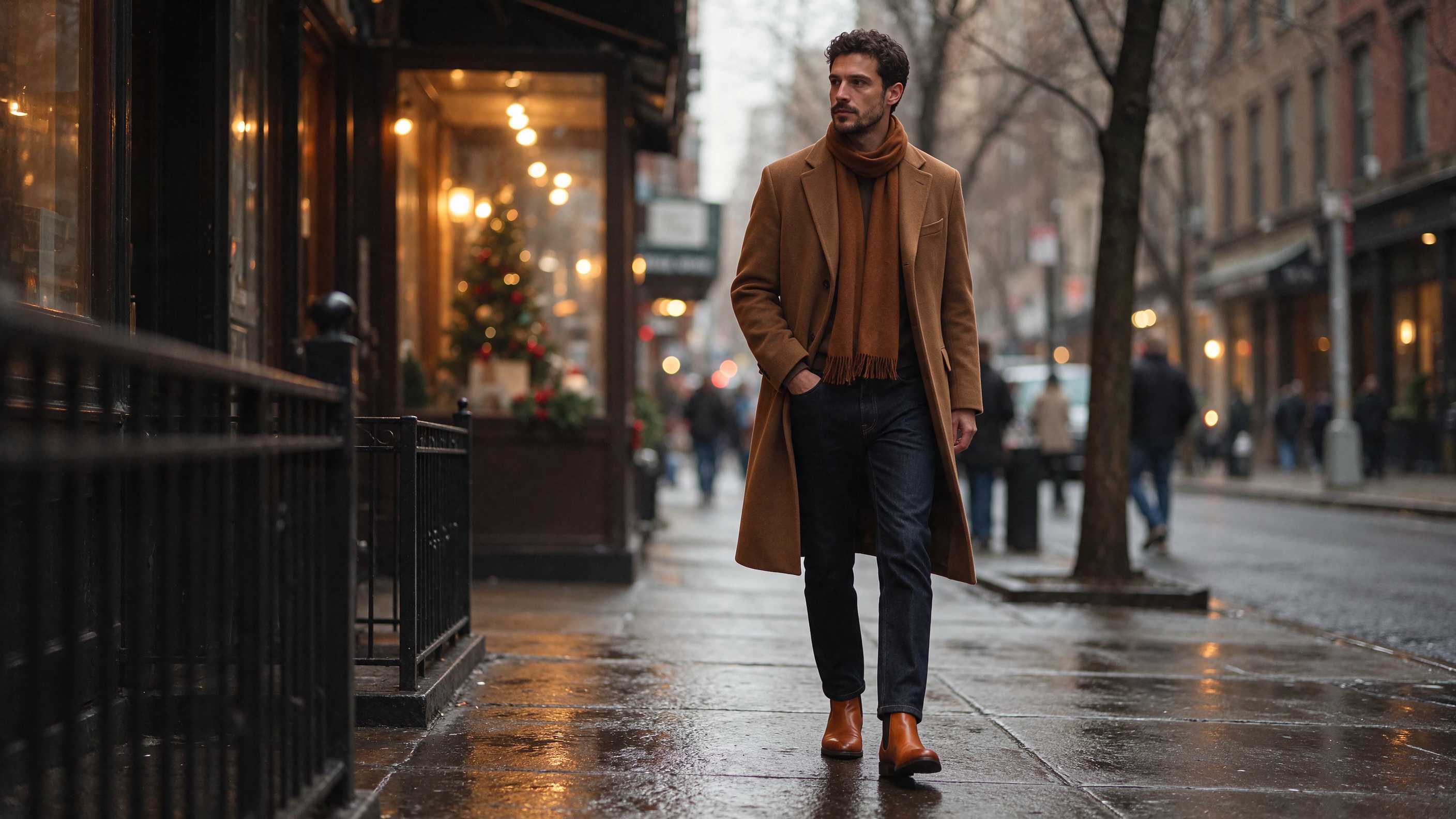
Every November, the same question lands in search bars across America: which men's winter boots are actually worth buying this year? The timing is not accidental. Search interest in winter boots climbs steadily from the second week of November and peaks right around Thanksgiving and Black Friday, when slush starts sticking to sidewalks from Portland, Maine to Minneapolis. Google Trends data shows the category reaching its five-year high at the end of November 2025, and early November 2026 numbers are already trending upward week over week. If you are reading this in late November, you are right on schedule — and this guide is built to help you buy once and buy well.
The demand has also changed shape. The fastest-growing search in the entire category is "best men's winter boots for extreme cold," which Google Trends flags as a breakout query with over 1,050% growth over five years. In plain terms: American men are no longer shopping for a single pair of fashion boots to survive the season. They want boots for the office commute, boots for weekend errands, boots for date-night dinners, and serious insulated boots for the kind of deep-freeze January that turns Chicago sidewalks into wind tunnels. Meanwhile, "chelsea boots men" keeps climbing every week of the 2026 season — it is the only major boot long-tail still rising in November — and searches for "waterproof boots men" and "snow boots men" hold steady all year.
Geography tells its own story. The states with the highest winter-boot search interest over the past five years are Wyoming, Vermont, Alaska, Minnesota, and Maine. That is the Northeast and Upper Midwest wet-snow belt, where the enemy is not just cold but slush — the half-melted mess that soaks through unsealed leather in a single crosswalk. If you live anywhere in that band, waterproofing is not a luxury feature; it is the baseline. This guide keeps that reality in mind throughout.
One more thing the data makes clear: this is a list-driven category. The top-ranking articles for "best winter boots for men" are all editor-tested roundups from Men's Health, The Guardian, and outdoor field-review sites. Readers want curated, experience-backed recommendations, not a catalog. So that is what we built — seven styles, each explained in terms of the weather it handles, the outfits it completes, and the mistakes that ruin it.
So we did what the editors at the major style publications do: we broke the category into the seven boot styles that actually matter for 2026, studied the editorial testing from outlets like Men's Health's 2026 boot roundup and The Guardian's winter boot guide, and paired each style with complete outfit formulas you can copy directly. Whether your winter means wet subway platforms in Manhattan, packed powder in Vermont, or forty-degree drizzle in Seattle, one of these seven styles is your answer. For broader cold-weather outfit building, our winter coat styles guide pairs naturally with everything below.
How to Choose Men's Winter Boots: 4 Questions Before You Buy
Boots fail when men buy them for the wrong job. Before we get to the seven styles, answer four quick questions. First: what is the actual weather? Dry cold, wet slush, and deep powder each demand different construction. Second: where are you actually going? A boot that excels at a mountain cabin is a liability in a glass office tower. Third: what will you wear them with? The slimmer the trouser, the sleeker the boot needs to be. Fourth: how much maintenance will you do? Suede and untreated leather demand care; rubber and sealed nubuck forgive neglect.
Keep three technical specs in view as you shop. Waterproofing comes in two forms: waterproof-breathable membranes (best for active wear and wet snow) and sealed or rubberized exteriors (best for slush city walking). Insulation is measured in grams; 200g suits city commuting, 400g handles real cold, and 800g-plus is for the extreme-cold scenarios we cover later. Outsoles matter more than most men expect: look for deep rubber lugs if you face ice and packed snow, and cleaner wedge or low-profile soles if your winters are mostly pavement. For a broader framework on building cold-weather outfits around pieces like these, see our men's wool polo layering guide.
1. Chelsea Boots: The Commute King
If you buy one pair of men's winter boots this season, make it a Chelsea. Google Trends data from November 2026 shows "chelsea boots men" at 49 and climbing every single week — the strongest momentum of any boot search this fall — with related queries like "black chelsea boots for men" up 130% and "waterproof chelsea boots men" up 80%. The editorial world agrees: Men's Health named the Blundstone 585 its Best Overall boot in its 2026 testing, and the pull-on silhouette has become the default smart-casual footwear of every city from Boston to Seattle. You can read about the boot's long history — it dates back to Victorian England and the Chelsea art scene of the 1950s — in this Wikipedia entry on the Chelsea boot.
Why it works in winter: the elastic side panel and pull tab mean no laces to freeze, no hardware to salt-stain, and a clean ankle line that slides under straight or tapered trousers without bunching. The silhouette is sleek enough for the office and rugged enough for weekend errands. Choose waterproof leather or treated nubuck for wet climates; save suede for dry-cold regions or indoor-heavy schedules.
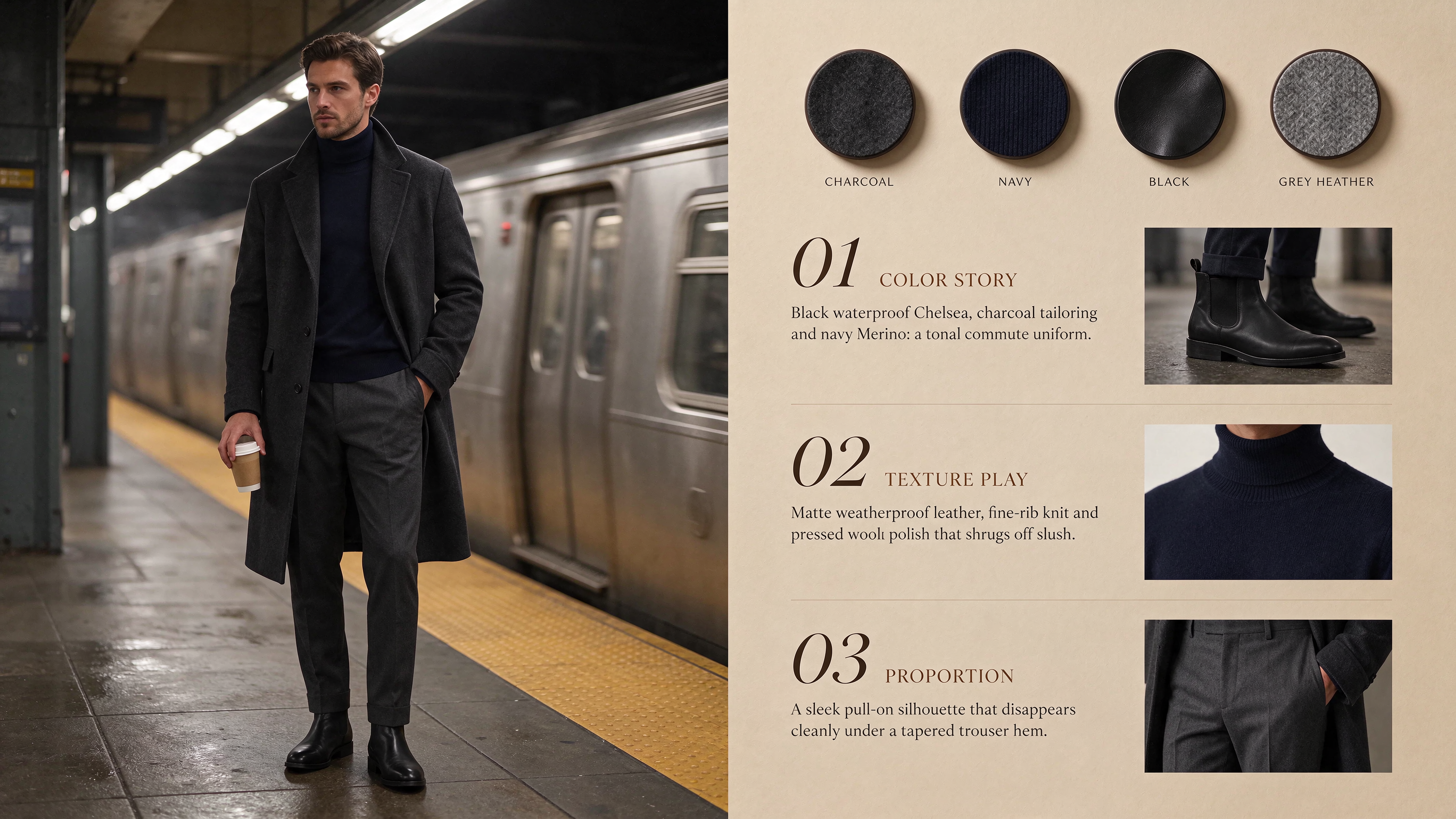
Outfit pairing — the winter commute: black waterproof Chelsea boots, charcoal wool dress trousers with a slight taper, a fine-gauge Merino turtleneck in navy or black, and a topcoat in camel or charcoal. The boot disappears under the trouser hem and reads as a dress shoe from a distance, which is exactly what you want in a client meeting. On frigid mornings add a wool overcoat rather than a parka; the combination signals competence without trying hard. This is the single most versatile winter boots outfit men can assemble for Monday through Friday.
Color guidance: black is the office answer; chestnut or caramel brown dresses down beautifully with dark denim for the weekend. If you want one boot to cover both, buy dark brown — it sits comfortably between formal and casual. The Blundstone official site is a useful reference point for how a classic Chelsea is built, whatever brand you ultimately choose.
Avoid: square-toe Chelseas, which date a look instantly, and paper-thin fashion versions with no tread — a smooth leather sole on black ice is a hospital visit waiting to happen.
2. Chukka Boots: The Smart Weekend Standard
The chukka — the ankle-high, two-or-three-eyelet desert boot silhouette — is the lightest boot on this list, and that is precisely its strength. It occupies the space between a sneaker and a real boot: more structured than canvas, less aggressive than a lace-up work boot. The Guardian's 2026 winter boot guide highlighted the chukka as the all-rounder city option, and brands like Amberjack have pushed fresh updates into the category this year.
Why it works in winter: a chukka pairs with everything in a smart-casual wardrobe — chinos, dark denim, wool trousers — and its low profile keeps proportions clean under cuffed or cropped pants. The tradeoff is weather protection: most chukkas are not waterproof and carry minimal tread. Treat this as a dry-cold or mild-wet boot, or buy a winterized version with a lug rubber sole and treated upper.
Think of the chukka as the boot you reach for on the eighty percent of winter days that are merely cold, not brutal. It is the style that answers the office holiday party with no stated dress code, the Saturday museum visit, the long lunch that turns into an afternoon walk. No other boot on this list disappears so completely into a wardrobe — which is precisely why so many well-dressed men own two pairs, one suede for dry days and one treated leather for everything else.
Outfit pairing — smart casual: sand or dark-brown suede chukkas, slim olive or stone chinos, an Oxford button-down under a fine Merino crewneck, and a wool topcoat. On weekends swap the shirt for a heavyweight cream tee and add a chore jacket. The chukka rewards rolled or cropped hems: show a sliver of ankle or a warm sock in charcoal or burgundy. This is the boot for men whose winter involves more indoor plans than blizzards — dinners, galleries, errands, casual Fridays.
Fit notes: a chukka should fit snugly through the heel and midfoot with a thumb's width of room at the toe, because the unlined or lightly lined construction stretches more than a full leather boot. Buy your true size in lined versions and consider a half size down in unlined suede if you are between sizes. The crepe or rubber sole should feel flexible on the first wear — a chukka that needs breaking in was built wrong.
Avoid: wearing chukkas through real slush; water stains suede permanently without treatment. A spray-on water repellent applied before first wear buys you insurance, not immunity.
3. Lace-Up Derby Boots: The Dressiest Winter Boot
When the plan calls for polish — a winter wedding, a client dinner, a holiday party at a nice restaurant — the lace-up derby boot is the answer. It borrows the DNA of a dress shoe and builds it on a boot last, giving you the formality of an oxford with the coverage and warmth of a boot. Think of it as the winter equivalent of the derby shoe, and style it with the same respect.
Why it works in winter: the closed lacing and higher ankle keep warmth in and slush out better than any low shoe, and the silhouette is slim enough to wear with tailoring. A rubber-studded leather sole or a slim lug sole gives you traction without breaking the dress code. In deep-wet cities, look for versions with a thin waterproof membrane hidden inside the leather upper.
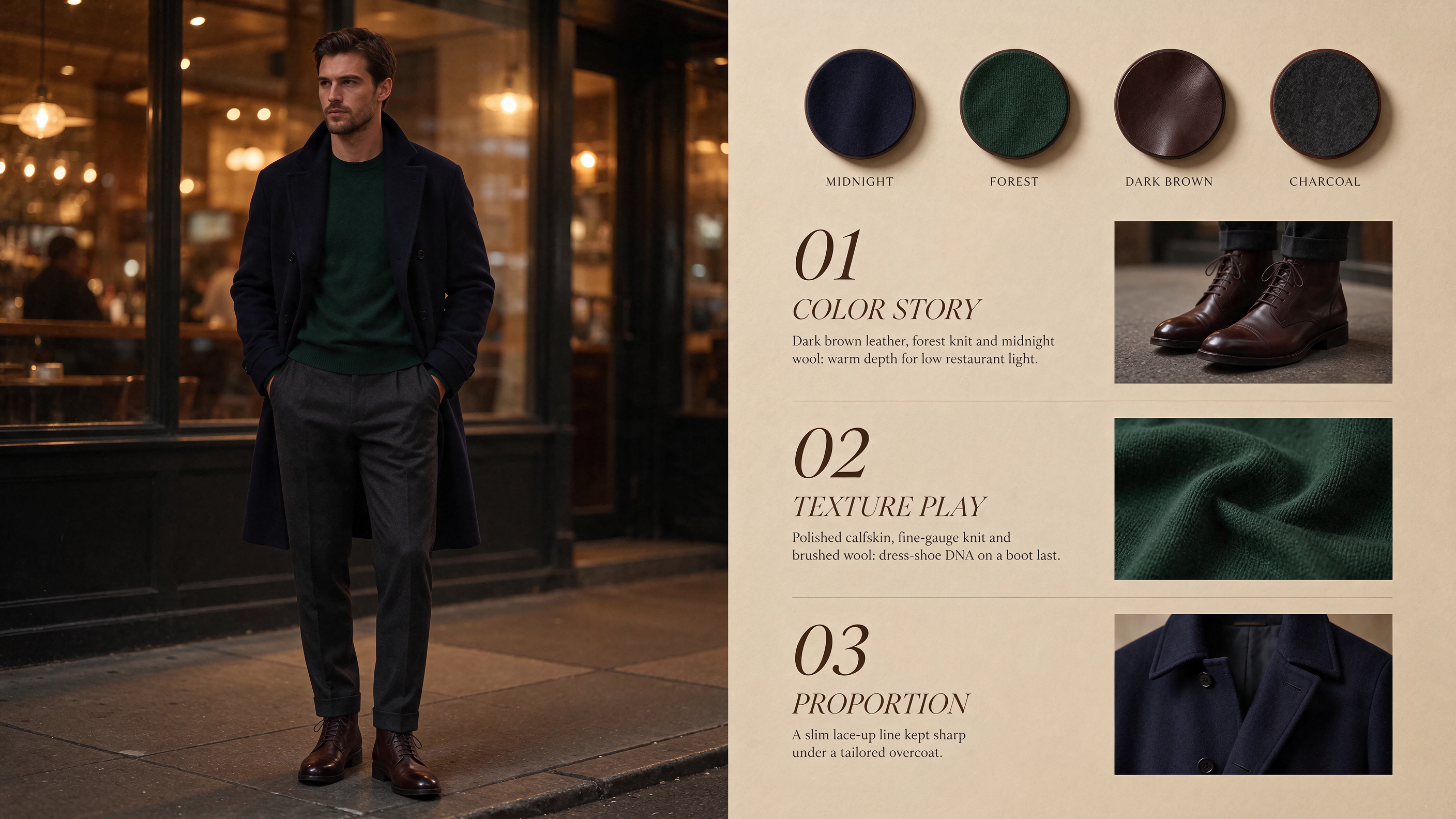
Outfit pairing — dinner date: dark-brown leather derby boots, dark wool trousers in charcoal or midnight, a dark green or burgundy fine-knit sweater, and a tailored overcoat. Brown reads warmer and more interesting than black under restaurant lighting, and the lace-up keeps the look intentional rather than default. If the evening runs long and the walk home is cold, you will be grateful for the ankle coverage — a detail your date will notice, too. For full cold-weather date formulas built around looks like this, our men's winter date outfits guide walks through five complete scenarios.
Leather care: because derby boots are usually the most polished pair you own, they deserve the most polish. Wax-based polish feeds the leather and builds a barrier against sidewalk salt; cream polish refreshes color. Ten minutes of care after every two or three wears keeps a derby boot looking restaurant-ready for a decade, which is why this style offers some of the lowest cost-per-wear in the entire category.
Avoid: chunky commando soles on dressier versions — they push the boot toward workwear and limit what you can wear it with. Save the heavy tread for style number seven.
4. Duck Boots: The Northeast Heritage Icon
Few boots are as American as the duck boot. The rubber-bottom, leather-upper design was created by L.L.Bean in 1911 and remains functionally unchanged more than a century later — you can trace the full story in the Wikipedia entry on Bean boots. Search data confirms the icon's hold: "ll bean duck boots" is one of the most common companion queries to "best winter boots for men," and Ape to Gentleman's 2026 style guide put duck boots at the top of its seasonal list. If you live in Maine, Vermont, upstate New York, or anywhere that gets wet snow followed by refreeze, you already know why.
Why it works in winter: the rubber lower half is effectively a rain boot; the leather upper keeps it from looking like one. Melting slush beads off the rubber while the leather shafts stay warm and dry with proper waxing. The chain-tread outsole grips packed snow better than almost any leather sole. The official L.L.Bean Bean Boots page remains the reference standard, and competitors from Sperry to Sorel now offer their own takes.
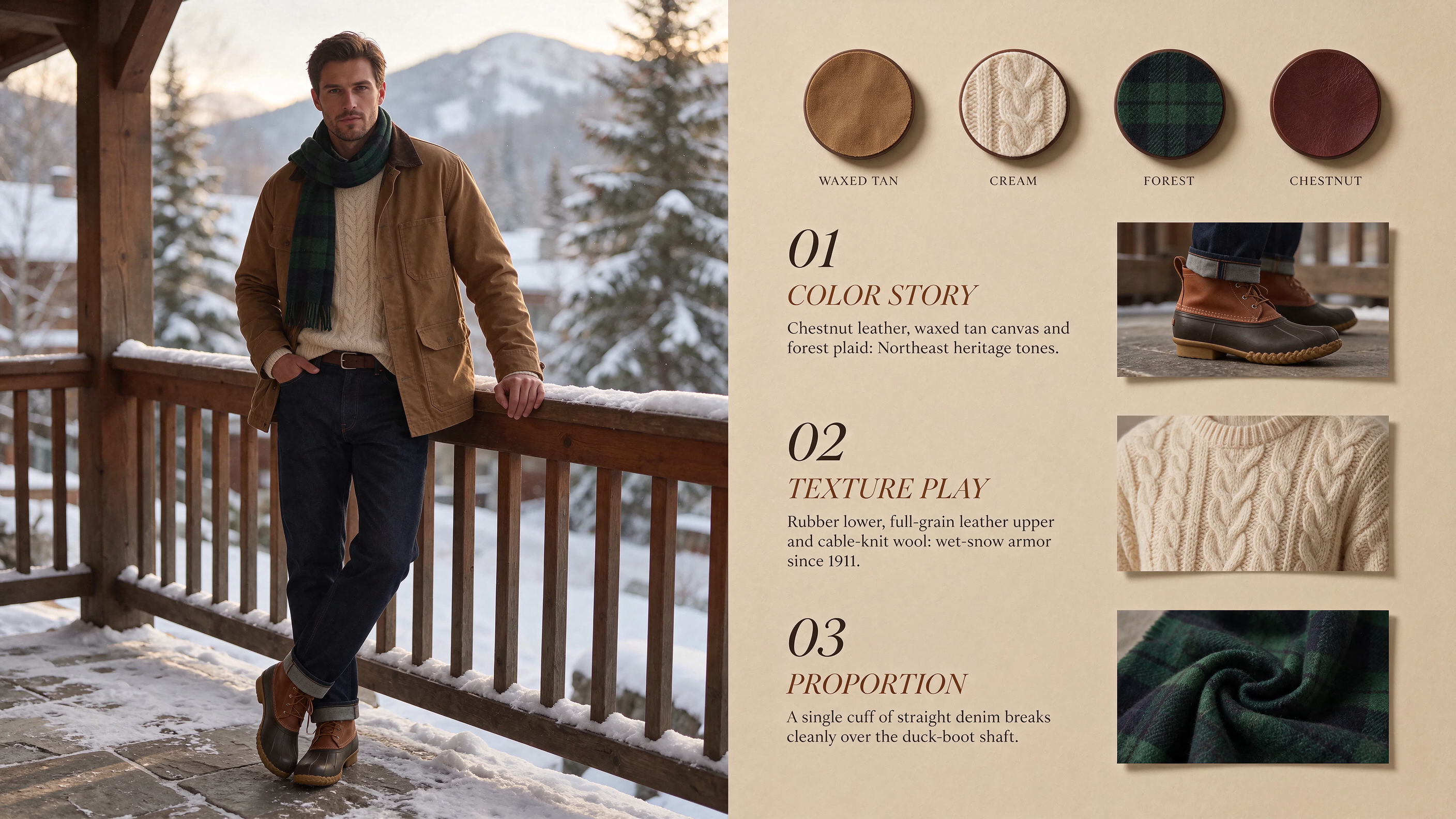
Outfit pairing — the holiday gathering: brown duck boots, dark indigo straight jeans with a single cuff, a cream cable-knit sweater, a red or forest-green plaid wool scarf, and a waxed canvas or wool field jacket. The duck boot anchors the look in heritage Americana, and the plaid scarf leans into the seasonal mood without tipping into costume. This combination covers everything from the tree-farm run to the family Thanksgiving porch to a casual Christmas Eve gathering. For party-ready variations on this formula, our New Year's Eve outfit ideas for 2027 build on the same palette.
Avoid: treating duck boots like dress boots. They are brilliant with denim, cords, and flannel; awkward with tailoring. And buy a half size up if you plan thick socks — the rubber shell does not stretch.
5. Insulated Snow Boots: The Extreme-Cold Answer
This is the section the search data demanded. "Best men's winter boots for extreme cold" is the breakout query of the entire category, up over 1,050% in five years, and "snow boots men" spikes every January — typically four to eight weeks after the general winter-boot search peaks. These are the boots for single-digit mornings, lake-effect bands, and the walk from the car to the sledding hill when the wind chill is a number you do not say out loud.
Why it works in winter: insulated snow boots combine three things fashion boots cannot fake: serious insulation (400g to 800g of synthetic fill or wool blend), fully waterproof uppers that extend well above the ankle, and aggressive lug outsoles designed for packed powder and ice. Field-testing roundups from outdoor publications consistently single out boots in the style of the Sorel Caribou and The North Face Chilkat as the benchmarks in this class.
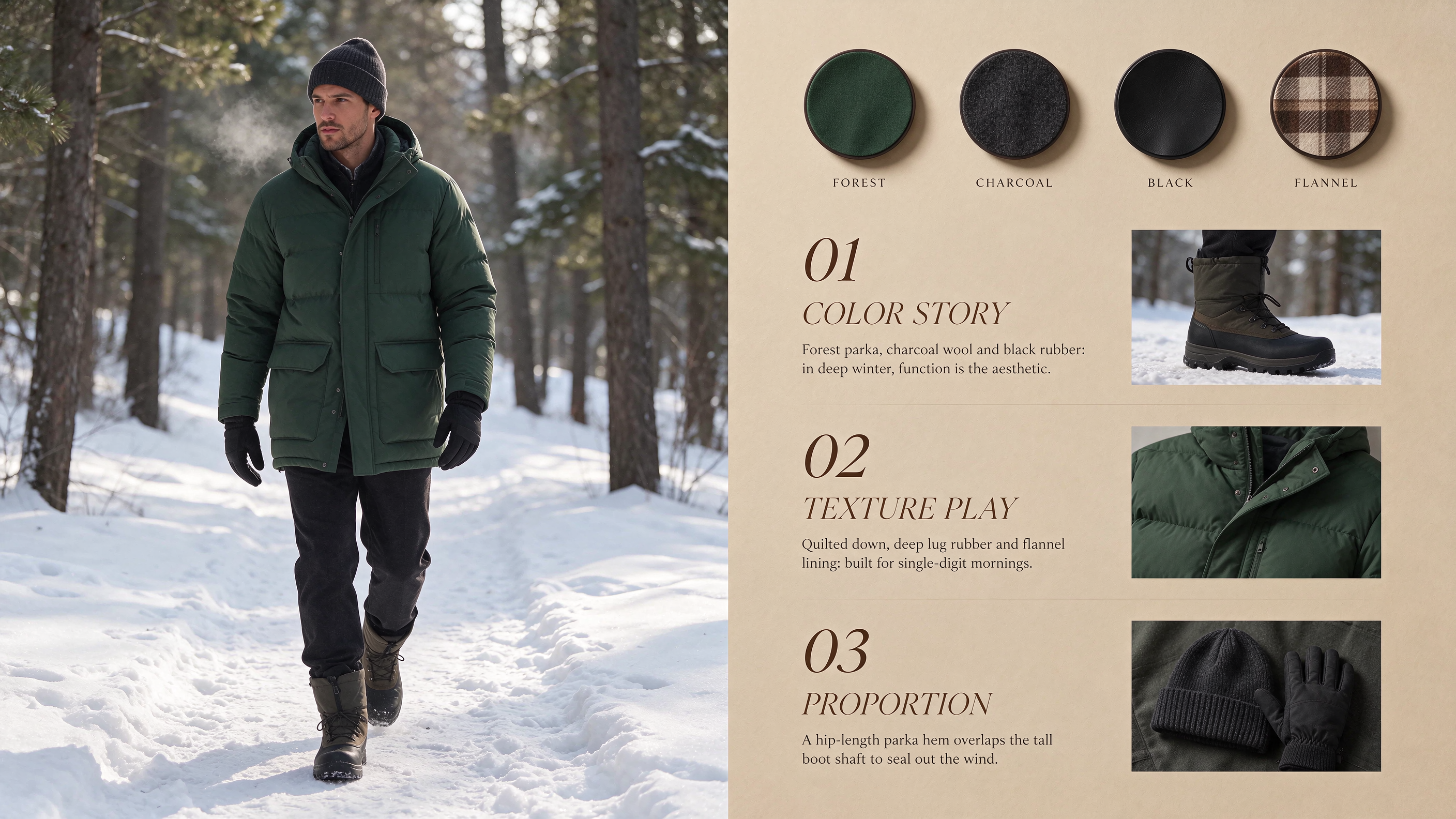
Outfit pairing — the deep-winter weekend: tall insulated snow boots, weatherproof shell pants or heavy flannel-lined pants, a mid-weight down parka that covers the hips, a wool beanie, and insulated gloves. The styling logic here is coverage and layering, not silhouette: the parka's hem should overlap the boot tops so no skin or thin fabric is exposed to the wind. Keep the palette simple — navy, black, forest, or gray — because in extreme cold, function is the aesthetic.
City adaptation: if you are commuting in extreme cold rather than recreating, choose a mid-height insulated boot with a cleaner upper (a waterproof leather hiker with 400g insulation is ideal) and wear it with wool trousers and a parka. You keep most of the warmth without the expedition look. Whatever height you choose, the rule from the Northeast and Upper Midwest wet-snow belt applies everywhere: a boot that keeps snow out but lets sweat pool inside will freeze your feet just as surely as a leak.
The sock question: extreme-cold performance is a system, and socks are half of it. One thick sock is almost always better than two thin ones, because trapped air insulates and doubled seams compress circulation. Merino wool blends in the midweight range work for most men; avoid pure cotton socks below freezing entirely — cotton holds moisture and turns clammy the moment you step indoors. If your boots feel tight with your winter socks, the boots are too small; fit the boot to the sock system, not to your summer foot.
Avoid: fashion "snow boots" with thin fur trim and flat soles — they photograph well and fail at ten degrees. Check the insulation gram rating before you check the price.
6. Lug-Sole Hybrid Boots: The Streetwear Pick
The newest entry on this list is the lug-sole hybrid — boots that fuse sneaker or winterized-chukka uppers with thick, tractor-tread rubber soles. The TikTok-driven rise of the UGG CityFunc and similar city-function boots has pushed this category into mainstream men's wardrobes this season, and it maps directly onto the "lug-sole hybrid" trend that editors have been tracking all year. If your winter style leans streetwear — wide-leg pants, puffers, technical layers — this is your boot.
Why it works in winter: the exaggerated lug sole lifts you above slush and grips wet pavement far better than a dress sole, while padded collars and synthetic uppers shrug off salt. Many versions add waterproof membranes and reflective details that genuinely earn their place on dark winter commutes.
Outfit pairing — modern streetwear: black or gray lug-sole boots, relaxed straight-leg denim or cargo trousers with a stacked hem, an oversized wool-blend coat or cropped puffer, and a beanie. Proportion is the whole game here: the chunky sole needs a fuller pant leg to balance it. Slim jeans on a heavy lug sole look like a mistake; wide or straight cuts look deliberate. Keep the upper half clean and let the boots carry the weight.
Why now: the hybrid category barely existed three winters ago, which is exactly why it feels current. It solves a real problem — men wanted sneaker comfort with boot capability — and the styling is forgiving because the silhouette is deliberately average: neither dressy nor workwear, it slots into almost any casual wardrobe without demanding new clothes. If your closet is mostly streetwear-leaning, this is the lowest-risk boot purchase on the list.
Avoid: pairing lug-sole boots with slim tailoring — the visual clash undermines both pieces. And check the sole compound; some fashion lugs are too hard to grip real ice.
7. Work-Heritage Boots: The Rugged Everyday
The final style is the one with the deepest roots in American dressing: the work-heritage boot, from the wheat six-inch lace-up popularized by Timberland to moc-toe and plain-toe heritage designs from brands like Red Wing and Thursday. These are the boots that made "waterproof boots men" a year-round search — the category holds an average interest of 30 on Google Trends even outside winter — and they remain the most-worn men's boot in the country by a wide margin.
Why it works in winter: thick full-grain leather, padded collars, real tread, and construction meant to be resoled rather than replaced. A sealed or waterproof wheat work boot laughs at salted sidewalks, and the silhouette — round toe, visible lacing, ankle height — flatters almost every casual outfit in your closet.
There is also a durability argument that fashion boots cannot match. A stitched welt construction can be resoled two or three times, which means a $250 heritage boot amortized over fifteen years costs less per winter than a $90 department-store pair replaced annually. That is why "thursday boots" and similar heritage-brand searches have climbed 150% over the past year — men have figured out the math.
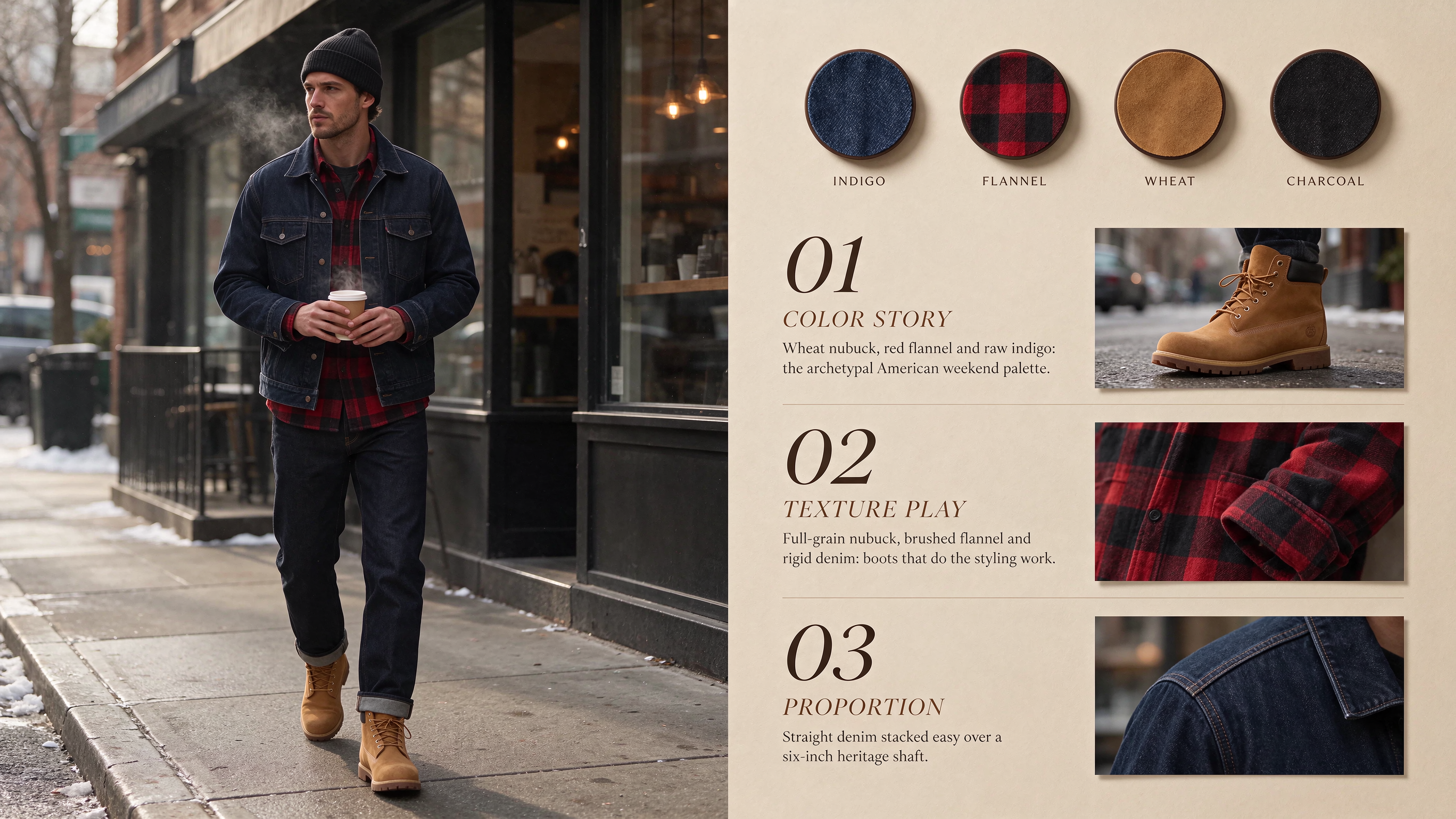
Outfit pairing — the weekend coffee run: wheat or tan heritage boots, dark straight denim, a red or green flannel shirt layered under a raw denim jacket or a waxed trucker, and a beanie for the walk. This is the archetypal weekend formula — effortless, warm, and completely at home in a coffee shop from Brooklyn to Portland. Swap the flannel for a heavyweight cream henley when you want a cleaner read. The beauty of the work-heritage boot is that it makes a simple outfit look finished; the boot does the styling work for you.
Avoid: wearing heritage work boots with a suit or dress trousers — the proportions fight each other. And break them in at home first; stiff leather on a long first wear is a lesson you only need once.
Men's Winter Boots for Extreme Cold: A Closer Look
Because the extreme-cold search has grown over tenfold in five years, it deserves its own decision framework. Match the boot to the forecast, not the fantasy. For zero to twenty degrees with dry cold, a 200g to 400g insulated waterproof boot or a thick leather work boot with wool socks is sufficient. For sub-zero stretches — the Wyoming, Minnesota, and Alaska reality — step up to 400g to 800g insulation, a boot shaft well above the ankle, and a roomy fit that lets you wear serious socks without compressing circulation. For wet extreme cold, the worst combination of all, prioritize a fully rubberized or membrane-lined lower with a gaiter-style collar, because wet feet at ten below are a genuine safety issue, not a comfort complaint.
Three habits extend any extreme-cold boot's life. Dry them at room temperature away from radiators, which crack leather and delaminate soles. Rotate two pairs if you wear them daily, so moisture fully evaporates between wears. And store them with cedar trees or crumpled paper in the off-season so the uppers hold their shape. If you want help building complete cold-weather looks around boots like these, the AI personal stylist guide for men shows how to match footwear to outfits, colors, and occasions systematically.
Price Tiers and When to Buy
Men's winter boots cluster into three honest price tiers. Under $150, you get solid waterproofing and decent tread but thinner leather and glued construction — perfectly fine for a commuter who wants one or two seasons of service. The $150 to $300 tier is the sweet spot: better leather, real insulation options, stitched construction, and brands that stand behind resoling. Above $300, you are paying for heritage manufacturing, designer names, or expedition-grade engineering. The Our Legacy Camion phenomenon — where a $350-plus designer boot spawns waves of "alternatives" searches — proves that plenty of men want the look without the invoice; the good news is that every style on this list has an excellent option under $250.
Timing matters as much as tier. Search and sales data both spike around Thanksgiving and Black Friday, which is when the deepest discounts of the season land on exactly the boots in this guide. Buy between late November and mid-December for the best combination of stock, size runs, and price. Wait until January and you will find steeper markdowns on picked-over inventory; wait until the first blizzard and you will pay full price for whatever is left. If you are shopping this week, you are in the window.
Winter Boot Care: Make One Pair Last Five Years
The difference between boots that last two winters and boots that last ten is almost never the purchase price — it is maintenance. Five habits cover ninety percent of boot longevity. First, waterproof before you wear: a spray or wax treatment applied to clean, dry leather on day one creates the barrier that salt and slush cannot. Reapply monthly during heavy-wear months. Second, wipe down after every wet wear: a damp cloth removes salt film before it dries into white crusts that etch leather permanently. Pay attention to the welt and sole edges, where salt collects unnoticed.
Third, dry slowly at room temperature. Radiators, space heaters, and hair dryers are the enemies — heat cracks leather, warps glue, and separates rubber soles. Remove the laces, stuff the boots with newspaper, and let them dry overnight. Fourth, condition the leather every four to six weeks in season with a neutral cream or oil; winter salt is desiccating, and unconditioned leather dries, cracks, and admits water at the flex points. Fifth, rest and rotate: leather needs twenty-four hours to release absorbed moisture, so a single daily-worn pair ages twice as fast as a rotated pair. If you take only one habit from this guide, take the rotation — it costs nothing and doubles boot life.
Frequently Asked Questions
These are the questions American men actually type into search bars every November — condensed into fast, honest answers.
What are the best men's winter boots for 2026?
The best men's winter boots for 2026 depend on your weather and lifestyle: waterproof Chelsea boots for commuting, duck boots for wet snow in the Northeast, insulated snow boots rated 400g or more for extreme cold, and heritage work boots for everyday casual wear. Match insulation and waterproofing to your coldest realistic scenario.
Are Chelsea boots warm enough for winter?
Yes, in most city winters. A leather Chelsea with a weatherproof treatment and wool socks handles typical cold and slush well. For extreme cold below roughly 10°F, switch to an insulated boot, since most Chelseas have no insulation rating.
What boots should men wear in extreme cold?
Choose insulated boots with 400g to 800g of insulation, fully waterproof uppers that extend above the ankle, and deep lug outsoles. Boot styles like the Sorel Caribou or insulated waterproof hikers are field-testing benchmarks for sub-zero conditions.
Can you wear duck boots as fashion boots?
Absolutely — duck boots are a legitimate heritage style. Pair them with dark denim, flannel or cable-knit sweaters, and a field jacket or wool coat. They work for casual and smart-casual settings, though not with tailoring.
When is the best time to buy men's winter boots?
Late November through mid-December. Search interest and retailer discounts both peak around Thanksgiving and Black Friday, giving you the best mix of price, selection, and size availability. Prices drop further in January but inventory is picked over.
How do I keep my winter boots from getting ruined by salt?
Treat leather and suede with a waterproofing spray before first wear, wipe boots down with a damp cloth after salted walks, let them dry at room temperature, and condition leather monthly during winter. Rubber-bottom boots like duck boots resist salt almost entirely.
Conclusion
The right pair of men's winter boots is not the most expensive pair, or the pair with the most hype — it is the pair engineered for the winter you actually live through. City commuters should start with a waterproof Chelsea and build from there. Men in the Northeast wet-snow belt belong in duck boots. Anyone facing sub-zero Januarys needs a serious insulated boot, full stop. And if your style runs casual or streetwear, the work-heritage boot and lug-sole hybrid have you covered.
Buy in the late-November window while selection is full, treat the leather before the first snowfall, and rotate your pairs so they dry properly. Do those three things and a good boot will carry you through multiple winters, looking better each year as it breaks in. Winter rewards the prepared — and now you know exactly what to prepare.
Start where your calendar starts. If the next cold month is mostly office days, the waterproof Chelsea is your foundation and everything else is optional. If your weekends involve snow-covered driveways and woodsmoke, duck boots or heritage work boots belong in the trunk. And if the forecast ever says "extreme cold warning," reach past the fashion shelf for the insulated pair — the tenfold growth in extreme-cold searches this year is a signal that American winters are demanding more from our boots, and the men who answer that demand with the right gear are the ones who actually enjoy the season.
Reviewed by the DLOOK Style Team
DLOOK helps men dress with confidence through personalized outfit intelligence, seasonal style guides, and curated wardrobe essentials. Try the DLOOK virtual try-on to see how these boots and outfits look with your own wardrobe.
Try the DLOOK virtual try-on experience to see how these outfits look on you, discover your perfect colors, and effortlessly manage your closet and looks.