By the DLOOK Fashion Editorial Team
For more than a decade, animal print occupied an awkward spot in the average man's wardrobe. It was the shirt you bought on vacation and never wore at home, the jacket that felt right on a stage but wrong on a sidewalk. Worn carelessly, leopard and snake print have a fast route to costume territory — Vegas-pit-boss territory, not fashion-week territory. So it is understandable that most men have kept their distance.
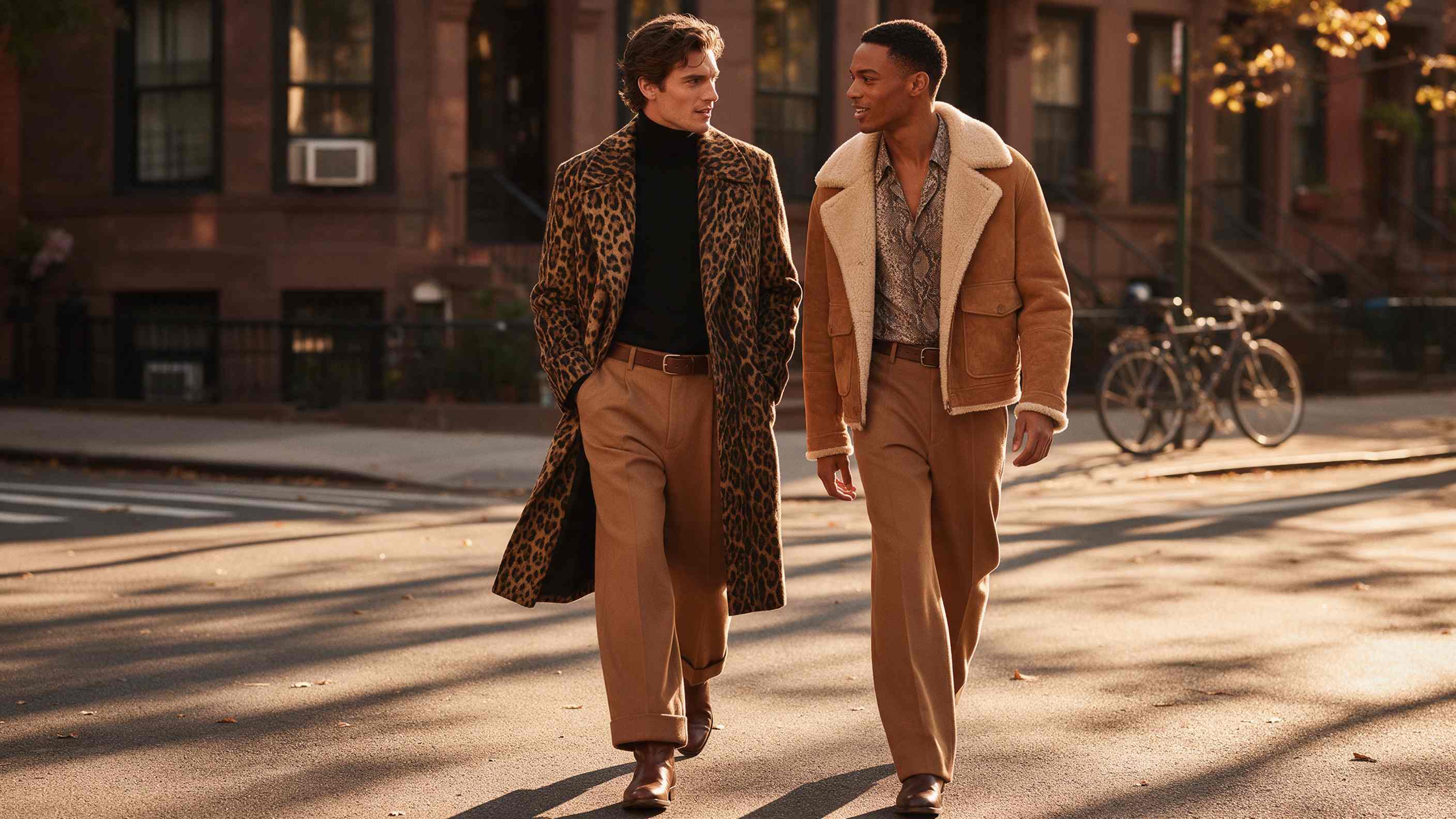
Fall/winter 2026 is the season to close that distance. Animal print has returned to menswear's center in a noticeably different register: moodier, more polished, and styled with the discipline of a neutral rather than the volume of a costume. Runway coverage from the FW26-27 men's fashion weeks described leopard and snake appearing as part of a polished "rock-dandy" revival — statement pieces with dark denim, clean tailoring, and high-contrast restraint. This guide translates that runway moment into something you can actually wear. You will get the styling rules that keep animal print expensive-looking, then occasion-by-occasion color formulas for both leopard and snake print — office, date night, parties, and weekends — built from the fall palette you already own.
What You'll Learn
Why animal print is the men's trend of fall/winter 2026 — and what changed since the last wave
The six golden rules that keep leopard and snake print looking sophisticated, not flashy
Four leopard print color formulas: office, date night, party, and weekend
Four snake print color formulas: office, date night, party, and weekend
The 2026 wildcard prints (zebra, tiger, cow) and how far to push them
The five starter pieces, ranked from lowest to highest risk
The five mistakes that instantly cheapen an animal print outfit
Why Animal Print Is the Men's Trend of Fall/Winter 2026
The evidence this season is unusually consistent across the fashion establishment. When Numéro surveyed the FW26-27 men's fashion weeks across Milan, Paris, and Pitti Uomo, animal prints appeared throughout its trend report — but styled differently than the streetwear-heavy waves of the past. The formula was "moody": leopard and snake pieces cut sharp, paired with dark denim and precise tailoring, a rock-dandy sensibility that treats the print as one element in a composed outfit rather than the whole message.
The editorial consensus has moved the same direction. In September 2026, Who What Wear published its five new rules for wearing animal print in autumn, anchored by an idea that would have sounded absurd a decade ago: animal print is a neutral. Leopard, with its mix of warm browns and black, functions like a textured tan. Snake, in its grey-taupe iterations, behaves like brushed steel or soft grey leather. The rules that followed — wear it as an accent, mix prints only with discipline, go minimalist with everything around it — map almost one-to-one onto the formulas below.
Search behavior confirms this is not an editor-invented moment. Google's "People also ask" boxes now surface the questions directly: "Is leopard print in style for fall 2026?" and "Is snake print still in style in 2026?" The answer to both is yes — with an asterisk. The men getting it right in 2026 are not the ones wearing the most print; they are the ones pairing it with the most discipline. That is why the occasion-based framing matters. Esquire's winter outfit coverage builds its guides around real destinations — office, date night, travel — and animal print works the same way: the print stays constant, but the palette and proportions change with the room you are walking into.
One more thing has changed: the fear factor. Animal print is a visual gamble, and most men avoid it because they cannot picture the outcome. That uncertainty is exactly what the second half of this guide removes — and exactly where an AI try-on tool earns its keep.
The Six Golden Rules of Wearing Animal Print Without Looking Flashy
Before the formulas, the philosophy. Every polished animal print outfit you will see this season obeys the same six rules, whether the wearer knows it or not.
1. Treat the print as a neutral, not a statement. This is the season's core idea, and it reframes everything. Leopard is a blend of caramel, espresso, and black — colors you already wear. Snake print in grey or taupe is functionally a textured charcoal. When you stop treating the print as a "look at me" moment and start treating it as a material, styling it becomes as easy as styling a brown sweater.
2. Obey the ten-percent rule. One animal-print piece per outfit, covering roughly a tenth of the total silhouette. A belt, a pair of boots, a scarf, a knit, a jacket. Not two. The moment a second print enters, the outfit stops reading intentional and starts reading chaotic — the single most common way men get this wrong.
3. Anchor with elevated neutrals. Animal print earns its keep against expensive-looking backgrounds: camel, cream white, charcoal grey, espresso brown, black. These anchors do two jobs at once — they make the print look deliberate, and they keep the whole palette inside fall's natural color story so the outfit never fights the season.
4. Let fit carry the print. Print amplifies everything around it, including a bad fit. A baggy leopard shirt looks sloppy in a way a baggy white shirt never will, because the eye goes straight to the pattern. Structured shoulders, correct sleeve length, trousers with a clean break — the tailoring fundamentals matter twice as much once a pattern enters the frame.
5. Choose matte over shine. Matte finishes — wool, suede, matte leather, brushed silk — read luxurious. High-shine synthetics read costume. This single fabric decision separates the rock-dandy runway version of animal print from the discount-store version, and it costs nothing.
6. Keep everything else quiet. Plain T-shirts, solid knits, clean denim, minimal logos. The print is the one piece of punctuation in the sentence; it cannot share the paragraph with another exclamation point. Grooming and footwear should be the cleanest versions of themselves — the details signal that the print was a choice, not an accident.
Leopard Print Color Formulas by Occasion
Leopard is the warmer of the two prints — a mixture of honey, caramel, espresso, and black that slots directly into the earth-tone palette of fall. That is why it leads the season: it cooperates with the camel coat, the cream knit, and the dark denim you already own. Four formulas, four rooms.
1. The Office: Leopard Knit + Camel Coat + Cream Trousers
Formula: fine-gauge leopard-print knit sweater + camel wool overcoat + cream or oatmeal wool trousers + dark brown loafers.
This is the gateway formula, and the one that converts the most skeptics. A knitted leopard sweater worn like any other mid layer reads as texture from across the room and only reveals itself at handshake distance. The camel coat frames the print's warm tones, and the cream trousers lift the whole outfit out of the brown-on-brown murk that makes animal print look cheap. Keep the knit fine-gauge and fitted; save chunky leopard cables for the weekend.
Why it works: the palette is a single warm family — camel, cream, caramel, espresso — so the print reads as the most interesting member of a cohesive group rather than a foreign object. This is the leopard print version of "quiet luxury": nobody can quite name what makes the outfit look expensive, but everybody notices it.
Adjustments: in a conservative office, swap the cream trousers for charcoal flannel and let the camel coat carry the warmth. In a creative office, reverse the formula — leopard knit under a charcoal blazer, camel coat on top — and the print gets one degree more visible. If your workplace runs warm, the knit alone over an ecru tee with tailored trousers still clears the business-casual bar, because a patterned knit reads no louder than a patterned tie.
2. Date Night: Leopard Scarf + Black Roll Neck + Burgundy Overcoat
Formula: black merino roll neck + burgundy wool overcoat + dark indigo jeans + leopard-print wool scarf + black chelsea boots.
For a winter date night, the goal is contrast and warmth — two things leopard delivers for free. The burgundy coat against the black base creates the rich, low-light-ready palette restaurants demand, and the leopard scarf at the neckline adds the detail that reads "he knows what he is doing" when the coat comes off. Keep the jeans dark and tailored; this is not the moment for distressed denim.
Why it works: burgundy and leopard share the same warm undertones, so the print looks native to the outfit, and the black base keeps the whole thing anchored and evening-appropriate. One scarf, ten percent of the silhouette, all of the personality.
Adjustments: if burgundy feels like a stretch, a charcoal overcoat produces the same effect with even less risk — the formula works on contrast, not on the specific coat. Footwear moves the register: black chelsea boots read polished, while a dark suede boot with a lug sole gives the outfit a rock-dandy edge that suits concert dates and late-night bars. Leave the scarf long and loosely draped rather than knotted; a tight knot turns a texture into a bib.
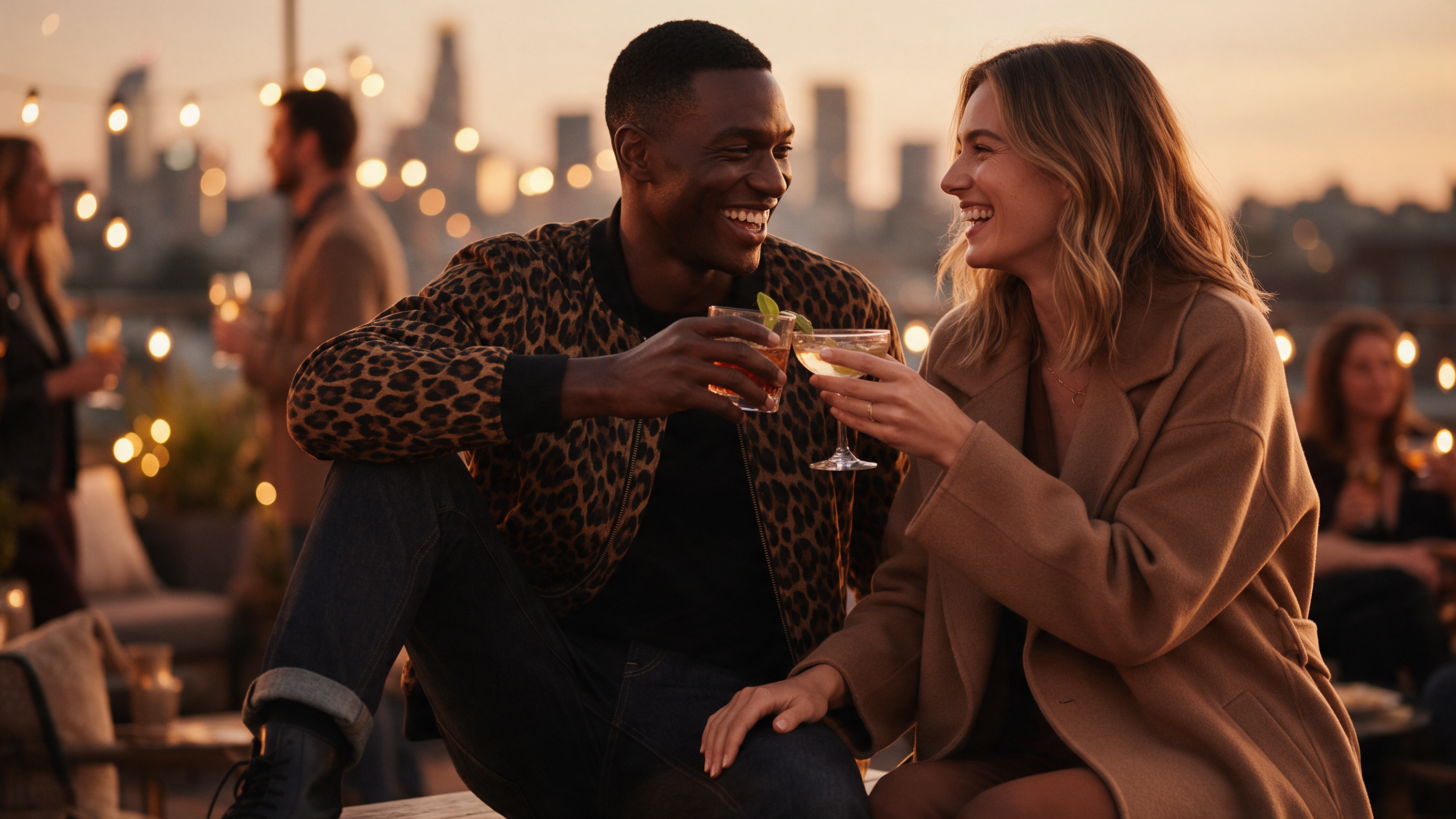
3. The Party: Leopard Statement Jacket + Charcoal Roll Neck + Black Trousers
Formula: tailored leopard-print jacket or shacket + charcoal merino roll neck + black wool trousers + black leather boots.
This is the maximum-dose formula — a full animal-print jacket — and it works because everything surrounding it has been reduced to almost nothing. Charcoal and black are the two most forgiving neutrals in menswear; they let the jacket be the entire story while quietly proving you understood the assignment. The jacket must be tailored: structured shoulder, clean body, sleeves that end at the wrist bone. A slouchy leopard jacket at a party reads sloppy; a sharp one reads like front-row.
Why it works: high contrast. Dark neutrals make warm prints glow, and the tailored cut keeps the statement inside the lines of formal. If there is one night a season to wear this, it is the December party circuit — this is exactly the outfit the FW26-27 runways were styling with dark denim and precise coats.
Adjustments: the jacket is the whole budget, so everything underneath should be pieces you already trust. Swap the roll neck for a black silk or merino shirt if the venue runs hot, and swap the trousers for dark denim if the dress code is looser — the runways paired exactly this kind of statement jacket with clean dark denim more often than with tailoring. One warning: this formula dies with a limp jacket. If the shoulder collapses or the hem hits mid-hip, the look slides from rock-dandy to after-hours-lounge; the silhouette must be crisp enough to stand on its own.
4. The Weekend: Leopard Overshirt + Dark Denim + Oatmeal Henley
Formula: brushed flannel leopard overshirt + oatmeal or ecru henley + dark indigo jeans + suede chukka boots.
The casual formula leans on texture stacking: the soft print over a ribbed henley over rigid denim. The oatmeal base warms up the leopard's tan tones while keeping the look relaxed enough for brunch, the record store, or a fall drive. Suede chukkas in tan or snuff echo the print's brown notes without competing.
Why it works: weekends forgive more print than the office does, so the overshirt can be slightly larger in scale. But the discipline stays: one print, earth-tone family, matte fabrics head to toe. Swap the henley for a plain white tee when the afternoon warms up.
Adjustments: treat the overshirt as a light jacket — it should be roomy enough to layer but structured enough to hold a line. If your base layers are slim, the overshirt can run a size relaxed; if you are broader through the midsection, keep the overshirt true to size and let the dark denim do the slimming. Footwear can wander further here than anywhere else in this guide: suede chukkas, clean leather sneakers, or even a worn-in chelsea boot all stay inside the formula.
Snake Print Color Formulas by Occasion
If leopard is the extrovert, snake print is the strategist. In its grey, taupe, and off-white iterations, it reads less like a pattern and more like a texture — a brushed, scaled surface that behaves like an expensive neutral. It is the print for men who want the compliment without the conversation. Four formulas, same rooms.
1. The Office: Snake Chelsea Boots + Charcoal Flannel Trousers + Black Knit
Formula: charcoal wool flannel trousers + black merino crewneck or knit polo + navy or black blazer + snake-print chelsea boots.
The lowest-risk formula in this entire guide. Snake-print boots sit under a hem, cover a small area, and read as a texture detail rather than a print — the office-safe entry point that still gets noticed in the elevator. Charcoal flannel and black knitwear give the boots the quietest possible background, and the navy blazer keeps the register business-appropriate.
Why it works: the snake print's grey-taupe palette is essentially a third neutral sitting between charcoal and black. Nothing clashes because nothing is actually fighting. This formula also travels well: swap the blazer for an overcoat and the boots do the same job in January.
Adjustments: keep the trouser hem short enough that the boot shaft shows — a full break swallowing a printed boot wastes the only print in the outfit. In a business-formal office, this formula clears the bar exactly as written; in a smart-casual one, swap the blazer for a fine charcoal crewneck and let the boots carry the whole statement. Socks matter more than you think: charcoal or black, no pattern. A patterned sock next to a printed boot is the beginner's tell.
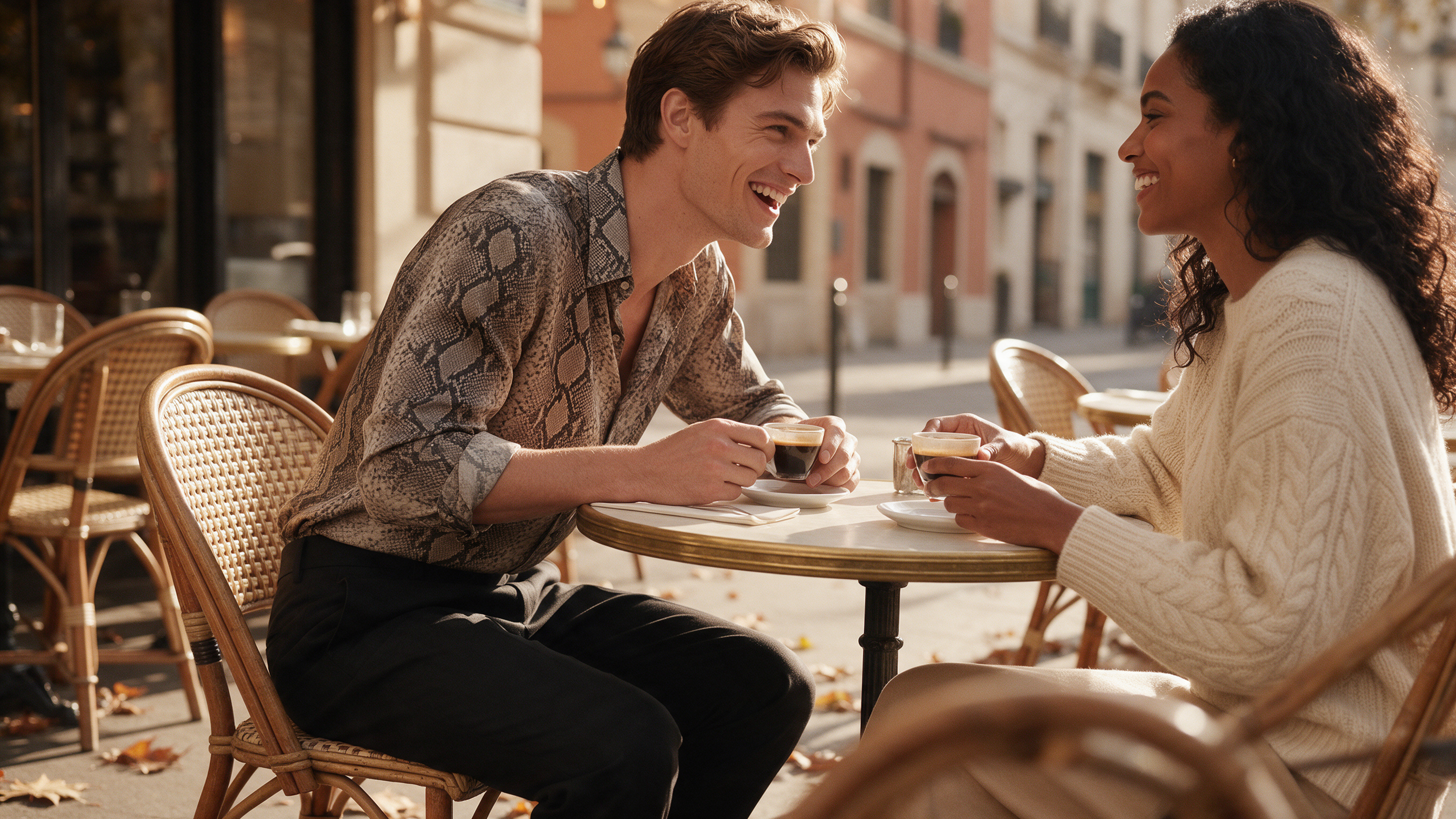
2. Date Night: Snake Shirt + Cream Knit + Espresso Trousers
Formula: fitted snake-print shirt (worn open at the collar) + cream merino sweater draped over the shoulders or worn loosely + espresso brown tailored trousers + dark brown loafers or boots.
The espresso-and-cream pairing is the most sophisticated in this guide: it is the palette of good coffee and old libraries, and it flatters snake print's taupe undertones perfectly. Wear the shirt as the base layer with the collar open one button, or layer the cream knit over a plain tee with the snake shirt open like a light jacket — both versions photograph beautifully in candlelight.
Why it works: cream next to the face softens the print, espresso at the trousers grounds it, and the warm palette signals intention. This is the "winter date night outfits men" answer for guys who find leopard a step too far: all the interest, half the volume.
Adjustments: the shirt must be fitted — a billowy snake print reads louche in the wrong way, while a close cut reads sharp. If you run warm, wear the snake shirt alone with the top button open and the sleeves pushed once; if the venue is cold, the cream knit over the shoulders is the move, worn cape-style rather than with sleeves forced through. Trousers should break cleanly over a dark brown boot or loafer; espresso brown is the unsung hero shade of 2026 date-night dressing — richer than black, softer than charcoal, and it flatters every warm print in this guide.
3. The Party: Snake Leather Jacket + All-Black Everything
Formula: snake-print or snakeskin-textured leather jacket + black merino roll neck + black tailored trousers + black leather boots.
All black with one textured statement is the most reliable party formula in menswear, and snake print is its best 2026 material. The monochrome base makes the scaled texture the only focal point, and the leather sheen — kept matte, per the golden rules — reads rock-dandy rather than costume. This is the jacket version of the FW26-27 runways' moodiest styling.
Why it works: black absorbs chaos. With no competing color, the eye has exactly one place to land, and the tailored silhouette keeps the look expensive. Add a single silver accessory — a ring, a slim chain — and stop there.
Adjustments: the trousers decide the register. Tailored black wool trousers make the outfit gallery-opening ready; black jeans with a clean taper make it gig-ready. If a full snake jacket is a bridge too far, the same formula runs with a black leather jacket carrying a snakeskin-textured panel or collar — the texture reads at two meters, the print reveals itself at one. Either way, keep the roll neck fine-gauge; a chunky knit under a leather jacket fights the collar line.
4. The Weekend: Snake Belt + Olive Field Jacket + Khaki Chinos
Formula: olive waxed or brushed field jacket + white or ecru tee + khaki chinos + snake-print belt + suede desert boots.
Proof that snake print works in daylight. The belt delivers the ten-percent dose against a completely casual earth-tone base, and the olive-khaki-snake combination lands firmly in the "stylish guy at the farmers market" register. The field jacket's utility energy keeps the print from feeling precious.
Why it works: the belt's small surface area makes this the most forgiving formula for print beginners, and the earth tones echo snake print's natural habitat — literally. Everything about this outfit says the print belongs.
Adjustments: the belt wants a matte buckle in brass or dark gunmetal — shiny silver hardware introduces a cold note the palette does not need. If the day calls for one more layer, a cream shawl-collar cardigan under the field jacket keeps the whole outfit inside the same warm family. This formula is also the easiest in the guide to run with leopard instead: swap the belt for a leopard-print one and nothing else changes, which makes it the perfect test lab for deciding which print is yours.
Leopard vs. Snake Print: Which One Belongs in Your Wardrobe?
The two anchor prints of the season solve different problems, and choosing between them is less about trend than about temperament.
Choose leopard if your closet runs warm. Leopard lives in the same color family as camel, cognac, tobacco, and cream — the earth-tone wardrobe that most American men already own. It reads warmer, friendlier, and slightly more expressive, and it carries the "patterned knit" role better than any other print. If your fall rotation already includes a camel coat, brown boots, and oatmeal knits, leopard will feel like it has always been there.
Choose snake if your closet runs cool. Snake print in grey and taupe sits naturally beside charcoal, black, navy, and steel — the monochrome wardrobe that never dates. It reads sharper, more architectural, and easier to wear in conservative rooms, which is why it owns the office formulas in this guide. If your closet is mostly black trousers, grey knitwear, and dark denim, snake is the lower-friction entry.
Choose both, eventually — but never in the same outfit. The season's most stylish men will own one leopard piece and one snake piece by December, deployed on different days. The two prints speak different dialects: leopard is warmth and texture, snake is coolness and line. Master one dialect first; the second comes free once the ten-percent rule is habit.
Animal Print for Every Build and Skin Tone
The print is constant; the placement is not. Three fit notes keep animal print flattering on every frame.
For leaner frames: let the print add visual weight. A leopard knit or snake shirt worn as the mid layer builds the torso exactly where you want it, and the formulas' structured outerwear adds the shoulder line. Avoid tiny-print pieces on very slim builds — the pattern disappears; choose medium-scale spots or scales instead.
For broader frames: move the print away from the midsection. The belt, the boots, and the scarf formulas were practically designed for this — the print lands at the waist, the feet, or the neckline, while the torso stays in solid, vertical, dark neutrals. If you do wear a printed knit, choose a small-scale pattern in a fine gauge and keep the base layers dark and uninterrupted.
For shorter frames: keep the print in the upper two-thirds of the body — scarf, knit, or shirt — and keep every layer fitted. A printed boot cuts the leg line at exactly the wrong height on shorter builds, so shorter men should default to leopard knits and snake belts before considering boots. A monochromatic base (charcoal on charcoal) under the print adds the vertical length the print borrows.
On skin tone: leopard's warm browns glow against deep and olive complexions and add life to fair, cool undertones when the surrounding palette carries cream. Snake's grey-taupe reads neutral on nearly everyone, which is the honest reason it leads office dressing. The one universal rule: keep a flattering solid next to the face — camel, cream, charcoal — and let the print work from the shoulders down. That single placement decision flatters every complexion in the room.
The 2026 Wildcard Prints: Zebra, Tiger, and Cow
Leopard and snake are the anchors, but fall/winter 2026's animal-print moment is broader than two patterns. Trend coverage throughout the year has tracked a full menagerie — zebra, tiger, and cow prints all appearing across collections and street style, with dalmatian and deer motifs showing up as quieter supporting acts. The rules of engagement stay identical: one print, ten percent of the outfit, elevated neutrals around it.
Zebra is the most wearable of the wildcards — its black-and-white palette is already neutral, so it slots into exactly the charcoal-and-cream formulas above. Tiger print works best in the party formula's all-black setting, where its orange undertones glow the way leopard's do against charcoal. Cow print is the weekend wildcard: brown-and-white spotting on a jacket or knit over dark denim reads western-leaning and casual, best kept away from the office. If you are building your first animal-print outfit, start with leopard or snake; graduate to the wildcards once the six golden rules are second nature.
Where to Start: The Five Starter Pieces, Ranked by Risk
Animal print rewards a gradual entry. These five pieces, ordered from the safest first purchase to the boldest, let you scale your commitment to your comfort level — and each one anchors dozens of the formulas above.
1. The belt. Snake-print or leopard-print leather belt, one to one-and-a-quarter inches wide, matte finish. The dose is so small it reads as a detail, and it upgrades every neutral outfit you own. Zero risk, real return.
2. The boots. Snake-print chelsea boots are the single best footwear investment of the season: office-safe, date-night-ready, and invisible enough to wear weekly. Leopard-print boots exist but demand more confidence — the pattern has more contrast at foot level.
3. The scarf. A leopard or snake wool scarf in muted tones is the ideal second piece. It delivers the print right where you want attention — the neckline — and disappears into a coat pocket when the room feels too conservative.
4. The knit. A fine-gauge leopard sweater is the first true garment on the list and the one that transforms the office formula. Look for small-scale spots, a slim fit, and wool or a wool-cotton blend; avoid oversized chunky leopard unless the weekend formula is the goal.
5. The statement jacket. The leopard jacket or snake leather jacket is the graduation piece — the one that makes the party formula possible. Buy it last, after the habits are built, and insist on tailoring: this is the purchase where fit failure is most expensive.
The Five Mistakes That Instantly Cheapen an Animal Print Outfit
Every rule above has a failure mode, and they cluster into five repeatable mistakes. Avoid these and you are ahead of ninety percent of the print-wearing population.
1. Wearing two prints at once. Leopard jacket, snake boots — it sounds editorial and almost never is outside a runway. One print per outfit, no exceptions, until you have years of practice.
2. Choosing shine over matte. Glossy polyester leopard is the fastest route to costume. If the fabric catches light like a balloon, leave it on the rack; wool, suede, matte leather, and brushed silk are the only finishes that read expensive.
3. Ignoring fit because "it's just a fun piece." Print is unforgiving. A baggy leopard shirt looks like a mistake in a way a baggy white shirt never does, because the pattern draws the eye to every fit flaw. Tailoring matters twice as much with print.
4. Adding loud companions. Graphic tees, big logos, bright colors, busy sneakers — any of these next to animal print tips the outfit into noise. The print is the one allowed statement; everything else whispers.
5. Wearing it apologetically. The mirror check matters. If you are visibly uncomfortable in a leopard knit, the discomfort reads louder than the print. Animal print is a confidence garment; only wear the formulas you would defend to a friend. When in doubt, drop back a tier — belt and boots never require courage.
Try It Before You Buy It: How DLOOK Removes the Guesswork
Here is the honest obstacle with animal print: you cannot reliably imagine it. A leopard knit looks different on every frame, every skin tone, and every existing wardrobe — and "different" is exactly what men fear when they skip the print rack entirely. That fear used to mean either missing the trend or buying blind and returning.
DLOOK's AI outfit stylist closes that gap. Photograph the pieces you already own — the camel coat, the black roll neck, the dark denim — and DLOOK builds the formulas in this guide around your actual closet, then shows you the finished outfit with a virtual try-on before you spend anything on a print. Snake boots against your charcoal trousers, the leopard scarf against your burgundy coat: see it first, buy second.
The same workflow runs in reverse after you shop. New leopard knit? Photograph it into your closet and let the AI generate every combination it supports across the season. Open DLOOK and turn fall 2026's boldest trend into your most considered wardrobe move.
Frequently Asked Questions
Is leopard print in style for fall 2026?
Yes. Leopard is one of the anchor prints of the fall/winter 2026 menswear season, confirmed by runway coverage from the FW26-27 men's fashion weeks and by autumn trend reports from major fashion editors. The 2026 version is styled differently than the flashy, all-over looks of the past: smaller doses, matte fabrics, and neutral anchors like camel, charcoal, and cream.
Is snake print still in style in 2026?
Yes — snake print has evolved rather than disappeared. In 2026 it shows up most often on boots, belts, and sleek jackets, treated as a cool-toned texture rather than a loud pattern. Because its palette is essentially grey and taupe, it pairs as easily with charcoal and black suiting as a solid leather piece would.
How can a man wear animal print without looking flashy?
Follow three rules: limit the print to roughly ten percent of the outfit, anchor it with elevated neutrals (camel, cream, charcoal, espresso brown), and choose matte, structured pieces over shiny ones. One animal-print item per outfit is the ceiling for most settings — the print should be the detail people notice last, not first.
What colors go with leopard print for men?
Leopard print is built from warm browns and black, so it behaves like a textured neutral. The most sophisticated pairings for fall/winter 2026 are camel plus cream white, charcoal grey plus black, espresso brown plus oatmeal, and burgundy plus black. Avoid adding a second busy color — let the print carry the interest.
Can men wear animal print to the office?
Yes, in small, structured doses. A leopard-print knit worn like a sweater, a snake-print belt, or snake-print chelsea boots all sit comfortably inside a business-casual dress code. Avoid head-to-toe print, shiny fabrics, and statement jackets in conservative workplaces — save those for evenings and weekends.
What is the first animal print piece a man should buy?
A snake-print belt or a pair of snake-print chelsea boots is the lowest-risk entry point: the small surface area keeps the look subtle and the cool grey tones blend with almost everything. If you prefer leopard, start with a knitted sweater or a wool-blend scarf in a small, muted spot pattern.
Editorial note: This guide was written by the DLOOK Fashion Editor Team and independently reviewed by our senior menswear editors before publication. Trend references reflect publicly available runway and editorial coverage from the FW26-27 season. Outfit formulas are original to DLOOK. We update this article as the season develops — last updated October 2026.
The Final Word: Wild, but Disciplined
Animal print in fall/winter 2026 is not the loud, novelty version men have been avoiding for a decade. It is moodier, more tailored, and more wearable than it has ever been — one matte, structured piece at a time, anchored by the camel coats, charcoal knits, and dark denim already hanging in your closet. Start with the belt or the boots. Master the ten-percent rule. Then, when the December party arrives, you will already know exactly how the leopard jacket looks on you — because you checked it in DLOOK first.
Download the DLOOK app to virtual try on outfits, discover your perfect colors, and effortlessly manage your closet and looks.