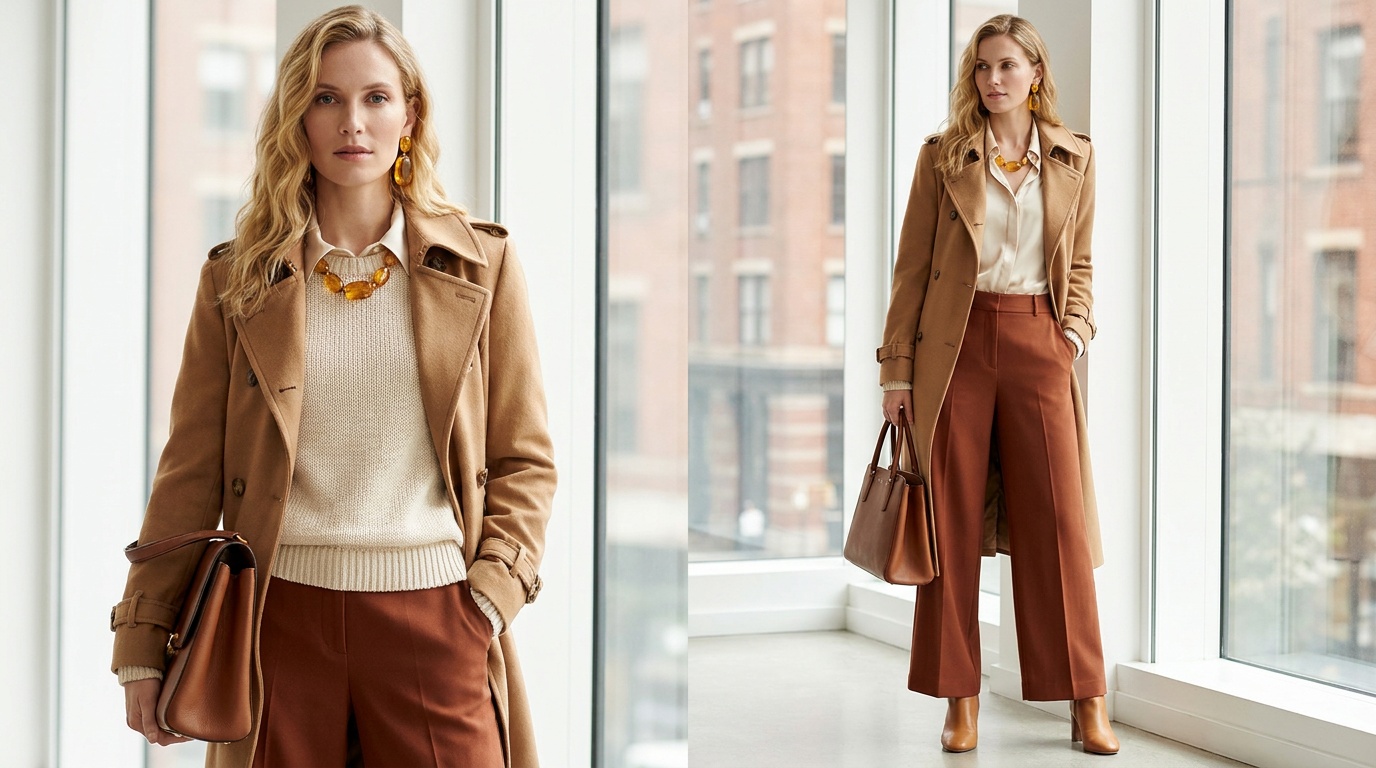
Let's be honest: the A-line skirt has a reputation problem. Cut well, it is one of the most forgiving, universally flattering silhouettes ever drafted—a shape that nips in at the waist and glides over hips, thighs, and everything in between. Cut or styled poorly, it drifts into a territory stylists quietly call "matronly": hem grazing the widest part of the calf, blouse ballooning over an invisible waist, and shoes that fight the whole look. If you have ever stood in front of a mirror in an A-line skirt and thought why does this feel frumpy?, you are not alone, and the problem is almost never the skirt itself.
The good news is that frumpiness is not a fate—it is a set of very fixable styling mistakes. In this guide, we break down the ten rules working stylists actually use to keep an A-line skirt looking current, whether you are dressing for campus, the office, or a dinner reservation. You will learn exactly where your hem should hit, how to tuck a shirt into an A-line skirt so your waistline does not disappear, which shoes work (and which sabotage you), and how fabric choice—denim, wool, satin—changes the entire message of the outfit.
Every rule follows the same simple format: the mistake that makes the look dated, and the fix that makes it feel intentional. Master these, and the most "boring" skirt in your closet becomes your most versatile one. One note before we start: "frumpy" is never about your body. The A-line was literally designed to flatter real hips and real waists—it goes wrong at the styling level, which means it can always be fixed at the styling level. No diet, no new body, no expensive overhaul required. Just ten rules.
Are A-Line Skirts in Style in 2026?
Yes— emphatically. The A-line skirt is one of the few silhouettes that never fully leaves, and in 2026 it is riding a wider midi-skirt wave that fashion editors have documented across every major runway cycle. Vogue's editors have called out the midi as the defining skirt length of the season, and the A-line is the midi shape that works on the most body types. The silhouette has serious historical credentials, too: the A-line silhouette takes its name from Christian Dior's 1955 "A-Line" collection, and it has cycled back into favor roughly every decade since.
What makes 2026 different is the styling. The frumpy associations come from how the skirt was worn in the past—with boxy, untucked blouses and sensible flats—not from the shape itself. Today's most-worn versions are cleaner: crisper waists, intentional hemlines, and footwear with a point of view. Denim A-line skirts anchor casual and campus looks, wool and tweed versions power city and office outfits, and satin A-line skirts handle evening with almost zero effort. The rest of this guide shows you how to get each one right.
Rule 1: Get the Hem Length Right—It Is Non-Negotiable
The mistake: letting the hem land at the widest, most awkward point of your leg. The single most common reason an A-line skirt reads frumpy is a hem that hits mid-calf, right where the calf muscle bulges. That line visually cuts your leg in half at its widest point, shortens the silhouette, and creates the "schoolteacher circa 1994" effect nobody wants.
The fix: choose one of three deliberate hem zones, and own it:
Just above the knee: the most leg-lengthening, youthful placement. Ideal for petite frames, campus looks, and anywhere you want visual lightness.
Right at or just below the knee: the classic, office-safe zone. It reads polished rather than frumpy as long as the waist is defined (Rule 2).
Midi, hitting mid-shin to just above the ankle: the most current length for 2026. The key is that a midi must skim—never grip—the calf, and it demands the right shoe (Rule 3).
So, where should an A-line skirt hit? Stylist shorthand: never at the fullest part of your calf, and never at a random point that looks like the skirt shrank. A deliberate length looks styled; an accidental one looks frumpy. When in doubt, try the skirt with the shoes you actually plan to wear—hem length and shoe height change each other completely. A midi that grazes the ankle with flats can look elegantly floor-skimming with a low block heel, and a knee-length hem that feels prim with flats turns playful with sneakers. If you love a skirt but the hem falls wrong, remember that shortening a hem is one of the cheapest alterations in tailoring—often under twenty dollars—and it transforms the garment more than any other change you can make. If you are shopping midi lengths, Who What Wear's midi skirt outfit coverage is a useful visual reference for how the pros balance proportion.
One more length nuance for 2026: the most current midi A-line hems skim the top of the ankle bone or end two fingers above it. Ankle-grazing hems pair best with a shoe that shows some foot—a slingback, a sandal, a low vamp—so the leg line continues to the floor. If your hem covers your entire shoe, switch to a taller boot or shorten the skirt; a "stump" of fabric above the foot shortens the leg and quietly adds ten visual years.
Rule 2: Define Your Waist—Always
The mistake: covering the waistband. An A-line skirt's entire job is to create an A-shape: narrow at the top, wider at the bottom. If your top hangs loose and untucked over the waistband, you erase the narrow point and become a column. Column equals frumpy. This one styling error is responsible for more "matronly" A-line looks than everything else combined.
The fix: make the waistband visible. You have three reliable options:
The full tuck: for thin knits and button-downs. Smooth the fabric flat at the waistband, then raise your arms once to let a little ease settle in.
The French tuck: tuck only the front center of the top into the waistband and leave the sides and back loose. This works brilliantly with tees and slightly oversized shirting.
The cropped or waist-length top: no tucking required. A top that ends right at the waistband gives the same defined effect with zero fuss.
A note on tucking mechanics, because this is where most people quietly fail: tuck into the band, not the skirt body. Smooth the fabric flat all the way around—especially the side seams and the back—then fasten a belt over the waistband if the skirt has belt loops, or raise your arms and let the fabric settle naturally if it does not. If you are tucking a shirt into a knit A-line and the fabric keeps creeping out, try the "tuck and twist": tuck firmly, then twist the skirt a quarter turn at the waistband so the tension holds the shirt in place. And if your top is thick or cropped already, do not force a tuck—a half-zip knit ending precisely at the waistband reads just as intentional as a tucked shirt.
Petite waistline note: the A-line-specific tricks
If you are petite, the waistband is your entire outfit. Choose A-line skirts with a high-rise waist—it sits at your natural waist or slightly above, pushing the "legs start here" line as high as possible. Pair it with a monochrome top-and-skirt color story (a black sweater into a black A-line) so the eye reads one unbroken vertical line, and keep hems in the just-above-knee zone rather than mid-calf, which compresses a shorter frame. For a deeper dive on proportion math for smaller frames, see our guide to long skirts for petite women—the high-waist logic transfers directly to A-lines.
Rule 3: Shoes Make or Break the Silhouette
The mistake: defaulting to "sensible" shoes. Flimsy ballet flats with a long midi, or heavy chunky footwear with a delicate hem, throw the whole proportion off. Footwear is the last thing people consciously notice and the first thing that makes an outfit feel dated.
The fix: match shoe weight and hem length. The formula is simple:
Knee-length or above-knee A-line: nearly anything works—ballet flats, loafers, sneakers, ankle boots, heels. The shorter hem frees you up.
Midi A-line skirt: needs a shoe with presence. Ankle boots that end just below the hem, pointed or almond-toe heels, loafers, or clean leather sneakers all work. Avoid anything that visually "chops" the leg at the ankle bone with no continuation.
A-line skirt with boots: the winter winner. Knee-high boots under a midi create a long, warm, polished column; ankle boots work best when there is a small gap of leg or a sheer tight between boot top and hem.
A-line skirt and sneakers: yes, and it is one of 2026's freshest combinations—but keep the sneakers slim and low-profile (a leather court sneaker, not a running shoe), and reserve the pairing for denim or cotton A-lines rather than satin.
When someone asks what shoes to wear with an A-line skirt, the honest stylist answer is: "whichever ones keep the vertical line going." Anything that interrupts the leg with a hard horizontal cut at an awkward height will read frumpy.
Two shoe situations deserve special handling. First, flats with a midi: it can be done beautifully, but only with an intentionally slim, low-vamp flat—a pointed d'Orsay or a sleek loafer—and ideally a hem that ends at the shin rather than swallowing the foot. Second, heels with an above-knee A-line: keep them moderate. A very high heel under a short, full skirt tips the proportion from "chic" toward "costume" for daytime; save the sky-high stilettos for the satin evening version. Block heels and kitten heels are the 2026 sweet spot—enough height to lengthen the leg, low enough to walk a full day in.
Rule 4: The Fabric Needs Structure—Not Stiffness
The mistake: limp, clingy, or pilling fabric. An A-line skirt cut from flimsy polyester crepe collapses against the body and highlights everything it was supposed to skim. Fabric that is too stiff, on the other hand, tents out like a lampshade. Frump lives at both extremes.
The fix: look for fabric with body and clean drape. Denim with some structure, wool crepe, tweed, crisp cotton poplin, and quality satin all hold the A-shape on their own—which is exactly what you want, because the skirt, not your body, creates the silhouette. Quick dressing-room test: hold the skirt by the waistband and let it hang. It should flare out in a clean A on its own, without you in it. If it hangs like a tube or collapses like a limp flag, leave it on the rack. Heavier fabrics also solve the wind problem, a real-world frump generator nobody talks about.
A quick fabric cheat sheet for shopping:
Denim (rigid or lightly stretchy): holds the A crisply; the more casual workhorse. Look for at least 10 oz weight so it does not bag at the seat.
Wool crepe: the office gold standard—tailored, seasonless, and virtually wrinkle-proof.
Tweed and bouclé: texture-rich and warm; keep the silhouette simple so the fabric is the star.
Cotton poplin or twill: the warm-weather structured option; crisp and preppy.
Satin and silk charmeuse: evening fluidity; buy the weighty kind that falls like water, not the thin kind that clings.
And a care note: whatever the fabric, press your A-line skirts. A creased, crumpled hemline reads frumpy even on an expensive skirt, while a pressed one elevates the cheapest. Five minutes with an iron (or a steamer, which is gentler on satin) is the most underrated styling tool in this entire article.
Rule 5: Balance Your Top Half
The mistake: pairing a full skirt with a full, boxy, hip-length top. Volume on volume erases your shape entirely—the classic route to frumpy.
The fix: since the A-line skirt carries volume at the bottom, keep the top fitted, tucked, or structured. This is the logic behind every great sweater-with-an-A-line-skirt outfit you have ever bookmarked: a slim crewneck or fine-gauge knit tucked into a wool A-line reads intentional and polished, especially with the sleeve pushed or the knit half-tucked. In warmer months, a fitted ribbed tank, a crisp button-down fully tucked, or a fitted tee with a French tuck does the same job. If you love oversized tops, wear them as a layer: an oversized blazer or cardigan over a tucked base layer gives you the relaxed proportion while keeping the waist defined underneath. And when in doubt about what top to wear with an A-line skirt, reach for the fitted option—the skirt is already doing the volume work for you.
Necklines and sleeves matter more than people expect. A V-neck or scoop keeps the top half feeling open and light, balancing the skirt's volume below; a high crew or turtleneck works beautifully too, as long as the knit is fine rather than chunky. Sleeve-wise, a pushed-up long sleeve or a three-quarter sleeve adds that styled-with-intent signal. Color is the final lever: a tonal top-and-skirt pairing (camel with camel, navy with navy) reads expensive and elongating, while a high-contrast pairing—a black skirt with a white tucked shirt—sharpens the waist definition and looks crisp for work. Both are right; they simply send different messages.
Rule 6: Winter Layering Without the Bulk
The mistake: treating the A-line skirt as a warm-weather-only piece, then abandoning it all winter—or worse, layering it so clumsily that the look balloons. A skirt hem fighting with the bottom of a long coat is peak frump.
The fix: layer with vertical logic. Wool and tweed A-line skirts are genuinely warm pieces; add opaque tights (80+ denier), tuck a thin thermal or fine turtleneck into the waistband, and finish with a coat whose hem either ends well above the skirt hem or well below it—never at the same line. Knee-high boots under a midi A-line with a wool coat is arguably the most elegant cold-weather formula that exists, and it works for the office, weekends, and evenings alike. For more outerwear proportion ideas, our styling notes on coats with skirts for fall cover the hem-over-hem rules in detail. Scarves should be worn long and looped rather than wrapped into a ball at the neck, preserving the vertical line you have built.
Tights deserve their own paragraph, because they make or break a winter A-line look. Black opaque tights with black boots is the foolproof combination—it creates one unbroken dark column from waist to toe, which is why it never looks frumpy. Sheer tights work with evening satin; patterned or textured tights (a fine rib, a subtle herringbone) add interest under wool skirts for daytime. What to avoid: tights that are lighter than your skirt and shoes, which segment the leg into blocks, and anything with a visible reinforced toe worn with open shoes. In deep winter, a thin thermal legging under thick tights keeps the silhouette intact without adding bulk at the hip.
Rule 7: The Business-Casual Formula
The mistake: defaulting to a plain shell top and cardigan every single office day. That uniform is precisely where the A-line skirt earned its frumpy reputation.
The fix: build a business casual skirt outfit with modern anchors. Three formulas that never fail:
Wool A-line + fine turtleneck + loafers + blazer: the power version. Everything fitted, waist defined, blazer ending at the high hip.
Structured midi A-line + crisp shirt full-tucked + pointed flats or block heels: boardroom-safe but current.
Denim A-line (dark wash, no distressing) + knit polo + ankle boots: for creative offices where denim is allowed.
The through-line in every business-casual A-line skirt outfit is intentionality: a belt at the waistband, a deliberate shoe, a top with shape. Remove any one of those and the look slumps back toward frumpy. If you work in an office, the A-line is genuinely one of the hardest-working business casual skirts you can own—it just needs its waistline shown and its shoes chosen on purpose.
For important meetings and presentations, level up one notch: swap the knit for a silk blouse, add a structured blazer with the sleeves pushed, and choose a pointed-toe pump or polished loafer. For casual Fridays, the dark-wash denim A-line with a knit polo and clean sneakers keeps you on the right side of the dress code. One practical tip for commuters: a midi A-line is far more commute-proof than a pencil skirt—you can stride, bike, and climb stairs without a single adjustment, which is exactly why it has quietly become the office skirt of choice for women who walk to work.
Rule 8: Over-40 Modernizing Tricks
The mistake: dressing "age-appropriately" by reaching for the softest, loosest, most covered-up version of everything. Ironically, that instinct is what makes A-line skirt outfits for women over 40 read matronly rather than elegant.
The fix: modernity over modesty. Stylists who dress women over 40 lean on a handful of reliable moves:
Show the ankle or the wrist. A midi hem with an ankle-boot gap, or a long sleeve pushed to the forearm, adds air and intention.
One trend element per outfit. A 2026-colored satin skirt with a classic cashmere crewneck feels current; head-to-toe classics can read costume-y.
Invest in fabric. Wool crepe, silk, and good denim elevate the silhouette instantly—cheap fabric is what actually dates a look.
Keep the waist defined but not cinched. A clean tuck beats a tight belt every time.
Women over 40 often wear the A-line better than anyone—the shape's polish rewards confidence and quality. The frumpy version is never about age; it is about the untucked blouse and the mid-calf hem. For readers building a curve-friendly skirt wardrobe, our plus size skirt styling guide covers fit and proportion from a different angle and pairs well with these rules.
Two more over-40 specifics that stylists repeat constantly. First, reconsider the go-to cardigan: a longline cardigan worn open over a tucked base layer is modern and lengthening, while a short buttoned cardigan over an untucked top is the single fastest route to matronly. Second, embrace a slight shoulder structure—a blazer or a top with a defined shoulder line lifts the entire upper body and makes the A-line waist look sharper by contrast. And tailoring pays dividends here more than at any other age: a skirt taken in at the waist so it sits exactly at your natural waist will outperform three ill-fitting skirts every time.
Rule 9: Match the Fabric to the Occasion
The mistake: wearing one generic A-line skirt everywhere, or owning only one type. The fabric is the message: the same silhouette in denim says Saturday, in tweed says Monday, in satin says Friday night. Getting this wrong—satin at a campus picnic, stiff tweed at a bar—creates a subtle "off" feeling that reads as frumpy even when everything fits.
The fix: think in three fabrics. The next three sections break down exactly how to style a denim A-line skirt, a wool or tweed A-line skirt, and a satin or silk A-line skirt—with outfit formulas for each setting.
Denim A-Line Skirt Outfits: Campus and Casual Days

The denim A-line skirt is the workhorse of casual dressing, and it is nearly impossible to make it frumpy—if you keep it modern. Who What Wear's denim skirt outfit roundups consistently prove the point: the freshest looks are always the simplest.
Campus formula: a medium-wash denim A-line hitting just above the knee, a fitted graphic or striped tee tucked fully in, clean white leather sneakers, and a canvas tote or backpack. Add a crewneck sweatshirt layered over the tee when it is chilly, knotted loosely at the waist rather than worn baggy.
Weekend formula: swap the tee for a fitted ribbed tank or a slim henley, trade sneakers for loafers or ankle boots, and add a denim or chore jacket on top (yes, the Canadian tuxedo works—vary the washes). For a slightly dressier casual take, tuck a crisp white button-down into a dark-wash denim A-line and add block-heel sandals or ballet flats.
The frump traps to avoid with denim: a hem past mid-calf (it reads costume-y rather than casual), distressed or whiskered washes that fight the clean A-shape, and overly "cowboy" styling. The denim A-line wants to feel effortless and slightly preppy—think campus classic, not theme party.
Denim care also matters: wash your denim A-line rarely and cold, inside out, so the indigo stays rich and the shape stays crisp. A faded, bagged-out denim skirt loses the very structure that makes the silhouette work. And if you only buy one, make it a medium-to-dark wash in a non-stretch or low-stretch denim—it is the most versatile color, transitioning from sneakers and a tee by day to ankle boots and a silk camisole by night with just a shoe and top swap.
Wool and Tweed A-Line Skirt Outfits: City Streets and the Office

The wool and tweed A-line skirt is where the silhouette does its most sophisticated work. This is the business-casual skirt and city-street staple, and it is the fabric most likely to tip into frumpy if you are not careful—tweed has "vintage" energy that needs modern counterweights.
Office formula: a charcoal or camel wool A-line at or just below the knee, a fine merino turtleneck in a tonal color fully tucked, a leather belt at the waistband, pointed ankle boots, and a longline wool coat over everything. The monochrome palette is what keeps tweed feeling 2026 instead of 1955.
City formula: a houndstooth or plaid tweed A-line with a plain white or black fitted knit (the busy fabric deserves a quiet top), sheer black tights, loafers, and a structured shoulder bag. Push the sweater sleeves to the forearm—that one styling move modernizes tweed more than anything else.
The frump traps to avoid with wool and tweed: pairing a patterned tweed skirt with a patterned or ruffled blouse (pattern clash plus extra frill is the matronly double-hit), choosing a tweed with metallic or glitter threads for daytime, and letting the hem drift toward mid-calf. Keep the top simple, the waist visible, and the palette disciplined, and the tweed A-line becomes the most complimented thing in your closet.
Fit notes for wool specifically: because wool has no stretch, the waistband must sit exactly right—too tight and it digs, too loose and the whole skirt slides down, destroying the A-shape. Buy for the waist and hip you have, and spend the tailoring money on the waistband if needed. A lined wool A-line will also hang noticeably better than an unlined one; the lining lets the outer fabric skim instead of catch on tights or static, which is the quiet difference between "expensive" and "almost."
Satin and Silk A-Line Skirt Outfits: Dinner and Evening
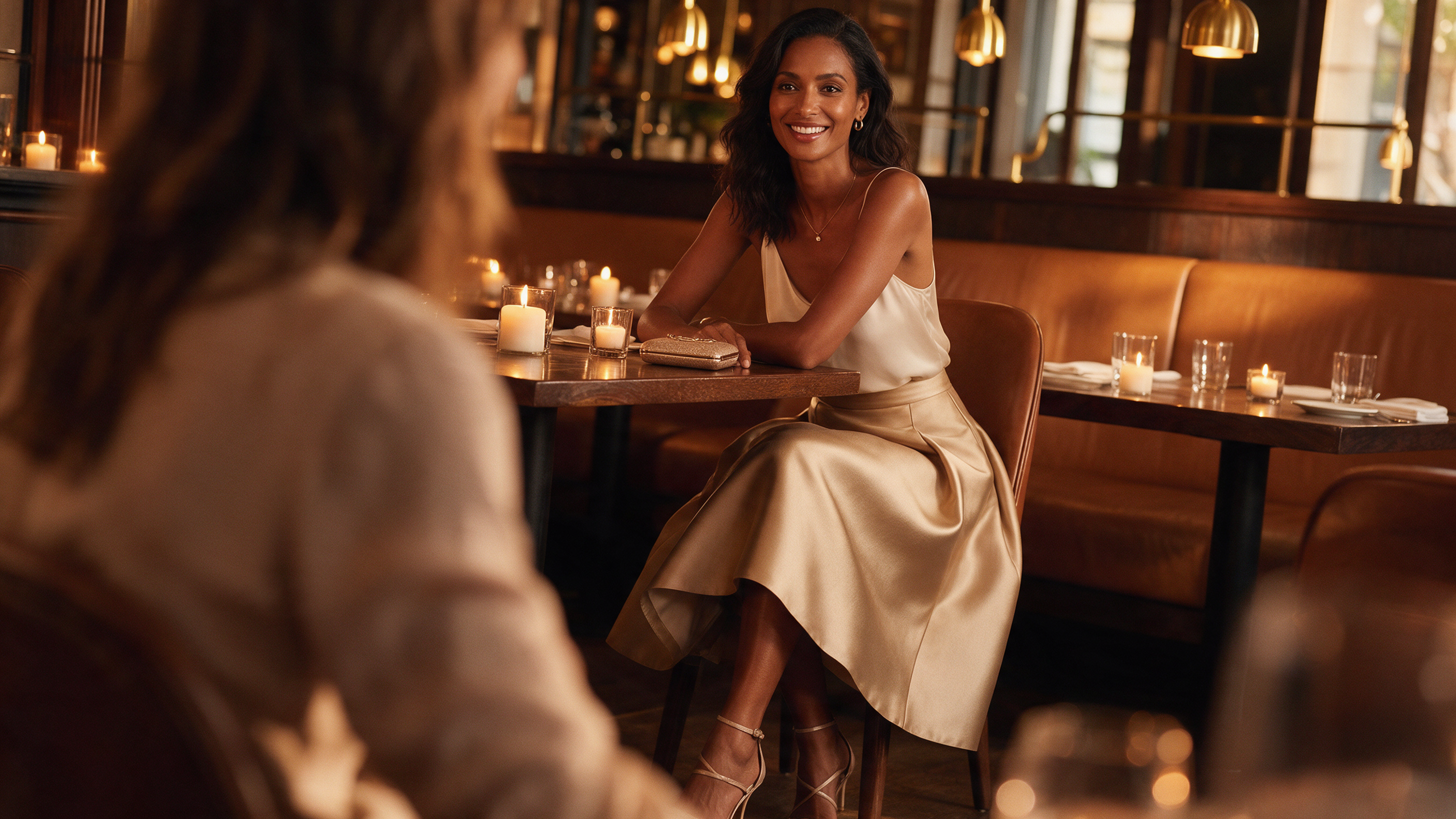
The satin A-line skirt is the shape-shifter of the three: dressy by fabric, easy by cut. Worn well, it is the answer to "what do I wear to dinner that is not a dress?" Worn badly, it slips into slip-skirt territory—limp, clinging, and cheap-looking.
Dinner formula: a midi satin A-line in champagne, black, or a deep jewel tone, a fitted silky camisole or fine-knit top fully tucked, strappy heeled sandals or pointed slingbacks, and a small clutch. The waist definition matters even more here because satin shows every fold of excess fabric—a sloppy tuck ruins the whole effect, so smooth it flat.
Evening-out formula: swap the camisole for a fitted black turtleneck or a structured bustier-style top, add heeled ankle boots, and throw a long blazer or a faux-fur jacket over your shoulders. For holiday parties and events, a satin A-line with a tucked lace-trimmed blouse and block heels hits the dressy note without going full gown.
The frump traps to avoid with satin: ultra-flat shoes (they drag the hem and kill the drape), matte jersey tops that read "office" rather than "evening," and satin that is too thin—hold it up to the light in the store; if it is see-through, it will photograph worse. Quality satin falls in a liquid line; cheap satin wrinkles at the hip by dessert.
For a satin A-line that works harder, choose a midi in a solid jewel tone or classic champagne rather than a print—the solid color is what reads "evening" rather than "loungewear." Store it hanging (never folded, which creases satin permanently) and steam rather than iron it. One styling upgrade that costs nothing: add a belt at the waistband in a slim metallic or matching satin finish. It sharpens the tuck point, catches the light, and turns a simple skirt-and-top into a deliberate dinner outfit.
Rule 10: Run the 60-Second Mirror Test
The mistake: getting dressed on autopilot and leaving the house without a final check. Frump is almost always one missing element away.
The fix: before you leave, do the 60-second test. Look in a full-length mirror and ask four questions:
Can I see my waist? If not, tuck, crop, or belt. (Rule 2)
Where exactly is the hem hitting? Deliberate = good; accidental = change shoes or length. (Rule 1)
Do my shoes continue my leg line? Or do they chop it at an awkward spot? (Rule 3)
Does the fabric have structure? If it is clinging or collapsing, add a structured layer or choose a different skirt. (Rule 4)
If you pass all four, the outfit works. This test is also the fastest way to diagnose future outfits—frump is never mysterious once you know where to look. Switching an outfit from day to night, or campus to office, is usually just a shoe swap and a top change: the skirt stays, the message changes.
The 10 Mistakes at a Glance
Save this quick reference for rushed mornings. Frump almost always traces back to one of these:
Hem at mid-calf → move it above the knee, to the knee, or to a true midi. (Rule 1)
Waistband hidden → tuck fully, tuck French-style, or crop the top. (Rule 2)
Shoes chopping the leg → match shoe weight to hem length; keep the vertical line. (Rule 3)
Limp or overly stiff fabric → choose fabric with body that holds the A on its own. (Rule 4)
Boxy top over a full skirt → volume goes on bottom only. (Rule 5)
Coat hem ending at the skirt hem → stagger the lengths. (Rule 6)
Office autopilot uniform → add a belt, a deliberate shoe, one modern piece. (Rule 7)
"Age-appropriate" over-styling → modernity over modesty; show an ankle. (Rule 8)
Wrong fabric for the setting → denim for day, wool for work, satin for evening. (Rule 9)
No final check → run the 60-second mirror test before leaving. (Rule 10)
Try Every Fix on DLOOK
Reading about proportions is one thing; seeing them on your body is another. The DLOOK app lets you virtually try on outfits, test which hem length flatters you most, and see exactly how a tucked top changes your silhouette—before you buy or get dressed. Visit DLOOK to explore your style, or download the app below:
FAQ: A-Line Skirt Styling, Answered
How do you wear a skirt without looking frumpy? Follow the same four checks every time: define the waist, choose a deliberate hem length, match shoe weight to the hem, and pick fabric with structure. Frump is a styling issue, not a skirt issue.
What top do you wear with an A-line skirt? A fitted top that ends at or tucks into the waistband—think fine knits, fitted tees, crisp shirts, or cropped jackets. The skirt carries the volume; the top should be quiet.
What shoes go best with an A-line skirt? Above the knee: almost anything. Midi: ankle boots, loafers, pointed heels, or slim sneakers. Winter: knee-high boots under a midi. The only rule is avoiding a hard chop at the ankle bone.
Where should an A-line skirt hit? At one of three intentional zones: just above the knee, right around the knee, or midi grazing the mid-shin to just above the ankle. Never at the widest part of your calf.
Written by the DLOOK Fashion Editor Team.
Download the DLOOK app to virtual try on outfits, discover your perfect colors, and effortlessly manage your closet and looks.